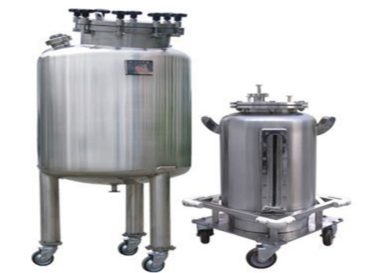
Vacuum Buffer Tank: Overview
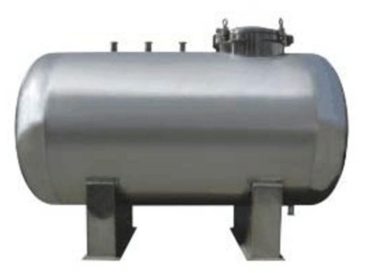
A vacuum buffer tank, also called a negative-pressure buffer tank, uses either stainless steel or carbon steel as its material. People often refer to stainless steel vacuum buffer tanks simply as stainless-steel vacuum tanks.
Vacuum Buffer Tank: Functions
Vacuum buffer tanks buffer system pressure fluctuations to keep the system running stably. They prevent material backflow and facilitate gas-liquid separation to maintain stable vacuum levels—without this, vacuum levels cannot meet requirements.
Vacuum Buffer Tank: Structure & Installation
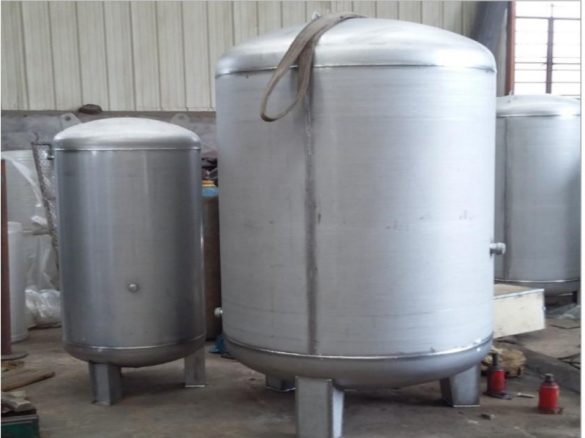
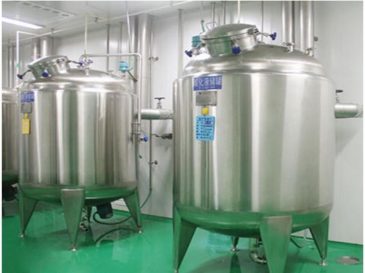
Most vacuum buffer tanks have a vertical structure. For food and pharmaceutical industries, manufacturers generally use stainless steel to make them.
They have a side air inlet, and workers feed materials tangentially to promote gas-liquid separation. The air extraction port sits at the tank’s upper part, and liquid drains from the lower part.
The tank has a pressure vacuum gauge port, air inlet, exhaust port, and liquid discharge port. A one-way valve on the pipeline prevents liquid back-suction or backflow. Workers place the vacuum buffer tank in front of the vacuum pump, at the pump’s inlet.
Compressed-Air Buffer Tank: Overview & Basic Functions
Compressed-air buffer tanks have similar functions to vacuum buffer tanks. They reduce air system pressure fluctuations and ensure the system supplies air stably and continuously.
Compressed-Air Buffer Tank: Installation & Specific Functions
Workers usually install compressed-air buffer tanks at the air compressor’s outlet and gas-using points. Those at the compressor’s outlet reduce outlet pressure pulsation and separate water from compressed air.
For reciprocating compressors, the outlet buffer tank’s volume is generally about 10% of the compressor’s per-minute flow (Nm³/min).
For centrifugal or screw compressors, the exhaust pressure is relatively stable. Their buffer tanks mainly separate condensed water, with size and volume based on separation requirements.
Buffer tanks at gas-using points adjust gas load, reduce pressure fluctuations from varying gas consumption, and ensure production devices run normally.
Compressed-Air Buffer Tank: Structure
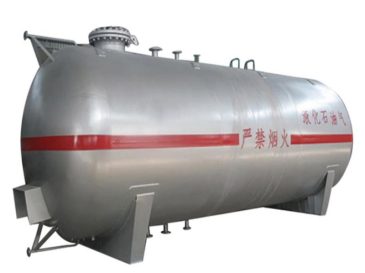
Compressed-air buffer tanks have a similar structure to vacuum buffer tanks. Their structures are relatively simple, and the key task is to determine their volume.