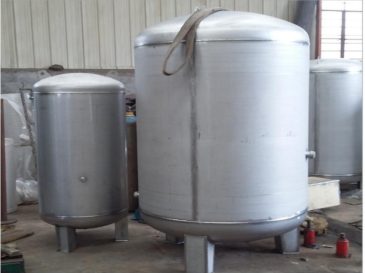
Overview & Basic Definition
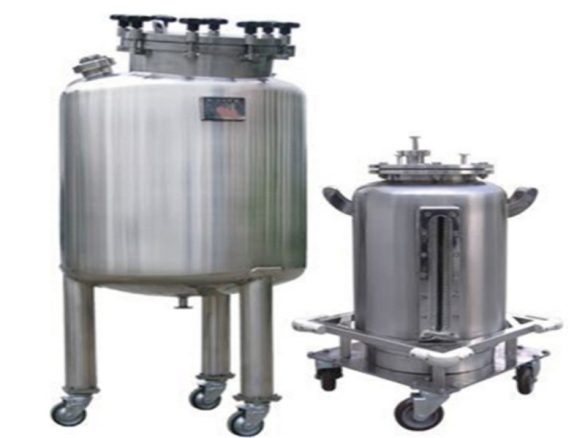
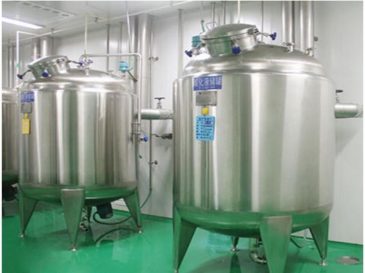
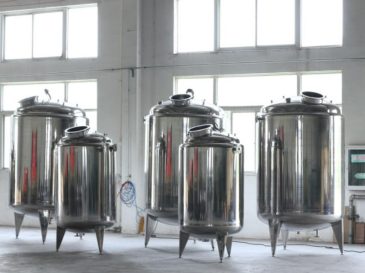
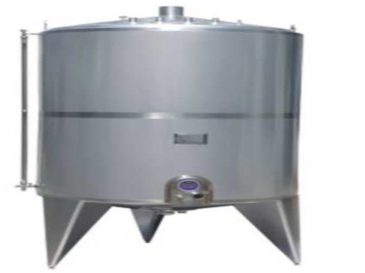
Stainless steel mobile storage tanks, also called mobile storage tanks, mobile turnover buckets, and mobile material tanks, are movable clean storage equipment.
Specifically, manufacturers design them for transferring liquid materials in industries such as pharmaceuticals, biology, food, fine chemicals (daily chemicals), and fermentation.
For the tank body, workers make the entire structure from SUS316L or SUS304 stainless steel.
Additionally, they mirror-polish the inner surface of the tank body to a roughness of Ra ≤ 0.4 μm.
Manufacturers design them for transferring liquid materials in industries such as pharmaceuticals, biology, food, fine chemicals (daily chemicals), and fermentation.
Workers make the entire tank body from SUS316L or SUS304 stainless steel.
They also mirror-polish the inner surface of the tank body to a roughness of Ra ≤ 0.4 μm.
Classification
By form: Manufacturers divide them into vertical and horizontal mobile storage tanks.
By pressure requirement: They categorize them into stainless steel pressure vessels and non-pressure vessels.
By structure: Besides the above classifications, they further classify them into single-layer, double-layer (with insulation), and three-layer (with insulation and jacket) storage tanks.
By pressure requirement: They categorize them into stainless steel pressure vessels and non-pressure vessels.
By structure: Additionally, they classify them into single-layer, double-layer (with insulation), and three-layer (with insulation and jacket) storage tanks.
Main Structure
A mobile storage tank mainly consists of a tank body and accessories.
Specifically, the tank body includes a cylinder, supporting legs (mobile casters with braking devices), upper and lower heads, a jacket, and an insulation layer.
The cylinder of the storage tank is cylindrical, with standard elliptical or dished upper and lower heads.
For the heads and cylinder, workers use 304 or 316L stainless steel as the main material.
As for insulation, they mostly use polyurethane or rock wool, with a thickness of 50 mm to 100 mm.
The tank body includes a cylinder, supporting legs (mobile casters with braking devices), upper and lower heads, a jacket, and an insulation layer.
The cylinder of the storage tank is cylindrical, with standard elliptical or dished upper and lower heads.
Workers use 304 or 316L stainless steel as the main material for the heads and cylinder.
For insulation, they mostly use polyurethane or rock wool, with a thickness of 50 mm to 100 mm.
Accessories
Main accessories include sanitary manholes, sight glass lamps, material liquid inlets and outlets, other process nozzles, and CIP cleaning ports.
On the other hand, optional accessories include level gauges, thermometers, cleaning balls, breathers, weighing modules, pressure gauges, and safety valves.
Optional accessories include level gauges, thermometers, cleaning balls, breathers, weighing modules, pressure gauges, and safety valves.
Material Advantages
Workers use 304 or 316L stainless steel for all parts in contact with liquid medicine.
This material boasts non-toxic, non-shedding properties and good corrosion resistance.
As a result, it not only ensures the quality of medicines and food but also extends the equipment’s service life.
This material is non-toxic, non-shedding, and has good corrosion resistance.
It not only ensures the quality of medicines and food but also extends the equipment’s service life.
Operational Performance
The accessories of the storage tank—such as manholes, inlets and outlets, level gauges, and breathing valves—are reasonably distributed.
Because of this rational layout, observation and operation become simple and easy.
This rational layout makes observation and operation simple and easy.
Sanitary Performance
The heads of the storage tank are standard elliptical or dished, with rounded corners formed by Japanese-style flat-plate hydraulic pressing.
To ensure smooth arc transitions at the corners, workers perform drawing treatment on all nozzle joints, with an arc radius of ≥ 10 mm.
They weld all tank body welds using automatic or manual argon arc welding and then subject them to stress relief treatment with a stress relief machine.
Furthermore, workers mechanically precision-polish the inner and outer surfaces of the equipment, ensuring the inner surface roughness Ra ≤ 0.6 μm.
This design effectively avoids product residue, reduces cleaning difficulty, and meets the requirements of hygienic-grade tanks.
Additionally, they pickle and passivate the inner surface to further enhance the equipment’s corrosion resistance and service life.
Workers perform drawing treatment on all nozzle joints to ensure smooth arc transitions at the corners, with an arc radius of ≥ 10 mm.
They weld all tank body welds using automatic or manual argon arc welding and subject them to stress relief treatment with a stress relief machine.
Workers also mechanically precision-polish the inner and outer surfaces of the equipment, ensuring the inner surface roughness Ra ≤ 0.6 μm.
This design effectively avoids product residue, reduces cleaning difficulty, and meets the requirements of hygienic-grade tanks.
Additionally, they pickle and passivate the inner surface to enhance the equipment’s corrosion resistance and service life.
Appearance Performance
An automatic polishing machine performs integral sanding on the outer surface of the storage tank to achieve a matte finish with uniform polishing lines.
Meanwhile, workers polish the upper and lower heads to a mirror or matte finish, with a roughness of Ra ≤ 0.8 μm.
In turn, this gives the tank a pleasant visual feeling and avoids light pollution.
Workers polish the upper and lower heads to a mirror or matte finish, with a roughness of Ra ≤ 0.8 μm.
This gives the tank a pleasant visual feeling and avoids light pollution.