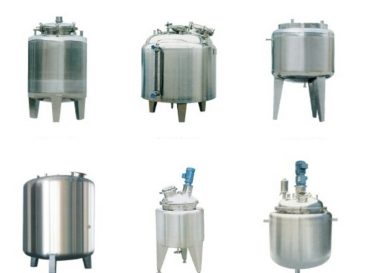
Overview & Alternative Names
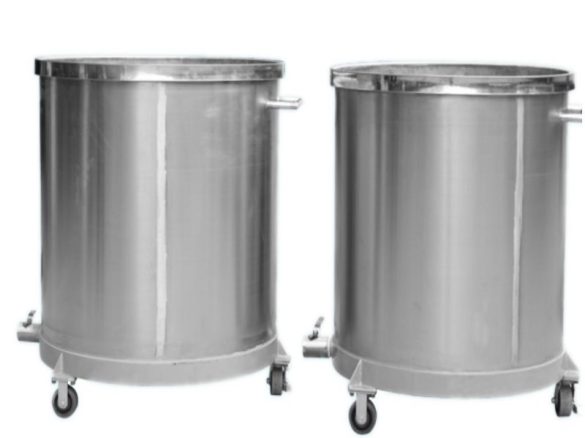
The full name of the stainless steel cylinder is the mobile stainless steel cylinder. Besides its full name, it also goes by many other names, including mobile cylinder, ink emulsification cylinder, stainless steel dispersion cylinder, dispersion barrel, stainless steel storage tank, coating stainless steel barrel, material cylinder, and material barrel.
In addition to these names, it is often called material tank, temporary storage cylinder, coating cylinder, dispersion machine cylinder, stainless steel cylinder barrel, stainless steel cylinder tank, or mixing tank, depending on its specific use scenario.
Main Applications & Functions
This cylinder has multiple main uses: first, it is used to load chemical materials such as paints, coatings, adhesives, color pastes, dyes, inks, pigments, electronics, and glues. Second, it serves as a mixing container for small-batch production and also functions as a temporary storage tool for small-batch materials.
Moreover, it is an essential mixing container for equipment like dispersion machines, grinding machines, sand mills, and emulsifying machines. Specifically, it acts as a material barrel for multi-variety dispersion, mixing, particle refinement, and dissolution processes.
Classification & Material Characteristics
Manufacturers classify cylinders into single-layer and double-layer types. They make them using stainless steel 201, 304, or 316L. Workers polish both the inner and outer surfaces, and the welding process is excellent; this excellent craftsmanship gives the cylinder strong corrosion resistance and oxidation resistance.
Structural Features
The cylinder discharges from the side for convenience, and manufacturers specially design its bottom to ensure clean discharging. It is equipped with industrial casters, and some of these casters have braking brakes to keep the cylinder stable when placed. Additionally, the handle is smooth and stable, which makes it easy for operators to move the cylinder.
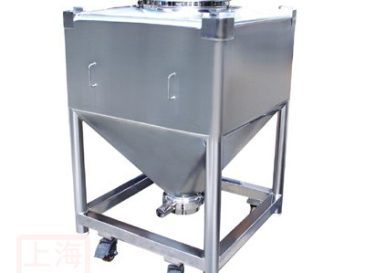
Workers install a reinforcing hoop on the top of the barrel to enhance its stability. For barrels with a diameter of φ1000 or more, manufacturers also add a reinforcing rib grid at the bottom to prevent deformation. Furthermore, common stainless steel cylinder bottoms include two types: inclined bottoms and head bottoms (flat bottoms).
Additional Configurations for Double-Layer Cylinders
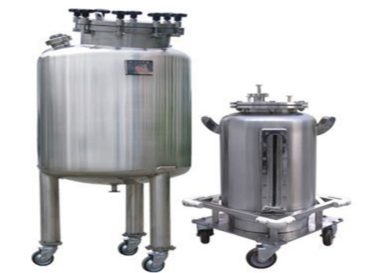
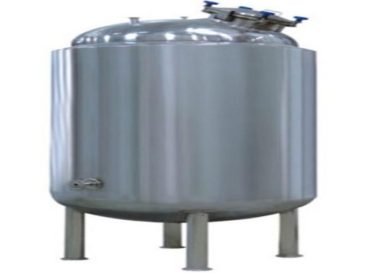
Double-layer cylinders offer extra flexibility compared to single-layer ones. For example, they can be equipped with heating devices and insulation layers for temperature control, or alternatively, users can use water for cooling, depending on the specific production needs.
Optional Accessories & Specifications
Users can add a cover to the cylinder, and this cover prevents material splashing during mixing while also reducing the volatilization of solvent-based products. Common volumes of the cylinder include 50L, 100L, 200L, 300L, 500L, 800L, 1000L, 1500L, and 2000L, and the discharge port size is either 1.5 inches or 2 inches.
The discharge valve has two options: either a stainless steel ball valve or a copper duckbill valve. Notably, the copper duckbill valve is particularly suitable for high-viscosity materials, and it can discharge directly on a slope.