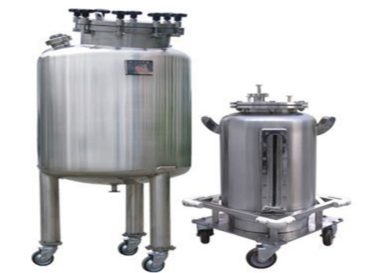
1. Basic Types & Structural Design
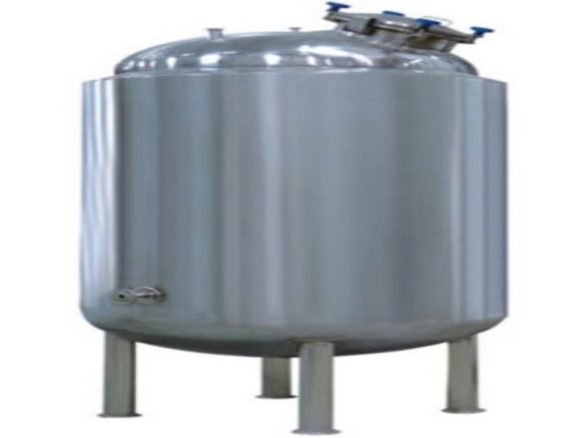
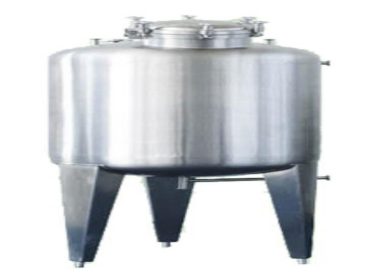
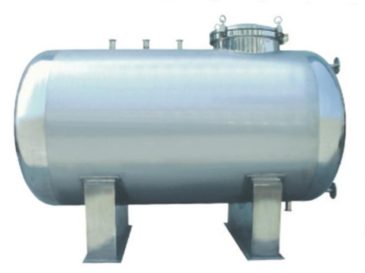
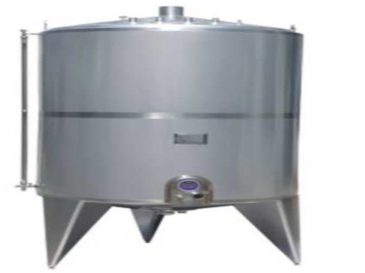
Developers offer liquid storage tanks in vertical and horizontal versions. The tank body uses a single-layer or double-layer structure for both vertical and horizontal forms. Workers polish the inner liner to a roughness of Ra0.45 μm. For the exterior, workers use mirror panels or frosted panels for insulation, and they fill insulation materials according to customer requirements.
2. Core Applications & Functional Features
Companies widely use these storage tanks in the storage and transportation of dairy products, beverages, and wine-making processes. These tanks deliver anti-seismic, explosion-proof, anti-leakage, and refrigeration functions. As a result, they serve as indispensable equipment in beverage manufacturing.
3. Key Components & Interface Standards
Manufacturers outfit the tank body with essential accessories: a liquid level gauge (non-contact ultrasonic, static pressure transmission, or glass tube type), an air breather, a sterilization steam port, a thermometer (digital or dial type), a CIP universal tank washer, a light hole sight glass, and multiple liquid inlet/outlet ports and manholes. All interfaces adopt the standard ISO quick-fit clamp-on disk type for seamless connection.
4. Material Quality & Compliance Standards
Workers craft the inner liner from imported 316L or 304 stainless steel. The storage tank features reasonable design, advanced technology, and automatic control systems. Consequently, it fully meets GMP standards for hygiene and safety.
5. Operational Process for Beverage Storage
In a typical beverage manufacturing plant, workers perform normal-pressure water boiling heating and sterilization on beverages. Afterward, they use water pumps to transfer beverages in or out via the liquid inlet/outlet ports. During transportation, they can apply heat preservation and refrigeration processes to the beverages, effectively maintaining their freshness.
6. Classification by Structure & Purpose
Engineers classify storage tanks by use: single-layer, double-layer insulated, three-layer heating, and three-layer heating/cooling types. They also categorize them by material properties: those with agitators and those without.
7. Material Selection & GMP Requirements
According to product requirements, manufacturers select materials as SUS304 or SUS316L. All interfaces use the standard quick-fit clamp-on disk type. Per pharmaceutical GMP regulations, storage tanks must include a steam sterilization function.
8. Surface Finish & Internal Hygiene
Workers polish the inner surfaces of all storage tanks to a roughness of Ra ≤ 0.4 μm. The outer surfaces receive a matt or laminated finish. They perform pickling or polishing on all welds to ensure no internal dead corners, preventing contamination.
9. Customization Based on Volume & Needs
Based on volume size, workers equip storage tank nozzles with liquid level gauges, breathing ports, thermometers, CIP cleaning rotating nozzles, and manholes. Manufacturers provide vertical or horizontal options to meet actual customer needs.