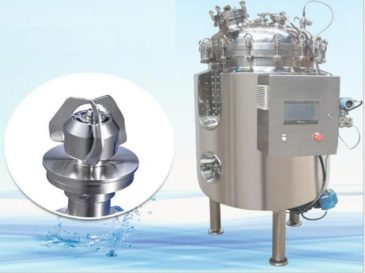
1. Overview and Application Industries
Solution tanks are mainly applied in multiple industries. These industries include the dairy, chemical, food, beverage, and pharmaceutical industries. Notably, due to their compliance with strict hygiene and safety standards, they are widely used in the pharmaceutical industry.
2. Name and Classification of Solution Tanks
Solution tanks (liquid preparation tanks) have different names based on their uses. In pharmaceutical liquid preparation systems, we commonly call them liquid preparation tanks, concentrated preparation tanks, or dilute preparation tanks. Additionally, they are known as stainless steel liquid preparation tanks, sanitary-grade liquid preparation tanks, or injection preparation tanks. In contrast, in the food and dairy industry, they may be referred to as mixing tanks, preparation tanks, or sterile liquid preparation tanks.
3. Classification by Volume, Mobility and Stirring Method
We classify solution tanks into three types by volume: laboratory, pilot-scale, and large-scale liquid preparation tanks. When it comes to mobility, they are divided into fixed and portable liquid preparation tanks. Some are also detachable liquid preparation tanks for added flexibility. As for the stirring method, the available types include magnetic stirring, agitator-type, and buffer liquid preparation tanks.
4. Classification by Structure
Based on structure, solution tanks are categorized into three types. Specifically, these are single-layer, insulated stirring, and three-layer insulated liquid preparation tanks.
5. Design Standards and Tank Body Structure
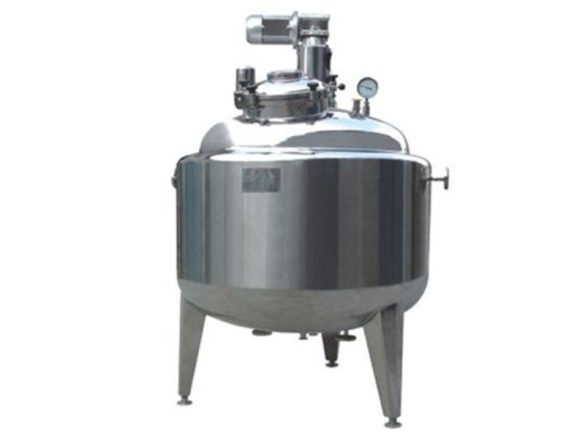
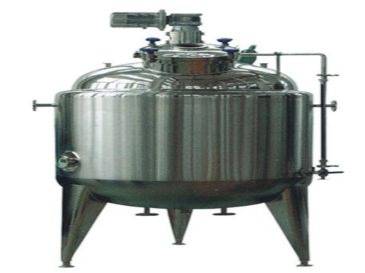
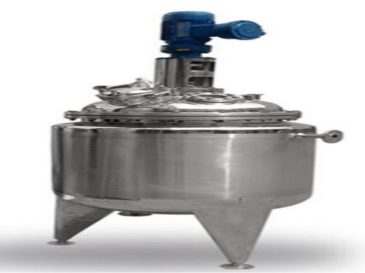
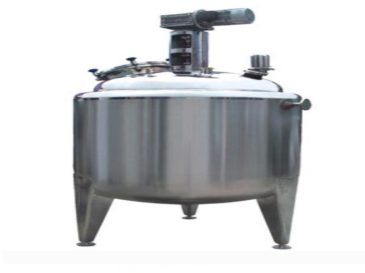
Solution tanks are designed with advanced technology and fully comply with national GMP certification requirements. The tank body adopts a vertical double-layer structure to enhance insulation and stability. The inner liner is polished to a precision of Ra0.45 for hygiene and smoothness. Spiral heating bands wrap the inner cylinder to ensure efficient heating, and the space between layers is filled with polyurethane material to achieve good insulation, thereby reducing energy loss.
6. Material and External Treatment
Mirror or frosted glass panels are used for the exterior insulation, ensuring uniform luster throughout the tank and enhancing its overall appearance. All components in contact with the solution are made of carefully selected 316L material for its excellent corrosion resistance. For other components, we choose 304 material to effectively balance performance and cost.
7. Internal and Top Configurations
The bottom head of the inner cylinder is concave-convex, which optimizes material mixing. A radial flow agitator is installed on its side wall, selected for efficient material mixing. The tank top is equipped with an inlet, reflux port, and sterilization port to meet various operational needs. It also features a cleaning ball, packing material access hole, and a 0.22um air breather at the breathing port to ensure cleanliness. Additionally, a stirring system is included to further enhance mixing efficiency and ensure uniform material distribution.
8. Bottom Configurations and Control System
The tank bottom is equipped with a condensate outlet, discharge port, and sludge discharge port for easy waste disposal. It also has a sampling port, temperature probe, and level sensor for real-time monitoring of the solution status. A control cabinet is provided for convenient operation, simplifying the operational process. Instruments on the cabinet clearly display the solution temperature and level for quick observation and also offer upper and lower limit alarm functions to ensure operational safety and prevent accidents. According to user requirements, the dilution tank can be equipped with a nitrogen charging device and a PH meter to meet customized needs.
9. Honeycomb Jacket Structure and Reducer
This special structure combines upper and lower elliptical heads with a honeycomb jacket, significantly improving heat transfer efficiency. The reducer uses a horizontal worm gear, which offers stable performance and low noise. It has a small jacket space, forced circulation, and a large heating area, ensuring rapid and uniform heating. Compared to conventional jackets, it is more efficient, pressure-resistant, and time-saving, thus reducing production costs. Furthermore, it has an attractive appearance that fits industrial aesthetics, enhancing the overall layout of the production site.
10. Advantages and Disadvantages of Honeycomb Jacket
However, the honeycomb jacket has multiple welds and a complex manufacturing process, which increases production difficulty. As a result, it also requires high technical content to produce, raising the manufacturing threshold. On the plus side, the horizontal worm gear reducer is about 250-330mm shorter than vertical reducers, saving valuable installation space.