1. Overview and Basic Characteristics
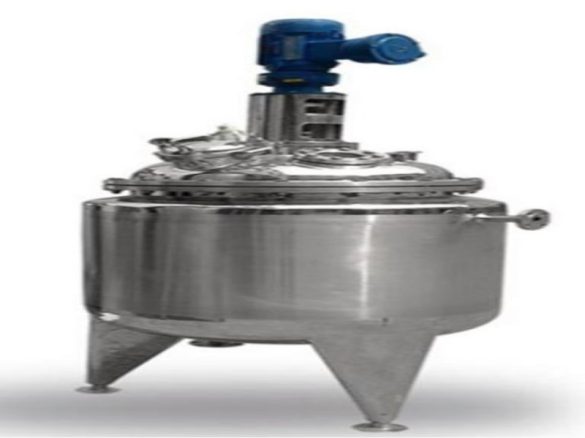
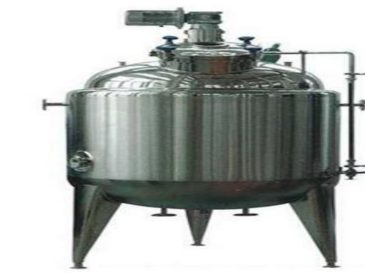
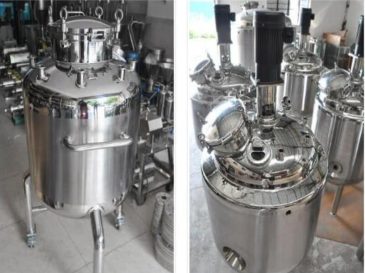
We equip the tank body with a jacket to realize heating, cooling, and temperature maintenance. Compared with a concentrated solution tank, the same model of thin solution tank has relatively lower stirring power. Generally, we design it as a fully sealed, vertical, sanitary, and clean container that integrates heating, cooling, heat preservation, and stirring functions.
2. Heating/Cooling Principle and System Configuration
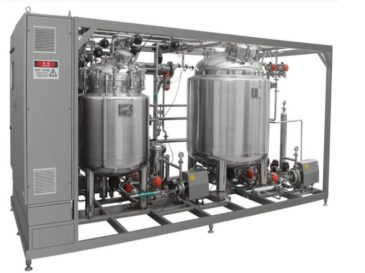
For thin solution tanks with heating or cooling functions, ; we can introduce heating or cooling media through this jacket to heat or cool the tank. With the operation of the stirrer, this process allows the liquid medicine to dissolve and mix fully. The system configuration of the thin solution tank mainly includes a transmission device, mechanical seal device, temperature control device, spotlight, sight glass, and stirring device. It also has a manhole feeding port, steam inlet, condensate outlet, material outlet, drain port, and sampling port, as well as a 360° universal cleaning ball. Additionally, some models are equipped with an orifice plate filtration device, weighing and metering device, liquid level metering device, or circulation device.
2.1 Types of Thin Solution Tanks
According to the requirements of process characteristics, we classify thin solution tanks into three types: single-layer thin solution tanks, double-layer insulated thin solution tanks, and three-layer heat exchange insulated thin solution tanks. Each type adapts to different process scenarios based on thermal insulation and heat exchange needs.
3. Volume, Structure and Stirring Configuration
We can customize the volume of thin solution tanks from as small as 10L to as large as 10m³. Most of them adopt a vertical, three-layer insulated structure. Most equipment uses upper and lower elliptical heads, which have good pressure resistance, no material accumulation, and no sanitary dead angles. For stirring, we mostly adopt upper mechanical stirring, while some models use lower magnetic stirring.
3.1 Stirring Types and Rotation Speed
Upper mechanical stirring generally includes paddle stirring, anchor stirring, frame stirring, and screw stirring. These stirring types have relatively low rotation speeds, mostly ranging from 10 to 243 r/min. Of course, the rotation speed of upper emulsifying stirring can reach 960 r/min, 1440 r/min, or 2900 r/min, and it can be either fixed-speed or adjustable-speed.
4. Jacket Types and Their Characteristics
The jacket generally adopts a universal standard hollow jacket. This jacket has a large heat exchange area, is simple to manufacture, and is suitable for normal pressure or medium-low pressure containers. Compared with honeycomb plate jackets, it saves manufacturing time, but honeycomb jackets have better pressure resistance. The half-pipe jacket thin solution tank can withstand pressure; although it is slightly more difficult to process, it is not a pressure vessel and can still bear a certain pressure.
4.2 Jacket Selection Suggestions
For small and medium-sized enterprises that want to manufacture pressure-resistant tanks, we recommend using honeycomb jackets or half-pipe jackets. Of course, if enterprises must manufacture according to standard pressure vessels, we mostly use standard hollow jackets.
5. Tank Wall Thickness and Pressure Relationship
The pressure inside the thin solution tank and the pressure of the jacket determine the wall thickness of the tank. The greater the pressure, the thicker the tank wall, and the higher the manufacturing cost. Generally, pharmaceutical factories mostly use steam heating, which mostly belongs to pressure vessels. However, using half-pipe jackets or honeycomb plate jackets means the tank does not belong to pressure vessels.