Product Overview
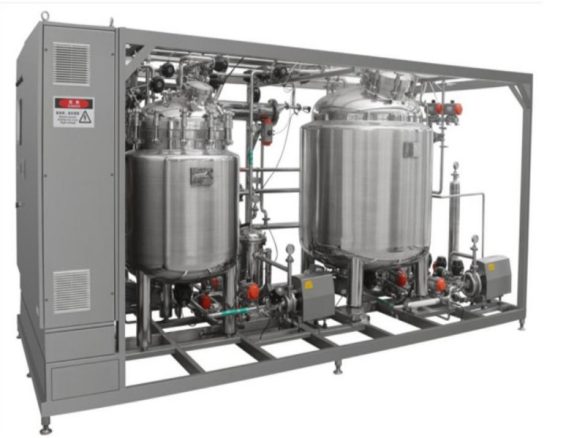
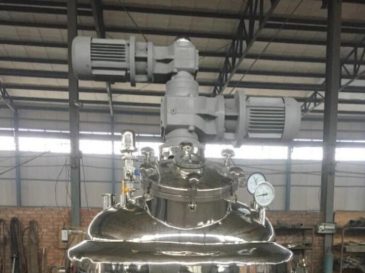
The buffer solution preparation tank, commonly known as the solution preparation tank, is a special container. It mixes raw materials, additives, auxiliary materials, and supplementary agents (both liquid and solid) according to production instructions and quality ratio requirements.
Its core purpose is to form a uniform liquid preparation. Typically, it is a three-layer vertical fully sealed sanitary clean container. Moreover, it integrates multiple practical functions.
Specifically, it has functions such as heating, cooling, heat preservation, stirring, and mixing, making it suitable for various preparation scenarios.
Classification by Process Requirements
According to different process requirements, we classify buffer solution preparation tanks into three main types. Each type has unique features to meet specific production needs:
1. Single-Layer Buffer Solution Preparation Tank
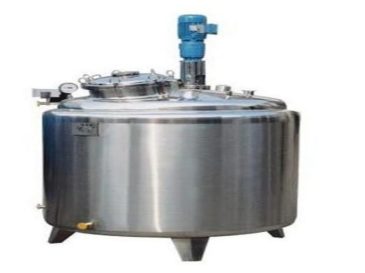
It is a simple single-layer tank without heating or cooling functions. Its main function is to stir and mix materials. It is ideal for scenarios where temperature control is not required.
2. Double-Layer Insulated Buffer Solution Preparation Tank
It is mainly used for heat preservation, stirring, and mixing operations. It is particularly suitable for materials that enter the tank in a hot state. The double-layer insulation design effectively maintains the material temperature.
3. Three-Layer Heat Exchange Insulated Buffer Solution Preparation Tank
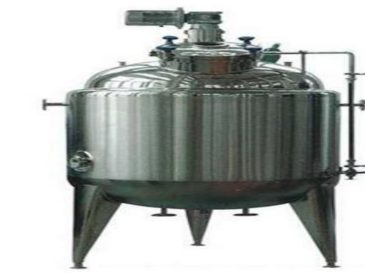
It is equipped with heating or cooling functions, with a jacket that allows heating or cooling media to pass through. This jacket controls the temperature of the materials inside the tank.
Additionally, the agitator operates to fully mix, dissolve, and blend the materials, ensuring uniform preparation of the buffer solution.
Standard Configurations and Optional Components
The buffer solution preparation tank system comes with a complete set of standard configurations. These configurations ensure its stable and efficient operation:
In addition to standard configurations, we also provide optional components to meet personalized needs. These optional components include orifice plate filtration devices, weighing and metering devices, and liquid level metering devices.
Material and Structural Features
1. Material Selection
We make the buffer solution preparation tank from sanitary-grade stainless steel 304 or 316L. This material ensures hygiene, corrosion resistance, and compliance with industry standards.
2. Sanitary Design
The tank body adopts a sanitary and aseptic design. Each pipe orifice is formed with a smooth transition through drawing processing. This avoids cleaning and material accumulation dead corners caused by direct socket welding.
As a result, it ensures the reliability and stability of the production process. The inner surface of the tank is mirror-polished, and the outer surface uses mirror panels or brushed panels.
This design makes the tank hygienic, clean, and beautiful, meeting the strict hygiene requirements of pharmaceutical and food industries.
3. Pipe Orifice Design
All process pipe orifices on the tank adopt sanitary-grade international ISO standard quick-installation chuck interfaces. These interfaces are hygienic, free of dead corners, and easy to disassemble.
For corrosive materials, we select corrosion-resistant PTFE gaskets. This selection ensures the service life of the equipment and prevents material contamination.
Key Functions and Customization Options
1. Sanitary Functions
The tank is equipped with online cleaning (CIP) and in-situ sterilization (SIP) functions. These functions ensure the tank remains sanitary and clean, fully meeting the pharmaceutical GMP standards.
2. Stirring Form Options
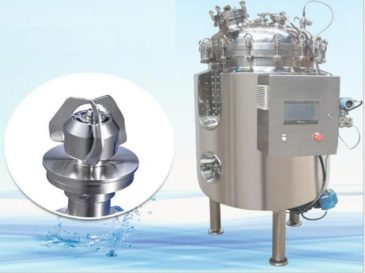
We can choose the stirring form according to the material characteristics. Common forms include mechanical stirring (such as paddle, anchor, frame, disc type), magnetic stirring, or high-shear stirring.
This flexibility ensures thorough mixing of different types of materials.
3. Heating Jacket Options
The heating jacket can adopt three types: standard jacket type, half-tube type, or honeycomb plate type. The standard jacket has a large heat exchange area and is easy to manufacture.
The half-tube jacket and honeycomb plate jacket have sufficient heat exchange and good flow guiding effect, but they take more time to manufacture.
We design the jacket form according to the material characteristics and heat exchange requirements. This ensures the heat exchange effect while saving manufacturing costs.
4. Control System Options
We can equip the tank with a temperature display and control system and a liquid level display system as needed. For those with high automation requirements, we can install level gauges, flowmeters, etc., with remote output control functions.
These components enable PLC control and one-key operation on the touch screen. For conventional requirements, we adopt local display and manual control, which is simple and easy to operate.
5. Sealing Performance
The equipment uses a special sanitary-grade mechanical seal. This seal is wear-resistant, does not contaminate materials, and has good sealing performance. It effectively prevents material leakage and ensures production safety.