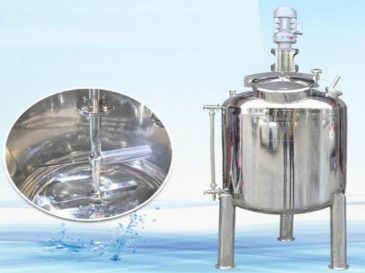
1. Overview of Gelatin Melting Tank
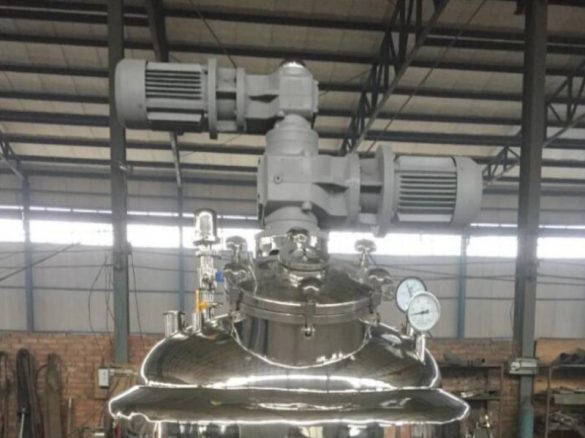
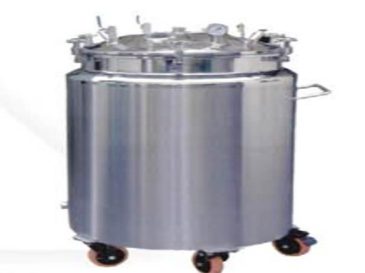
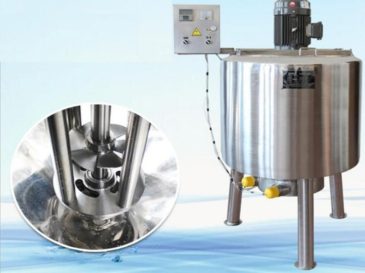
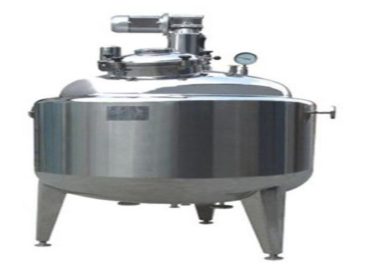
The gelatin melting tank also has other names, such as electric heating glue melting tank and stainless steel glue melting tank. We adopt a closed three-layer structure design to ensure stability and hygiene. We insert electric heating tubes into the jacket for heating, as this method is efficient and direct. The stirring system consists of two sets of shaft-type reducers to drive the stirring assembly. The stirring assembly adopts multi-layer split-flow blades, driven by dual shafts. The dual shafts can rotate bidirectionally—both forward and reverse—to ensure sufficient stirring.
2. Core Advantages
It can significantly shorten the glue melting time, thereby saving production time. In addition, it can ensure the stable dissolution of gelatin particles without caking or uneven melting. Furthermore, it can prevent gelatin liquid from burning, effectively protecting the quality of gelatin. It also improves the quality of gelatin liquid medium, as a better medium leads to better final products. Moreover, it enhances the uniformity of the liquid, ensuring the gelatin liquid remains consistent at all times. Additionally, it ensures high-quality particle pressing performance, making the particle press more efficient. It also increases the output of capsule particles, thereby improving overall production efficiency. Ultimately, reducing costs and increasing output will benefit the enterprise, thus improving enterprise efficiency. Notably, it fully complies with GMP hygiene standards, meeting the requirements of the pharmaceutical industry. Furthermore, it is a new type of equipment in the capsule pharmaceutical industry, capable of handling glue melting, batching, and vacuum stirring homogenization.
3. Comparison Between Electrically Heated Water Bath Tank and Water Bath Tank
Both types serve the capsule pharmaceutical industry, as they are used for adhesive melting and batching. Their main difference lies in the heating and temperature control methods, which are significantly different.
3.1 Differences in Heating and Temperature Control
Electrically heated water tank: Heating, temperature control, and cooling can be completed in one water tank. Unlike water bath tanks, they do not require an additional hot water tank, thus saving space and equipment costs.
Water bath tank: In addition to the glue melting tank, a separate hot water tank is required. This independent hot water tank can be preheated to improve efficiency.
3.2 Temperature Control Function
Water bath tanks provide more convenient temperature control because their operation is simple and intuitive. They also allow easier switching between heating and cooling, adapting to different process needs. Electrically heated tanks can also achieve this control, but they generally consume higher power. Therefore, for factories with steam heat sources, water bath tanks are more cost-efficient, as they save energy costs.
4. Key Equipment Details
4.1 Tank Structure
The equipment adopts a closed three-layer tank structure, which has multiple advantages. First, it has stable vacuum performance, keeping vacuum conditions consistent. Second, it has strong temperature retention, allowing the tank to retain heat well. Third, it ensures stable dissolution of gelatin particles, with no uneven melting. Finally, it delivers an excellent homogenization effect, keeping the gelatin liquid uniform.
4.2 Stirring System
The stirring assembly uses a live sleeve coupling, which connects the dual-shaft bidirectional multi-layer split-flow stirring paddle. The paddle is installed at the shaft position, making it easy to disassemble and install. It is also easy to maintain, which reduces maintenance time and costs.
4.3 Driving Mechanism
The rotating part consists of two sets of shaft-type reducers, which ensure smooth operation. It operates with low noise, making the working environment quieter. Additionally, it has stable performance with no frequent breakdowns. Moreover, it shortens glue melting time, making production more efficient. It also improves gelatin liquid medium quality, as better quality supports better production. Furthermore, it stabilizes liquid homogeneity, ensuring consistency is guaranteed.
4.4 Hygienic Design
The inner tank, outer surface, and all components are polished smoothly, with no rough surfaces. This makes it easy to clean, as no dead corners trap dirt or residue. Additionally, the overall structure is compact, saving space in the workshop. It also reduces the height of the glue melting room, making the space more usable. Besides, it saves energy consumption, lowering operational costs. Most importantly, it complies with GMP hygiene standards, meeting the requirements of pharmaceutical production.
4.5 Operating Accessories
A thermometer and a vacuum gauge are installed on the upper part for monitoring key parameters. Specifically, they can track the temperature inside the tank in real time, allowing operators to make adjustments as needed. They also monitor vacuum dynamics to ensure vacuum stability. In addition, the feed port (manhole) adopts a quick-opening and quick-installation design, simplifying operation. This design facilitates material transportation, making material addition fast and easy. It also simplifies internal cleaning, making hygiene maintenance effortless. Furthermore, it is easy to disassemble and maintain, making maintenance hassle-free.