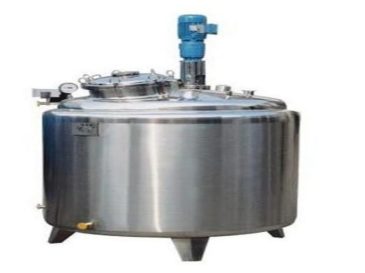
1. Overview and Application Fields
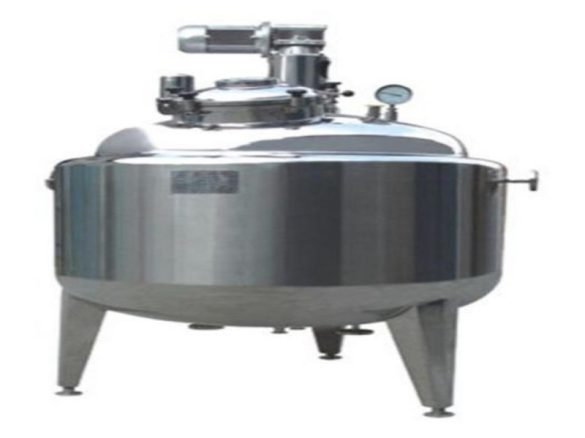
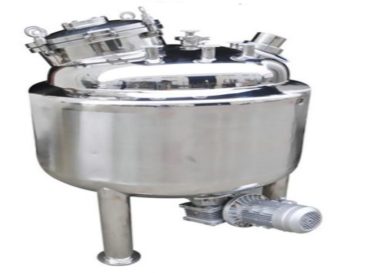
Liquid mixing tanks are widely used in multiple industries. Specifically, they cover the dairy, chemical, food, beverage, pharmaceutical, and medical industries. Among these industries, the pharmaceutical industry uses them particularly extensively, mainly due to the extremely strict hygiene and process requirements of pharmaceutical production.
2. Classification of Liquid Mixing Tanks
We classify liquid mixing tanks according to different standards, and their names also vary depending on specific applications. The following are the main classification methods and their corresponding types:
2.1 Classification by Purpose
In pharmaceutical liquid preparation systems, we usually refer to them by different names, including liquid mixing tanks, concentrated solution tanks, and dilute solution tanks. They are also known as stainless steel liquid mixing tanks and sanitary-grade liquid mixing tanks. In the pharmaceutical field, they may also be called injection mixing tanks or sanitary-grade liquid mixing tanks for pharmaceutical use. In contrast, the food and dairy industries usually refer to them as mixing tanks, preparation tanks, or sterile liquid mixing tanks. This difference in naming reflects their application scenarios in respective industries.
2.2 Classification by Volume
According to volume, we divide liquid mixing tanks into three types. The first is the laboratory-scale liquid mixing tank, suitable for small-scale experiments. The second is the pilot-scale liquid mixing tank specially designed for pilot production. The third is the large-scale liquid mixing tank that meets the needs of large-scale production.
2.3 Classification by Mobility
From the perspective of mobility, we classify them into fixed liquid mixing tanks and mobile liquid mixing tanks. Notably, some mobile liquid mixing tanks are detachable, and this detachable design greatly facilitates transportation and storage for users.
2.4 Classification by Agitation Type
According to the agitation type, we have several categories of liquid mixing tanks, including magnetic stirring liquid mixing tanks, impeller-type stirring liquid mixing tanks, and buffer liquid mixing tanks. It should be noted that the buffer liquid mixing tank is classified based on functional design rather than just agitation type.
2.5 Classification by Structural Design
In terms of structural design, we divide liquid mixing tanks into three types: single-layer liquid mixing tanks, insulated stirring liquid mixing tanks, and three-layer insulated liquid mixing tanks.
3. Structural Design and Core Configuration
3.1 Overall Design and Compliance
Liquid mixing tanks feature rational design and advanced technology. Importantly, they fully comply with national GMP certification requirements, which ensures they meet the strict standards of the pharmaceutical and food industries. We adopt a vertical double-layer structure for the tank body to enhance performance. The inner tank is polished to a precision of Ra 0.45, guaranteeing hygiene and smoothness; this smooth surface prevents material adhesion and facilitates cleaning.
3.2 Heating and Insulation Design
We equip the inner cylinder with a spiral belt for heating purposes, and the interlayer is filled with polyurethane insulation material to maintain temperature stability. Additionally, the exterior is insulated with mirror panels or frosted panels, which not only ensures consistent tank luster but also further enhances heat preservation effects.
3.3 Material Selection
We use 316L material for all parts that come into contact with liquid medicine, as this material offers excellent corrosion resistance and hygiene, meeting pharmaceutical industry standards. For the rest of the parts, we use 304 material, a choice that effectively balances performance and cost.
3.4 Key Structural Details
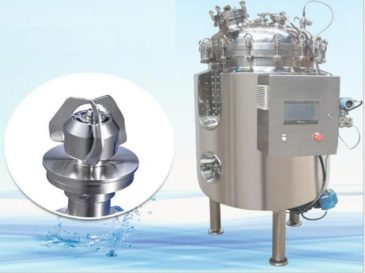
The bottom head of the inner tank has a concave-convex shape, and we adopt an offset-wall axial flow stirring design to enhance mixing uniformity. At the top of the tank, we install multiple functional components, including a water inlet, return port, disinfection port, cleaning ball, manhole filling port, and a breathing port with a 0.22μm air breather. Each component is designed to meet specific functional needs, ensuring the tank operates efficiently.
3.5 Bottom Configuration and Control System
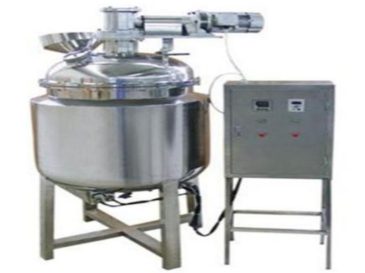
At the bottom of the tank, we set up several key components: a condensate outlet, discharge port, sewage outlet, sampling port, temperature probe, and liquid level sensor. We also equip the tank with a control cabinet for easy operation, and the cabinet features instruments that display the liquid medicine temperature and liquid level. It also provides upper and lower limit alarm functions to ensure safe operation during the production process.
3.6 Optional Configurations
According to user needs, we can equip the dilution tank with other components, such as a nitrogen filling device and a pH meter. These optional configurations help meet the specific process requirements of different users.
4. Advantages and Disadvantages of Special Structure
Some liquid mixing tanks adopt a special structure that combines upper and lower elliptical heads with a honeycomb jacket, and the reducer adopts a horizontal worm gear design. This special structure has multiple advantages: first, it has a small interlayer space and can achieve forced circulation; second, it has the advantages of large heating area, high efficiency, and strong pressure resistance. Compared with ordinary interlayers and coils, it can significantly save energy and time. In addition, it has an exquisite appearance that meets aesthetic needs.
However, this special structure also has some disadvantages. Specifically, it has many welding points, complex processes, and high technical content, which increase the difficulty of manufacturing. In addition, compared with vertical reducers, the horizontal worm gear reducer can reduce the height of the storage tank by about 250-330 millimeters, and reducing the height can save valuable installation space in the factory.