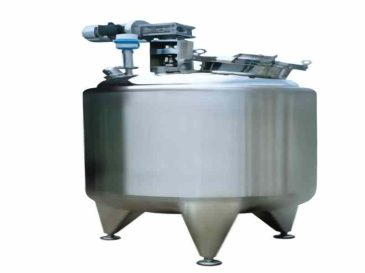
1. Overview and Core Components
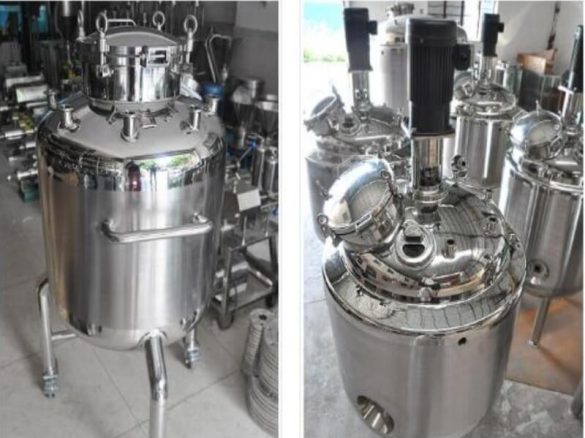
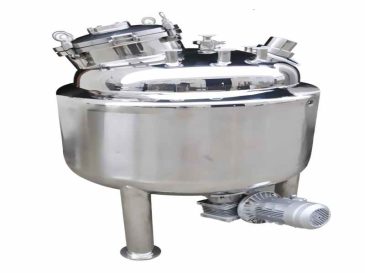
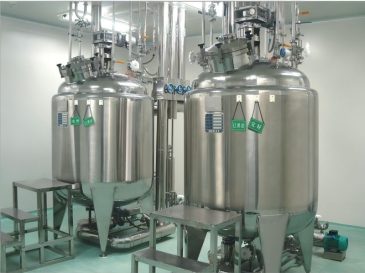
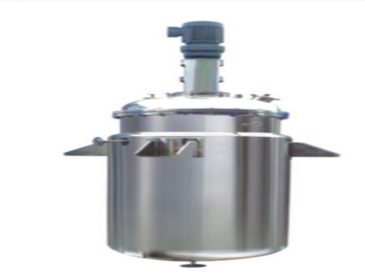
The eye drop preparation system consists of several core components. First and foremost, these include the concentrated solution preparation tank and the dilution solution preparation tank. In addition to these tanks, it also includes process pipelines and valves. Furthermore, it is equipped with a sterile filtration system to ensure product purity. Most importantly, we have equipped it with Clean-in-Place (CIP) and Sterilize-in-Place (SIP) functions, which play a crucial role in maintaining sterile conditions.
2. Industry-Specific Requirements
Eye drops are instilled into the extremely sensitive eyes, so the requirements for sterility or sterilization are extremely high. Additionally, the entire production system must strictly comply with GMP standards, which is essential for ensuring product safety and stable quality.
2.1 Sterile Filtration Requirements
The sterile filtration system follows a specific sequential process. First, we use a 1.0 μm filter membrane for primary filtration to remove large impurities. After primary filtration, we use a 0.45 μm filter membrane for secondary filtration. Finally, we use a 0.22 μm filter membrane for final filtration to achieve a sterile effect.
3. Control System Design
We can design two different control modes: manual control and touch screen PLC automatic control. We customize different control systems according to various process requirements to ensure the system can adapt to different production scenarios.
3.1 Functions of the Fully Automatic Control System
3.1.1 Parameter Setting and Real-Time Monitoring
The fully automatic control system supports flexible parameter settings; operators can easily adjust parameters according to changes in production needs. The system can directly read the process parameters of the equipment in real time to ensure accurate and timely monitoring.
3.1.2 Data Management and Access Control
In addition, it can store and simulate data curves for process analysis, enabling operators to analyze process trends easily and efficiently. It also supports data printing for official records, a function that complies with GMP documentation requirements. Furthermore, it has password and permission settings to restrict access, which can effectively prevent unauthorized operations.
4. Distribution and CIP/SIP Functions
If needed, we can equip the system with a distribution function that works closely with the filling machine. Therefore, it can achieve automatic control and seamless switching between processes, and this automation significantly improves production efficiency.
4.1 CIP and SIP Process Design
4.1.1 Compatibility of CIP/SIP with Control Modes
The Clean-in-Place (CIP) and Sterilize-in-Place (SIP) systems we designed support both manual and automatic control modes. The PLC touch screen allows operators to manually control the operation procedures and intervene in case of unexpected problems.
4.1.2 Switching Between Automatic and Manual Operations
After the program starts, the PLC control system will take over the management of CIP or SIP to ensure stable and reliable operation. If the automatic control program malfunctions, the operator can manually reset the program and then perform CIP or SIP manually to avoid production delays.
5. CIP and SIP System Integration
5.1 Key Components for CIP and SIP Integration
We have equipped the system with auxiliary sterile filters used in conjunction with the storage tanks; these filters are crucial for maintaining a sterile environment during cleaning and sterilization processes. In addition, we have also installed valves, pipelines, and detection devices to achieve full integration, and all these components together form a complete CIP and SIP system.
5.2 Sectional Cleaning and Disinfection
5.2.1 Design of Sectional Operation Process
We have specially designed separate operation procedures for sectional Clean-in-Place (CIP) and sectional Sterilize-in-Place (SIP), and these procedures ensure targeted and effective cleaning and sterilization.
5.2.2 Examples of Sectional Cleaning and Disinfection
5.2.2.1 First Stage of Cleaning and Disinfection Section
For example, we can clean and disinfect specific parts of the system separately. One of the key parts is from the concentrated solution preparation tank to the dilution solution preparation tank, which includes sterile filters, pipelines, and valves; we can clean and disinfect these components independently to ensure thorough cleaning.
5.2.2.2 Second Section of Cleaning and Disinfection
Another important part is from the dilution preparation tank to the buffer tank or filling machine; we can also clean and disinfect this part separately to ensure sterility.