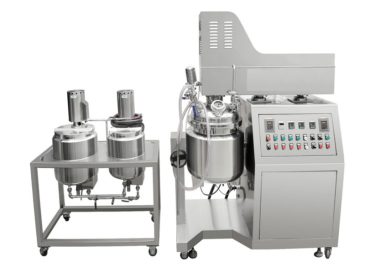
1. Overview and Core Functions
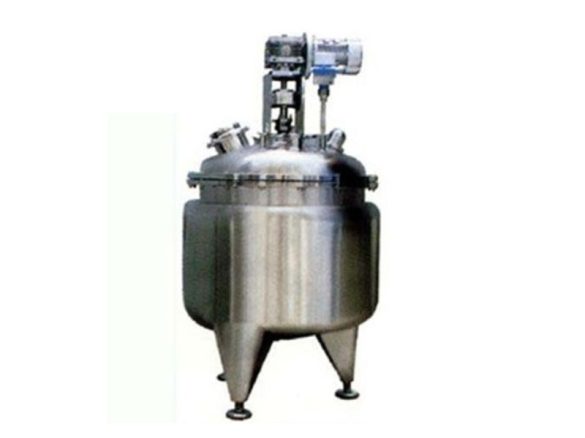
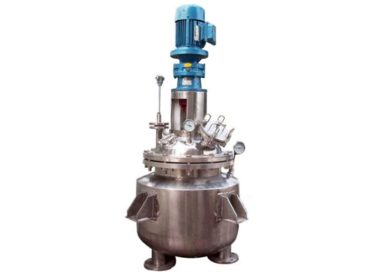
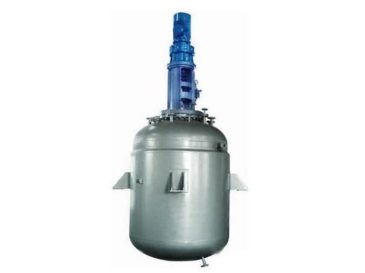
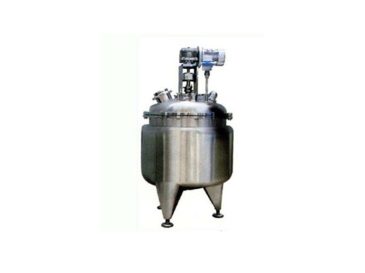
The Maillard reaction kettle produces natural meat flavor products through thermal reactions under various reaction mechanisms.
Specifically, it is dedicated production equipment for meat flavor substances.
Additionally, it can carry out other types of chemical reactions and even serve as a small tank.
It is dedicated production equipment for meat flavor substances.
Additionally, it can carry out other types of chemical reactions and serve as a small tank.
2. Basic Structure and Design Key Points
The Maillard reaction kettle mainly consists of multiple key components.
First of all, these components include a kettle body (cylinder), a kettle cover (head), and a jacket or coil.
Furthermore, it also includes an upper mechanical agitator, a transmission device (motor reducer), and an axial seal device.
Besides these, other key parts are supports (platforms, legs) and insulation medium.
Next, below are its detailed design points and structural characteristics:
These components include a kettle body (cylinder), a kettle cover (head), and a jacket or coil.
It also includes an upper mechanical agitator, a transmission device (motor reducer), and an axial seal device.
Other key parts are supports (platforms, legs) and insulation medium.
Below are its detailed design points and structural characteristics:
2.1 Kettle Body
We usually use SUS304 or SUS316 stainless steel for the inner tank body.
For the jacket, we adopt Q235-B or SUS304, while the outer insulation shell also uses SUS304.
To ensure smoothness and cleanliness, we polish the inner surface of the steel tank to a mirror finish.
As for the outer surface, we treat it with mirror polishing, 2B cross-ribbed plate, or other appropriate methods.
Since heating methods vary, we select the jacket form accordingly.
Common jacket forms include full jacket, semi-tube jacket, and detachable jacket.
We adopt Q235-B or SUS304 for the jacket and SUS304 for the outer insulation shell.
We polish the inner surface of the steel tank to a mirror finish.
We treat the outer surface with mirror polishing, 2B cross-ribbed plate, or other methods.
We select the jacket form according to different heating methods.
Common jacket forms include full jacket, semi-tube jacket, and detachable jacket.
2.2 Kettle Cover
We use two hinged movable covers for the kettle cover.
This structure is specifically designed to facilitate cleaning operations.
Similarly, we polish the inner surface of the stainless steel cover to a mirror finish.
For the outer surface of the cover, we use mechanical polishing to ensure smoothness.
This structure facilitates cleaning operations.
We polish the inner surface of the stainless steel cover to a mirror finish.
We use mechanical polishing for the outer surface of the cover.
2.3 Kettle Bottom Structure
We press the kettle bottom into an R angle through spinning.
After welding and polishing with the inner tank body, there are no dead angles left.
To ensure complete material discharge, we incline the bottom in a certain direction toward the discharge port.
As a result, this design helps discharge materials completely without any residue.
After welding and polishing with the inner tank body, there are no dead angles.
We incline the bottom in a certain direction toward the discharge port.
This design helps discharge materials completely without residue.
2.4 Agitator
The agitator adopts top center or eccentric stirring, depending on process needs.
We connect the output shaft of the reducer with the agitator shaft through a detachable coupling.
Thanks to this coupling design, it facilitates disassembly and cleaning of the agitator.
According to specific process requirements, we can adjust the stirring speed within a certain range.
Common agitator forms include frame type, anchor type, blade type, and turbine type.
We connect the output shaft of the reducer with the agitator shaft through a detachable coupling.
This coupling design facilitates disassembly and cleaning.
We can adjust the stirring speed within a certain range according to process requirements.
Common agitator forms include frame type, anchor type, blade type, and turbine type.
3. Standard Configuration
The Maillard reaction kettle is equipped with a complete set of configurations.
Among these configurations, it includes a control box with multiple functions.
Specifically, the control box contains a thermometer, level meter, pressure display, switches, and indicator lights.
In addition to the control box, other configurations include a manhole, feed and discharge ports, and cold and hot medium inlets and outlets.
It also has a spare port, cleaning port, thermometer port, and pressure gauge port for daily operation.
Additionally, a vacuum port is part of the standard configuration to meet special process needs.
It includes a control box with multiple functions.
The control box contains a thermometer, level meter, pressure display, switches, and indicator lights.
Other configurations include a manhole, feed and discharge ports, and cold and hot medium inlets and outlets.
It also has a spare port, cleaning port, thermometer port, and pressure gauge port.
Additionally, a vacuum port is part of the standard configuration.
4. Working Principle and Operation Process
The Maillard reaction kettle uses proteins, fats, amino acids, peptides, sugars, and other substances as raw materials.
It conducts thermal reactions at high temperatures to generate substances with a strong cooked meat aroma.
During operation, operators first add reaction materials into the kettle.
Then, they heat the materials to the required temperature through the jacket or coil.
After reaching the target temperature, they turn on the stirring device to promote uniform reaction of the materials.
Finally, after the reaction is completed, operators discharge the product through the discharge port.
It conducts thermal reactions at high temperatures to generate substances with a strong cooked meat aroma.
During operation, operators add reaction materials into the kettle.
They heat the materials to the required temperature through the jacket or coil.
Then, they turn on the stirring device to promote uniform reaction of the materials.
After the reaction is completed, operators discharge the product through the discharge port.
5. Maintenance and Overhaul Requirements
To ensure normal operation and prolong the service life of the Maillard reaction kettle, we need regular maintenance and overhaul.
First, maintenance items include cleaning the kettle body and jacket to remove residues.
They also include checking the wear of the stirring device and sealing parts, which are critical for operation.
In addition, we need to check whether the wiring and components of the electrical control box are loose or damaged to avoid malfunctions.
Meanwhile, we should pay attention to regularly replacing lubricating oil and cleaning the condenser to maintain stable performance.
Maintenance items include cleaning the kettle body and jacket.
They also include checking the wear of the stirring device and sealing parts.
In addition, we need to check whether the wiring and components of the electrical control box are loose or damaged.
Meanwhile, we should pay attention to regularly replacing lubricating oil and cleaning the condenser.