1. Overview and Applications
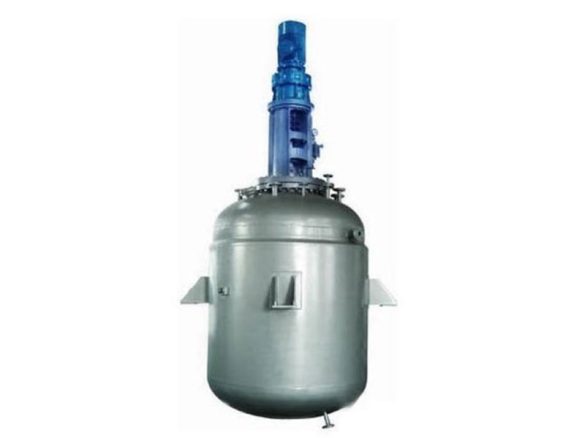
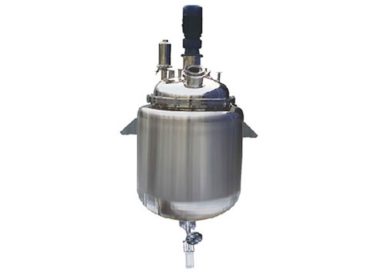
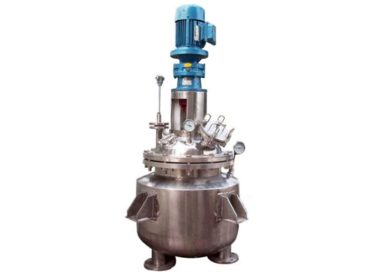
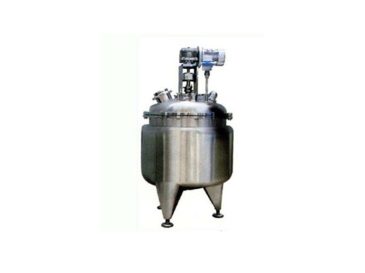
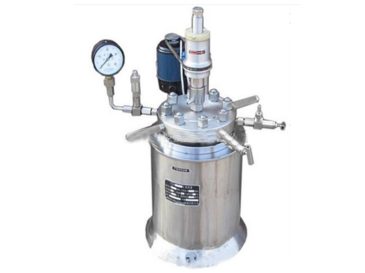
The resin reactor is a key equipment for resin and related products. We use it to produce unsaturated polyester resin, rosin resin, and epoxy resin.
It also manufactures phenolic resin, alkyd resin, paint, and adhesives. We can standardize and humanize its structure and configuration.
This customization depends on production process requirements. During the reaction, it supports multiple control modes.
These include feed control, discharge control, and stirring control. Both manual and automatic controls are available.
2. Main Components
The resin reactor consists of several core parts. These include a reactor body (cylinder) and a reactor cover (head).
It also has a jacket or coil and an upper mechanical agitator. Additionally, it includes a transmission device (motor reducer).
An axial seal device is also part of its structure. It also has support (platform support legs) and insulation medium.
3. Classification by Reaction Temperature
We classify resin reactors by reaction temperature. There are high-temperature and normal-temperature types.
High-temperature resin reactors work between 150℃ and 300℃. Normal-temperature ones operate between 60℃ and 150℃.
4. Reactor Body Ports and Connection Forms
The reactor body is equipped with various functional ports. These include manholes, which can also serve as solid feed ports.
It also has feed ports, discharge ports, sight glasses, and spotlights. Breathing ports, thermometers, and temperature sensors are included too.
Cold and hot medium inlets and outlets are also present. We design and manufacture ports based on the production process.
Port connection forms have three options. These are quick-release flange type, flange type, and threaded type.
We select the connection form according to process requirements.
5. Complete Resin Equipment and Material Selection
The complete resin equipment includes multiple components. These are a reactor, vertical fractionating column, and horizontal condenser.
It also has a water tank, oil overflow tank, and pipeline (for dilute kettle). All parts touching materials use stainless steel.
We can install a stainless steel coil inside the jacket. This coil can be either inner or outer stainless steel.
6. Reactor Body Material and Surface Treatment
The inner tank body uses SUS304, SUS316L, or Q235-B material. The jacket adopts Q235-B or SUS304.
The outer insulation shell uses SUS304 or Q235B. We polish the inner surface of the stainless steel tank to a mirror finish.
The fine polishing ensures Ra≤0.6μm. The outer surface uses a mirror surface or 2B cross-grain plate.
7. Jacket Form and Insulation Material
We select jacket forms based on heating methods. Common types include full jacket, half-tube jacket, and detachable jacket.
We use specific insulation materials to maintain temperature. These materials are pearl cotton, rock wool, or polyurethane casting foam.
They isolate the reactor from the outside temperature. This achieves effective heat insulation and heat preservation.
8. Outer Shell Surface Treatment
The outer shell has multiple surface treatment options. These include mirror polishing and 2B unpolished treatment.
We also offer 2B sanding surface matte treatment. Spraying treatment is another available option.
9. Reactor Cover Design
The cover adopts a two-door hinged design. It has an inclined bottom or conical bottom (ellipsoidal, butterfly head) structure.
This design makes cleaning convenient. We can also choose upper and lower conical head structures.
Another option is upper and lower ellipsoidal (or butterfly) head structures. The inner stainless steel surface is mirror-polished (Ra≤0.6μm).
The outer surface undergoes mechanical polishing to Ra≤0.8μm.
10. Bottom Structure
We process the reactor bottom into an R corner by spinning. It is welded and polished with the inner tank body, leaving no dead corners.
It inclines at 5° towards the discharge port. This design facilitates complete material emptying without residue.
11. Agitator Details
The top is equipped with a (biased) central agitator. The reducer’s output shaft connects to the agitator shaft via a detachable coupling.
This coupling allows easy disassembly and cleaning. The stirring speed ranges from 15 to 120r/min.
The speed can be fixed or custom-made. We select agitator blade forms based on process requirements.
Options include paddle, anchor, blade, and turbine types. We can also design custom blades for special customer needs.
12. Standard Configuration
The resin reactor has a complete standard configuration. It includes an electrical control box with multiple functions.
The control box has a thermometer, level meter, and pressure display. It also has switches, indicator lights, and a spotlight switch.
Other configurations include a manhole and feed/discharge ports. Cold and hot medium inlets and outlets are also present.
It also has a spare port, cleaning port, and thermometer port. A pressure gauge and vacuum port are included too.
13. Processing Features
All process openings and inner tank welding parts have fillet transitions. These transitions are smooth and easy to clean.
They leave no dead corners during use. Additionally, the overall appearance is aesthetically pleasing.