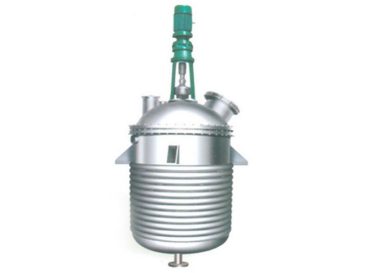
1. Overview and Basic Classification
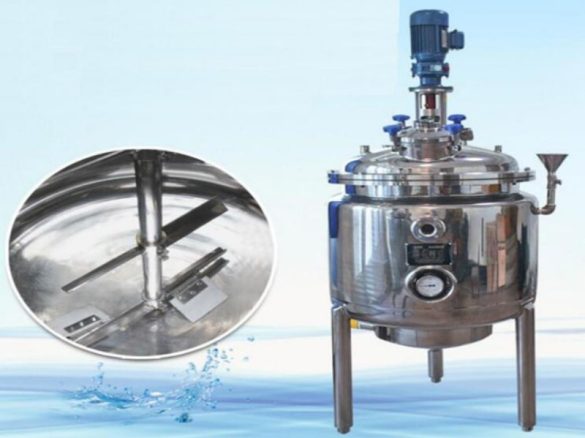
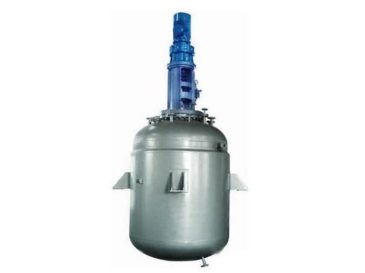
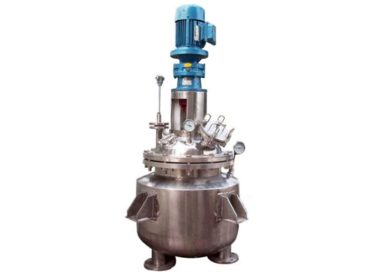
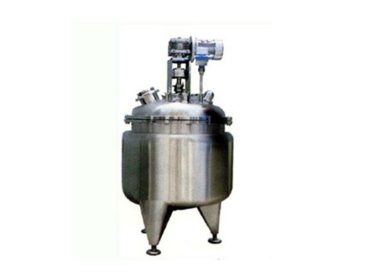
The heat-conducting oil heating reactor is a common electric-heating reactor.
It uses heat-conducting oil as the heat transfer medium for heating.
We have two main types of this reactor.
1.1 Standard Jacketed Electric-Heating Reactor
This type uses electric heating tubes to heat the oil in the jacket.
People often call it an electric-heating reactor.
Most electric-heating reactors fall into this category.
It is mainly used for heating, not cooling.
The jacketed oil stays inside for a long time to keep constant temperature.
1.2 Circulating Heat-Exchange Type
This type uses heat-conducting oil as a circulating heat-exchange medium.
It can realize cyclic heating or cooling.
You need to equip it with hot and cold oil tanks.
Without these tanks, heat waste will be serious.
It suits reactors that need both heating and cooling.
We use it when there is no steam source but both functions are needed.
1.3 Comparison with Water-Heating Reactor
A water-heating reactor is similar but for low-temperature needs.
It is suitable when heating temperature is below 60℃.
We use water as the heating medium in this case.
Below, we focus on the more common electric-heating reactor.
2. Core Features
The reactor uses heat-conducting oil as the heating medium.
It has high heating temperature, fast speed and uniform heating.
It can reach up to 320℃, higher than ordinary steam-heated reactors.
3. Safety and Insulation Design
We add an insulation layer outside the jacket for safety.
It has good insulation effect and low heat loss.
We cover the surface with stainless steel.
This design ensures safety, beauty and hygiene.
4. Heating Power and Heating Tubes
We calculate heating power based on temperature difference and heating time.
Common power ranges from 1kw to 108kw.
We design the number of heating tubes according to tank size.
5. Stirring System
Most reactors have a stirring system for uniform heat and faster heating.
We configure it based on material properties and reaction characteristics.
Options include impeller, anchor-type, anchor-frame combined, and frame-type scraping-wall stirring.
Different materials need different stirring forms and speeds.
You must specify material properties when placing an order.
These properties include viscosity, concentration, particle size and corrosiveness.
6. Structural Form and Customization
We usually adopt upper and lower elliptical heads for the structure.
We also provide non-standard customization.
Custom options include upper flat mouth, side-opening cover, conical head, conical bottom or inclined bottom.
We design the height-to-diameter ratio according to reaction characteristics.
It can also be customized based on material properties and reaction conditions.