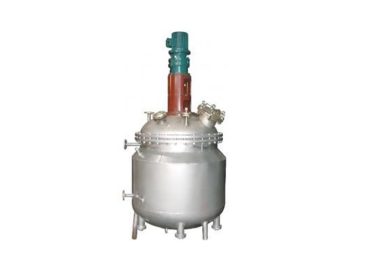
1. Overview and Definition
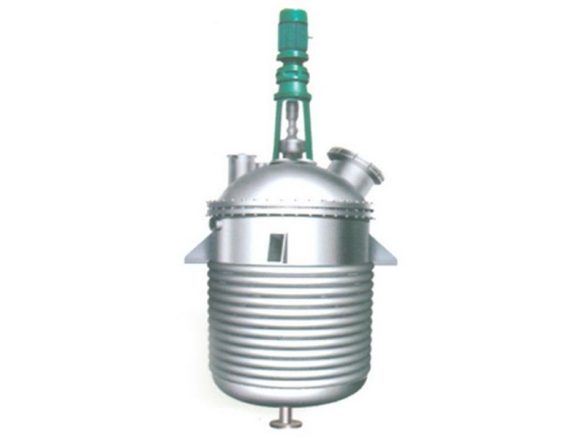
An external coil reactor has a specific structure. We weld a half-tube coil to the outer wall of the cylinder inside the tank.
This coil circulates heat exchange medium and other substances. It has many excellent characteristics.
Notably, it heats quickly and resists high temperatures. Additionally, it has corrosion resistance and hygiene.
Furthermore, it causes no environmental pollution. We do not need an automatic boiler for temperature control.
Moreover, it is also very convenient to use in daily operations.
2. Application Fields and Uses
We widely use it in various industries. These include petroleum, chemical, rubber, pesticide, dye, medicine, and food.
It completes many key processes. These processes include vulcanization, nitration, hydrogenation, and hydrocarbonation.
In addition, it also handles polymerization and condensation processes. Its use requires full mixing of reaction substances.
For some physical changes, we need a stirring device. These changes include heating, cooling, and extraction.
Similarly, gas absorption also needs a stirring device for good effects. Besides, we can design and manufacture it according to customer needs.
3. Structural Configuration
The reactor body has a discharge port at its lower part. It also contains a stirrer inside.
The reactor has multiple functional holes. These include holes for feeding and stirring.
Additionally, it also has holes for observation, temperature measurement, and pressure measurement.
There are also holes for steam extraction, fractionation, and safety discharge.
The heating coil has connecting pipe holes. These are for oil (gas) inlet and outlet, temperature measurement, and exhaust.
We can connect it to steam, heat oil, or water. This connection thus achieves heating or cooling functions.
4. Design and Specifications
We determine design parameters based on specific needs. These include material production requirements and user demands.
Key parameters include pressure, temperature, and material. We also consider stirring device type and speed.
Furthermore, sealing structure and heating method are also important. The reactor has diverse varieties and specifications.
Specifically, its volume ranges from 0.1 to 10 cubic meters.
5. Advantages of Spiral Half-Tube Design
The spiral half-tube design has many advantages. First of all, it reduces the thickness of the reactor wall.
It also increases the reactor’s pressure-bearing capacity. The reactor body wall is 37.5% thinner than jacket-designed walls.
Similarly, the lower head is 50% thinner than jacket-designed ones. Besides, it helps improve heat transfer efficiency.
It increases the heat supply coefficient. At the same time, it reduces thermal resistance.
It is also suitable for cooling processes. Additionally, it increases the medium flow rate in the coil.
High-speed flowing medium prevents inner jacket scaling. Moreover, it also saves energy consumption effectively.
It reduces the reactor’s overall diameter. This, in turn, helps with workshop layout.
Finally, it saves steel materials.