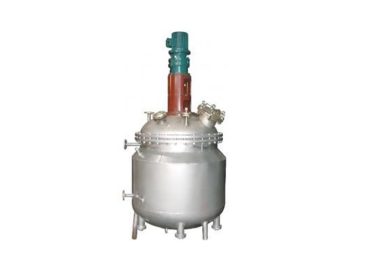
1. Overview and Inner Lining Processing
1.1 Reactor Overview
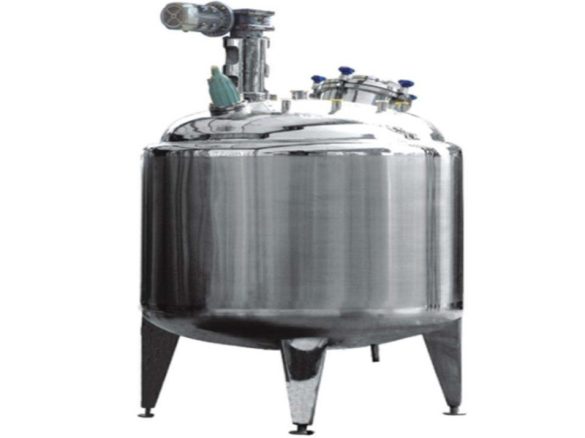
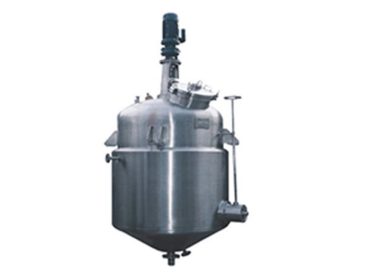
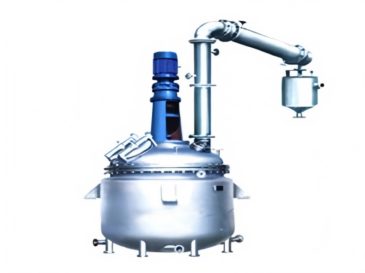
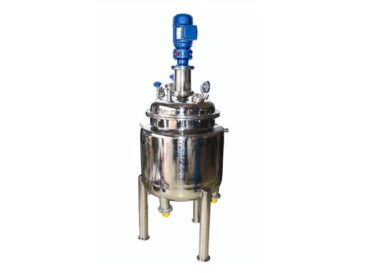
A four-fluorine lined reactor is a specialized corrosion-resistant reactor designed for scenarios requiring strong chemical resistance.
1.2 Inner Lining Processing
To achieve strong corrosion resistance, we treat its inner surface carefully. We coat the inner surface with four-fluorine through spraying or rolling.
Additionally, we can determine the coating thickness based on specific operating conditions to ensure optimal performance.
A four-fluorine lined reactor is a specialized corrosion-resistant reactor. To achieve strong corrosion resistance, we treat its inner surface carefully.
We coat the inner surface with four-fluorine through spraying or rolling, and we can determine the coating thickness based on specific operating conditions.
We coat the inner surface with four-fluorine through spraying or rolling. We can determine the coating thickness based on specific operating conditions.
2. Application Requirements and Core Advantages
2.1 Production Application Requirements
In production, we often add various chemicals or additives, and these additives have complex characteristics.
Consequently, this complexity imposes specific requirements on reactor design and manufacturing. For example, we design acid-resistant reactors with an inner four-fluorine lining.
This lining gives the reactor acid, alkali, and high-temperature resistance. Moreover, we can custom-process the reactor according to user needs.
2.2 Core Advantages
The four-fluorine lined reactor has many key advantages: first, it offers strong corrosion resistance, durability, and high strength.
Second, it is more advanced, purer, and economical. Additionally, we can customize it based on customer requirements with efficient manufacturing.
In production, we often add various chemicals or additives, and these additives have complex characteristics.
Consequently, this complexity imposes specific requirements on reactor design and manufacturing. For example, we design acid-resistant reactors with an inner four-fluorine lining.
This lining gives the reactor acid, alkali, and high-temperature resistance. Moreover, we can custom-process the reactor according to user needs.
The four-fluorine lined reactor has many key advantages: first, it offers strong corrosion resistance, durability, and high strength.
Second, it is more advanced, purer, and economical. Additionally, we can customize it based on customer requirements with efficient manufacturing.
Consequently, this complexity imposes specific requirements on reactor design and manufacturing. For example, we design acid-resistant reactors with an inner four-fluorine lining.
This lining gives the reactor acid, alkali, and high-temperature resistance. Moreover, we can custom-process the reactor according to user needs.
The four-fluorine lined reactor has many key advantages: first, it offers strong corrosion resistance, durability, and high strength.
Second, it is more advanced, purer, and economical. Additionally, we can customize it based on customer requirements with efficient manufacturing.
3. Applicable Scenarios and Lining Standards
3.1 Applicable Scenarios
It suits a wide range of application scenarios, including sulfuric acid, hydrochloric acid, water treatment, acid pipelines, and desalinated water.
Furthermore, it works for liquor pipelines, chlorine dioxide, high-temperature conditions, and full vacuum service. Even under the highest rated temperature and full vacuum conditions, it maintains stable performance.
3.2 Lining Standards
We use PTFE, PCTFE, PVDF, PE, PP, PFA, PO, PE, and PP linings for these reactors, and these linings meet or even exceed all ASTM standards.
It suits a wide range of application scenarios, including sulfuric acid, hydrochloric acid, water treatment, acid pipelines, and desalinated water.
Furthermore, it works for liquor pipelines, chlorine dioxide, high-temperature conditions, and full vacuum service. Even under the highest rated temperature and full vacuum conditions, it maintains stable performance.
We use PTFE, PCTFE, PVDF, PE, PP, PFA, PO, PE, and PP linings for these reactors, and these linings meet or even exceed all ASTM standards.
Furthermore, it works for liquor pipelines, chlorine dioxide, high-temperature conditions, and full vacuum service. Even under the highest rated temperature and full vacuum conditions, it maintains stable performance.
We use PTFE, PCTFE, PVDF, PE, PP, PFA, PO, PE, and PP linings for these reactors, and these linings meet or even exceed all ASTM standards.
4. Key Performance Indicators
4.1 Pressure and Temperature Resistance
The reactor can withstand strong acids and strong bases, as well as a negative pressure of 0.1 MPa and a positive pressure of 72 kg.
Furthermore, it tolerates extreme temperatures ranging from -193℃ to 260℃. Besides, it has anti-adhesion, wear resistance, and anti-static properties.
4.2 Corrosion Resistance
For instance, it can withstand highly corrosive chemicals, such as 72% hydrofluoric acid, hydrochloric acid, nitric acid, phosphoric acid, ammonia water, aqua regia, hydrogen peroxide, and bromides.
The reactor can withstand strong acids and strong bases, as well as a negative pressure of 0.1 MPa and a positive pressure of 72 kg.
Furthermore, it tolerates extreme temperatures ranging from -193℃ to 260℃. Besides, it has anti-adhesion, wear resistance, and anti-static properties.
For instance, it can withstand highly corrosive chemicals, such as 72% hydrofluoric acid, hydrochloric acid, nitric acid, phosphoric acid, ammonia water, aqua regia, hydrogen peroxide, and bromides.
Furthermore, it tolerates extreme temperatures ranging from -193℃ to 260℃. Besides, it has anti-adhesion, wear resistance, and anti-static properties.
For instance, it can withstand highly corrosive chemicals, such as 72% hydrofluoric acid, hydrochloric acid, nitric acid, phosphoric acid, ammonia water, aqua regia, hydrogen peroxide, and bromides.
5. Lining Materials and Coating Methods
5.1 Lining Materials
We use various fluorine-resistant materials for the lining, including PFA/FEP/ETFE/ECTFE/PVDF (with glass fiber). In addition, imported and domestic PTFE board four-fluorine lining is also available for selection.
5.2 Coating Methods
Roll coating is adopted to apply F40, with a thickness of 2-3mm. For PTFE, PFA, and F40, we use spray coating to ensure uniform coverage and stable performance.
We use various fluorine-resistant materials for the lining, including PFA/FEP/ETFE/ECTFE/PVDF (with glass fiber).
In addition, imported and domestic PTFE board four-fluorine lining is also available for selection. Roll coating is adopted to apply F40, with a thickness of 2-3mm.
For PTFE, PFA, and F40, we use spray coating to ensure uniform coverage and stable performance.
In addition, imported and domestic PTFE board four-fluorine lining is also available for selection. Roll coating is adopted to apply F40, with a thickness of 2-3mm.
For PTFE, PFA, and F40, we use spray coating to ensure uniform coverage and stable performance.
6. Temperature Resistance and Membrane Thickness
The reactor has three temperature resistance levels, namely 150℃, 200℃, and above 260℃.
Even if the chemical medium remains the same, the temperature resistance varies. For optimal corrosion resistance, we generally line the reactor to a thickness of 1mm-4mm.
The chemical medium may remain the same, but the temperature resistance varies. For optimal corrosion resistance, we generally line the reactor to a thickness of 1mm-4mm.
7.1 Specific Types of Fluorine Lining Materials
We divide PTFE, FEP, PFA, and ETFE into several basic types, and their key characteristics are as follows:
PTFE (polytetrafluoroethylene): Its non-stick coating can operate continuously at 260℃, with a maximum service temperature of 290-300℃.
Additionally, it boasts an extremely low friction coefficient, good wear resistance, and excellent chemical stability.
FEP (fluoroethylene propylene copolymer): During baking, its non-stick coating melts and flows to form a seamless film.
This film delivers excellent chemical stability and non-stick properties, with a maximum service temperature of 200℃.
PTFE (polytetrafluoroethylene): Its non-stick coating can operate continuously at 260℃, with a maximum service temperature of 290-300℃.
Additionally, it boasts an extremely low friction coefficient, good wear resistance, and excellent chemical stability.
FEP (fluoroethylene propylene copolymer): During baking, its non-stick coating melts and flows to form a seamless film.
This film delivers excellent chemical stability and non-stick properties, with a maximum service temperature of 200℃.
7.2 Key Advantages of PFA and ETFE
PFA (perfluoroalkylation): Similar to FEP, its non-stick coating melts and flows during baking to form a seamless film.
What distinguishes PFA is its higher continuous service temperature of 260℃ and stronger toughness.
As a result, it is particularly suitable for high-temperature applications requiring anti-sticking and chemical resistance.
ETFE: This material is an ethylene and tetrafluoroethylene copolymer, with the resin being a tough fluoropolymer.
It forms a highly durable coating with excellent chemical resistance and can operate continuously at 150℃.
What distinguishes PFA is its higher continuous service temperature of 260℃ and stronger toughness.
As a result, it is particularly suitable for high-temperature applications requiring anti-sticking and chemical resistance.
ETFE: This material is an ethylene and tetrafluoroethylene copolymer, with the resin being a tough fluoropolymer.
It forms a highly durable coating with excellent chemical resistance and can operate continuously at 150℃.
8.1 Non-stickiness and Moisture Resistance
After applying PTFE coating, the reactor gains multiple excellent characteristics, which we detail below:
Non-stickiness: No substances adhere to the PTFE coating, and even a very thin film shows good non-adhesion performance.
It repels both water and oil, so it rarely adheres to solutions during production operations; a small amount of dirt can be easily wiped off.
This not only shortens shutdown time but also saves labor and improves overall work efficiency.
Moisture resistance: Its surface does not stick to water or oil, thus rarely adhering to solutions during production.
Even a small amount of dirt can be easily wiped off, which reduces shutdown time and further improves work efficiency.
Non-stickiness: No substances adhere to the PTFE coating, and even a very thin film shows good non-adhesion performance.
It repels both water and oil, so it rarely adheres to solutions during production operations; a small amount of dirt can be easily wiped off.
This not only shortens shutdown time but also saves labor and improves overall work efficiency.
Moisture resistance: Its surface does not stick to water or oil, thus rarely adhering to solutions during production.
Even a small amount of dirt can be easily wiped off, which reduces shutdown time and further improves work efficiency.
8.2 Heat Resistance and Slipperiness
Heat resistance: PTFE coating excels in both heat and low-temperature resistance, capable of withstanding up to 300℃ for a short time.
It can operate continuously between 240℃ and 260℃ with good thermal stability, working at freezing temperatures without brittleness and not melting at high temperatures.
Slipperiness: PTFE coating has a low friction coefficient, which changes during load sliding but only ranges from 0.05 to 0.15.
It can operate continuously between 240℃ and 260℃ with good thermal stability, working at freezing temperatures without brittleness and not melting at high temperatures.
Slipperiness: PTFE coating has a low friction coefficient, which changes during load sliding but only ranges from 0.05 to 0.15.
8.3 Wear Resistance and Corrosion Resistance
Wear resistance: Under high loads, it maintains excellent wear resistance; under certain loads, it combines both wear resistance and non-adhesion.
Corrosion resistance: PTFE is hardly corroded by chemicals, enabling it to protect the reactor from any kind of chemical corrosion.
Corrosion resistance: PTFE is hardly corroded by chemicals, enabling it to protect the reactor from any kind of chemical corrosion.