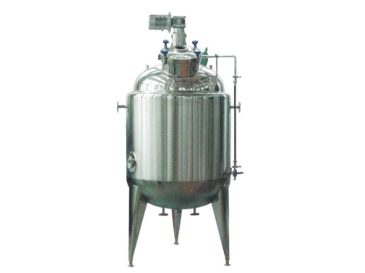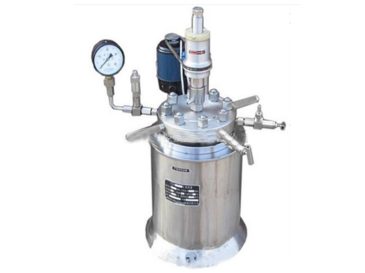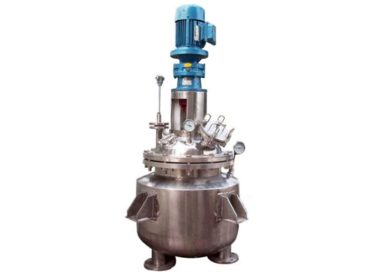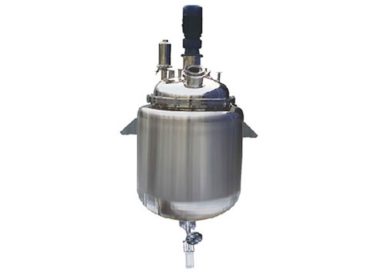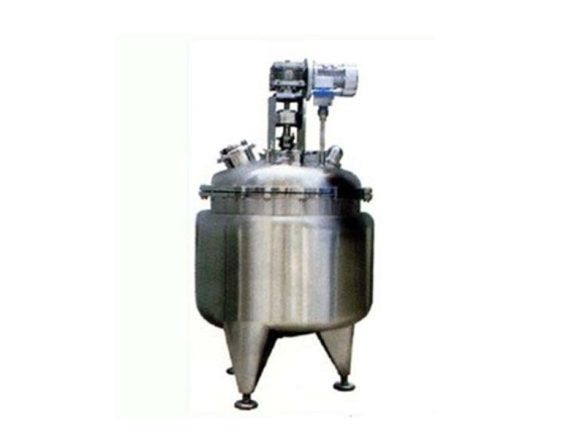
It is widely used in industries including resin, food, building materials, beverages, chemical engineering, pharmaceuticals, biotechnology, coatings, fruit wine, pigments, condiments, fine chemicals, oils and fats, as well as scientific research.
We use high-temperature reactors to carry out reactions of high-temperature materials.
Furthermore, these reactors enjoy wide applications in numerous industries and scientific research fields.
Specifically, they serve industries such as resins, food, building materials, beverages, and chemicals.
In addition, they perform well in pharmaceuticals, biotechnology, coatings, fruit wine, pigments, and other related fields.
Moreover, we also apply them to the production of condiments, fine chemicals, and edible oils.
High-temperature reactors act as pressure vessels, so they must withstand high temperatures and high pressures.
We design and manufacture these pressure vessels according to specific standards.
These standards include GB 150-2011 Pressure Vessels and Container Specifications.
A high-temperature reactor includes several key components.
Among them are the reactor body, reactor head, and jacket or coil.
We use jackets or coils to realize heating and cooling circulation.
Besides, other important parts include the stirring drive device, axial sealing device, support legs, and medium ports.
High-temperature reactors come with various process connections and ports.
For instance, these ports include manholes, feed inlets, discharge outlets, and spare ports.
We also equip the reactors with connections for thermometers, pressure gauges, and temperature sensors.
Additionally, the reactors provide connections for safety valves and steam inlet and outlet ports.
We design and manufacture all these connections in strict accordance with relevant standards.
We adopt SUS304 or SUS316L for the inner tank of the high-temperature reactor.
We use SUS304 as well for the outer insulation shell.
We polish the inner surface of the stainless steel tank to a mirror finish.
Meanwhile, we apply a brushed finish to the outer surface.
We usually classify high-temperature reactors based on their jacket heating methods.
The main types cover electric heating tube reactors.
We also provide steam-heated reactors and heat-conducting oil circulation-heated reactors.
The heat-conducting oil can reach a maximum temperature of 300°C.
We machine the bottom of the high-temperature reactor into an R-corner through spinning.
After we weld and polish the bottom with the inner tank, no dead corners remain.
The stirring device consists of several key parts.
These parts consist of a motor reducer, motor base, and stirring shaft.
It also includes an agitator and a mechanical seal assembly.
High-temperature reactors include a complete set of standard configurations.
One of them is a multi-functional electric control cabinet.
We install a thermometer, level gauge, and pressure display inside the control cabinet.
It also contains switches, indicator lights, and spotlight switches.
Other standard configurations include manholes, feed inlets, and discharge outlets.
Furthermore, the reactors have water inlet and outlet ports for cold and hot media, plus a spare port.
In addition, we set cleaning ports, thermometer ports, and pressure gauge ports on the reactors.
A vacuum connection also forms part of the standard configuration.
We need to clarify key factors when we design and select high-temperature reactors.
These factors involve material properties, operating conditions, and component matching ranges.
You can contact us by phone for more detailed information.
We usually use a conventional Type 204 water-ring mechanical seal if cooling water circulates in the reactor’s mechanical seal.
This water evaporates quickly at high temperatures.
As a result, evaporation causes dry grinding of the mechanical seal and leads to seal damage.
| Item | 100L | 300L | 500L | 1000L | 2000L | 3000L | 5000L | 10000L |
| Bore Diameter (mm) | 500 | 800 | 900 | 1100 | 1400 | 1500 | 1800 | 2100 |
| Heat Exchange Area (m²) | 0.9 | 2 | 2.7 | 4.5 | 7.5 | 10 | 13.5 | 22 |
| Stirring Power (kW) | 0.55 | 0.75 | 1.5 | 3 | 4 | 5.5 | 7.5 | 11 |
| Speed | Constant speed or variable frequency adjustable | |||||||
| Stirring Type | Designed and manufactured based on material properties | |||||||
| Operating Pressure (MPa) | Customized as per process conditions | |||||||
| Operating Temperature (℃) | -100℃ to 500℃ | |||||||
| Jacket Heating/Cooling Media | Steam, thermal oil, far infrared / cooling water, cold oil | |||||||
| Insulation Material | Polyurethane / Rock wool | |||||||
| Nozzle Configuration | Customizable according to customer requirements | |||||||
| Tank Material | Lined with SUS304/316L or other corrosion-resistant stainless steel | |||||||
| Vessel Class | Atmospheric pressure / Class I | |||||||
| Remarks | The above data is for reference only. For details, please contact us. Design and production comply with User Requirement Specification (URS). |