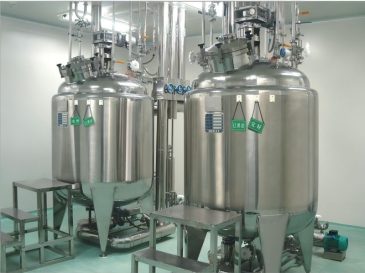
1. Overview and Crystallization Types
1.1 Basic Function of Crystallization Tanks
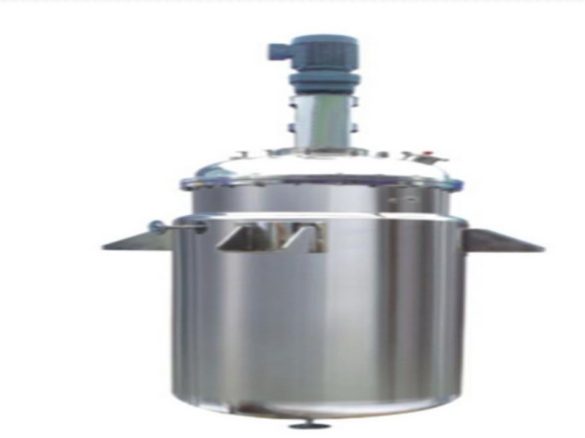
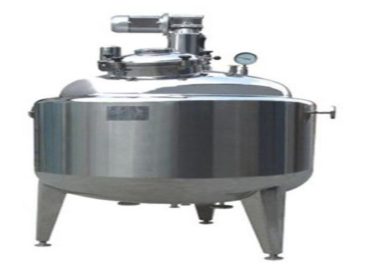
The crystallization tank is mainly used for fractional purification. It achieves this purification by utilizing the concentration difference between solutes.
1.2 Common Crystallization Types
Crystallization is generally divided into two main types. Specifically, these types are evaporation crystallization and cooling crystallization.
1.3 Market Application and Tank Structure
At present, a large part of the market adopts cooling crystallization for production. However, whether it is evaporation crystallization or cooling crystallization, the internal structure of the crystallization tank remains the same.
1.4 Tank Material Selection
The crystallization tank is generally made of stainless steel. This is because stainless steel can effectively withstand low temperatures, which is essential for crystallization processes.
The crystallization tank is mainly used for fractional purification. It achieves this purification by utilizing the concentration difference between solutes.
Crystallization is generally divided into two main types. Specifically, these types are evaporation crystallization and cooling crystallization.
At present, a large part of the market adopts cooling crystallization for production. However, whether it is evaporation crystallization or cooling crystallization, the internal structure of the crystallization tank remains the same.
The crystallization tank is generally made of stainless steel. This is because stainless steel can effectively withstand low temperatures, which is essential for crystallization processes.
2. Working Principle and Key Design Elements
2.1 Working Principle of Crystallization Tanks
A crystallization tank is a specialized crystallization device. After materials are mixed and reacted, it uses chilled water or refrigerant in the interlayer to achieve rapid temperature reduction.
2.2 Core Design Elements
Its key design elements include several important aspects. First, it includes the size of the interlayer area, which directly affects cooling efficiency.
Second, it involves the structure of the agitator, which ensures uniform material mixing during crystallization. Third, it includes the form of the material outlet, which facilitates smooth material discharge.
Additionally, it requires high-precision polishing of the tank interior and demands dead-angle-free internal cleaning to meet strict process conditions.
A crystallization tank is a specialized crystallization device. After materials are mixed and reacted, it uses chilled water or refrigerant in the interlayer to achieve rapid temperature reduction.
Its key design elements include several important aspects. First, it includes the size of the interlayer area, which directly affects cooling efficiency.
Second, it involves the structure of the agitator, which ensures uniform material mixing during crystallization. Third, it includes the form of the material outlet, which facilitates smooth material discharge.
Additionally, it requires high-precision polishing of the tank interior and demands dead-angle-free internal cleaning to meet strict process conditions.
3. Our Equipment Advantages and Specifications
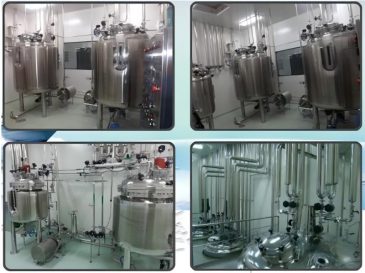
Our company has rich design and manufacturing experience for different process requirements. As a result, the equipment we produce fully complies with GMP validation standards.
Moreover, we can manufacture crystallization tanks with a volume range of 0.3-5 m³, which can meet various production scale needs.
4. Material and Structural Details
4.1 Stainless Steel Material Selection
For stainless steel crystallization tanks, we select the stainless steel material based on different uses. Common options include imported 316L or 304 stainless steel.
4.2 Tank Surface Treatment
We polish the inner wall of the tank using either electrolytic mirror finishing or mechanical polishing. On the other hand, we design the outer wall with a fully welded 304 thermal insulation structure.
We also subject the outer wall to either mirror or matte surface treatment. This treatment meets different aesthetic and practical needs of users.
4.3 Key Accessories and Features
4.3.1 Ventilation and Sterilization Features
We install a 0.2μm hydrophobic ventilation filter on the stainless steel crystallization tank. This filter ensures the tank’s internal environment remains clean.
The tank can withstand high-temperature sterilization, which is crucial for meeting hygiene standards. We also equip it with a sanitary-grade pressure gauge for accurate pressure monitoring.
4.3.2 Connection Ports and Auxiliary Components
We use sanitary quick-opening joints for the external connection ports of the tank. These joints simplify operation and ensure tightness.
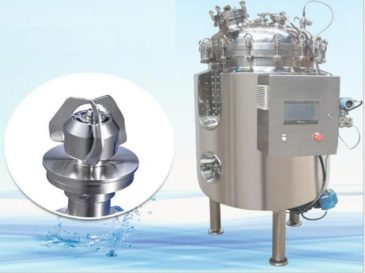
Furthermore, we equip the crystallization tank with a temperature monitoring device, two sight glasses, a cleaning ball, and a nitrogen inlet.
4.3.3 Shaft Seal and Speed Regulation
We adopt a special sanitary-grade mechanical seal for the shaft seal. This seal ensures that materials are not contaminated during the crystallization process.
In addition, we can equip the crystallization tank with a frequency conversion speed regulation device. This device allows a wide adjustment range for the agitator shaft speed, adapting to different material properties.