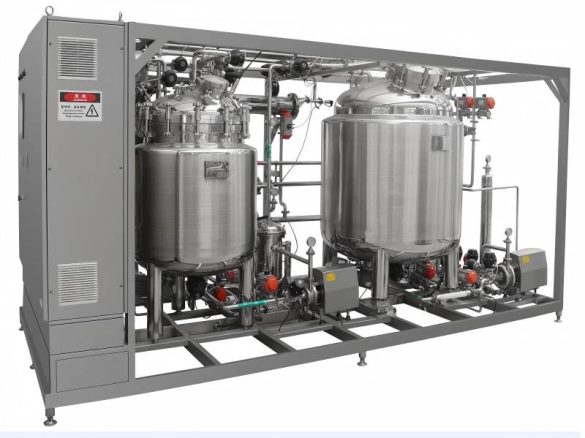
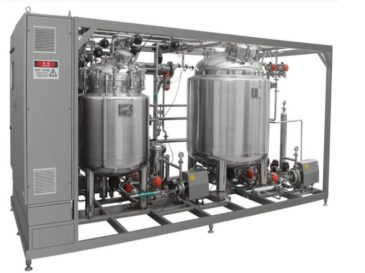
Organisms cannot live without blood, so the research and development of blood products are particularly important. Popularly speaking, a blood product preparation system refers to the equipment and supporting control system we specially design for producing various plasma protein products, including human albumin, placental human albumin, intravenous human immunoglobulin, intramuscular human immunoglobulin and other similar products.
Over time, the blood product solution preparation system has developed into an integrated solution control module. Specifically, the solution tank adopts advanced pharmaceutical preparation technology, while the system pipelines and control devices adopt a hygienic design without dead corners, facilitating cleaning and disinfection. These characteristics not only ensure uniform mixing, high energy efficiency and stable product quality, but also guarantee the uniformity and reliability of the final product.
The core functions of the blood product solution preparation system—including solution preparation, sterile filtration, dynamic buffering, liquid transportation and process control—are crucial for ensuring product sterility and preparing liquids of standard concentration. In addition, its main features include:
1. Solution Tank Design Complying with GMP Standards
We design the storage tanks in accordance with GMP standards to ensure hygiene and cleanliness, no residues, no dead corners for disinfection/cleaning, and no cold spots during the disinfection process, thereby maintaining the overall sterile state of the system. In addition, the concentrated/diluted solution storage tanks produced by our company adopt 360° dead-corner-free cleaning and in-situ disinfection technology, and are made of hygienic grade 304/316L stainless steel. The inner surface polishing precision reaches 0.22μm; the pipeline connection adopts drawn flanges to eliminate dead corners. Furthermore, according to specific requirements, the outer surface can be subjected to electrolytic polishing, mechanical matte treatment or sandblasting treatment.
2. High-Precision Metering and Stirring
We ensure metering accuracy through weighing modules and automatic liquid level/flow control modules, thereby maintaining the consistency of volume/concentration. In addition, the stirring system adopts the sterile uniform mixing design independently developed by us to ensure complete dissolution and efficient solution preparation.
3. Hygienic Pipeline Design
The pipelines have clear flow channels and a hygienic drainable design; for example, the slope of horizontal pipelines is greater than 1% to ensure complete emptying. We install diaphragm valves on inclined horizontal pipelines to prevent residues. The contact surfaces are made of 316L stainless steel and subjected to mechanical or electrolytic polishing. Importantly, the entire system (storage tanks, pipelines, valves, instruments) supports efficient CIP and SIP operations.
4. Automated Process Control
The system provides adjustable stirring speed and automatic liquid metering functions, which we achieve through dual control of liquid level and weight. In addition, the online temperature control and display functions support heating, cooling and heat preservation, ensuring uniform temperature control throughout the process.
5. Welding and Quality Assurance
We adopt a fully automatic orbital welding process and use argon gas with a purity of up to 99.999% for protection to prevent oxidation. In addition, we also conduct endoscopic and radiological inspections on the welds in accordance with the User Requirement Specification (URS) to ensure that they meet all pressure and temperature requirements.
6. Compliance Standards
Our design is based on a number of authoritative standards, including: GB 150-2011 Steel Pressure Vessels, HG 20584/20583/20569 (Chemical Container Standards), EU GMP, SFDA GMP 2010, ISO 14644-1, GB 50457-2008 and GAMP.
7. Validation Support
We assist in RA/DQ/IQ/OQ and provide technical documents as needed. In addition, the Factory Acceptance Test (FAT) includes the following key items: storage tank heating/cooling rate test, heat insulation test and SIP capability test (including heat distribution, BI challenge and pipeline residue inspection).