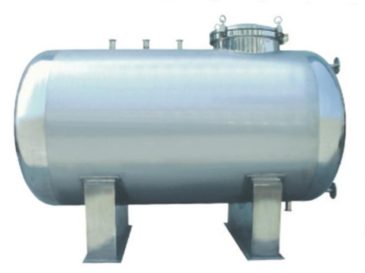
Basic Working Principle
Workers use a weighing module and detection instrument to calculate the storage amount of materials in a weighing and measuring tank.
They obtain the high-low level difference signal of materials from the detection instrument according to production process and technical requirements.
Through signal amplification, they automatically control the execution components (such as pumps, valves, etc.) at the material inlet and outlet to effectively measure and control the materials.
Core Characteristics & Suitable Occasions
Weighing and measuring tanks have the characteristics of simple structure, convenient operation, and the ability to realize automatic control.
They are suitable for occasions where the requirements for material storage and measurement accuracy are not high.
Metering Method & Precision Control
Weighing and measuring tanks adopt the method of gravity metering and feeding.
Workers do not need to calculate the weight of the liquid.
They use a “Toledo” weighing sensor and a weighing terminal to realize the proportional feeding of liquid and other raw materials.
For strict precision inspection, workers control the entire system with Mitsubishi or Siemens PLC, with touch screen display for operation.
The PLC calculates and automatically compensates for the fluctuations of materials during metering.
Workers control the metering accuracy of the system within 0.5%.
Structural Types & Application Scope
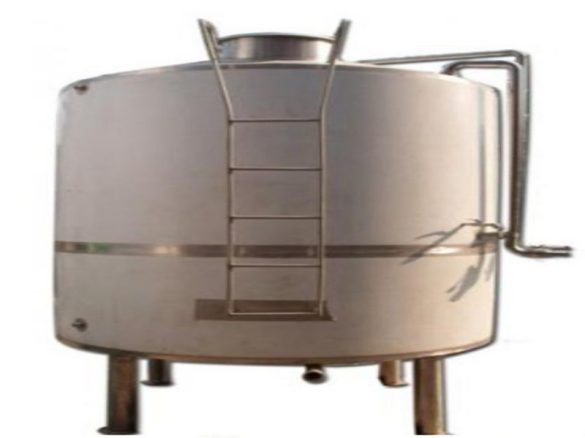
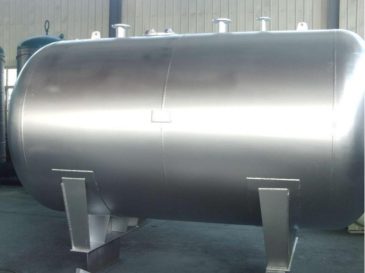
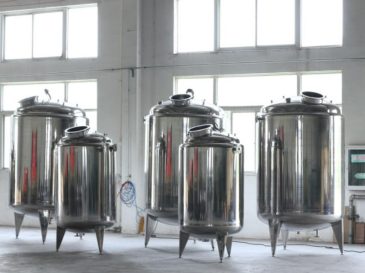
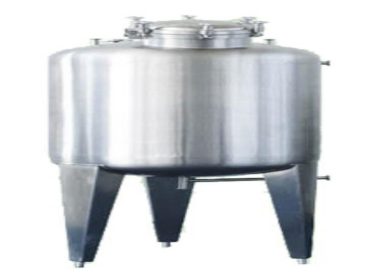
Manufacturers divide the structural types of weighing and measuring tanks into six categories.
These types include: vertical type with upper and lower heads, vertical type with an upper head and a lower conical bottom, vertical type with a flat cover and a lower conical bottom, vertical type with a flat bottom and a flat cover, horizontal type with double heads, and horizontal measuring tank with a flat head.
Manufacturers widely use these products in industries such as chemical engineering, chemistry, petroleum, metallurgy, pharmacy, printing and dyeing, salt making, and fertilizer production.
Main Functions & Common Structure
Workers use weighing and measuring tanks to provide quantitative raw materials for batching.
The most common measuring tank is the vertical type with upper and lower standard elliptical heads.
Workers install a liquid level gauge or a weighing module on the support feet/ears of the tank.
This kind of measuring tank can realize manual, automatic, and manual-automatic switching.
Full-automatic metering is convenient and accurate, preparing sufficient raw materials at a fixed time and quantity.
It has a lack-of-material alarm prompt and automatically closes the valve when the quantity is sufficient.
The measuring tank has a simple structure but powerful functions.
Multi-Functional Type & Material Specifications
A multi-functional weighing and measuring tank not only has a metering function but also has stirring and heat-exchange functions.
It can realize fully automatic processes such as stirring, liquid preparation, and metering.