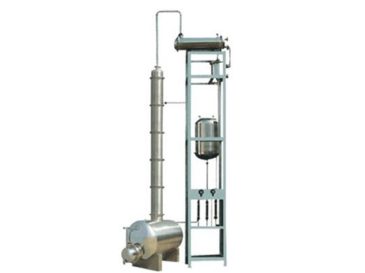
1. Overview and Core Principle
The water precipitation tank shares the same principle as the alcohol precipitation tank, and it serves as a commonly used process step in traditional Chinese medicine (TCM) extraction. Specifically, it corresponds directly to the alcohol precipitation tank in TCM processing.
After concentrating the alcohol extract of TCM, we add water at normal or low temperature for water precipitation. Water acts dual roles here: it serves as a solvent to dissolve effective components in the concentrated liquid and as a precipitating agent to separate some impurities from the alcohol extract.
Water precipitation is essentially a method to remove impurities from the extraction liquid through water-induced sedimentation. This process not only removes impurities and reduces dosage but also features refinement and convenience for preparation, allowing TCM extracts to be made into Chinese patent medicines.
2. Application Process of Water Precipitation Tank
We use the water precipitation tank for the alcohol-water extract or concentrated liquid of TCM to be prepared. First, we add 1-4 times the volume of water, then let the mixture stand for sedimentation to remove water-insoluble substances in the solution.
After recovering and removing ethanol, we add water again to dilute the liquid to a specified concentration. Finally, we filter and fill the liquid before sterilization. The basic principle behind this lies in utilizing the solubility of TCM effective components—they dissolve in both ethanol and water—to refine products and improve the quality of the final prepared products.
3. Detailed Principle of Water Precipitation
The water precipitation process uses ethanol of a specific concentration prepared from the alcohol liquid. When the ethanol concentration reaches the impurity-removing threshold, it can effectively separate unwanted substances.
Generally, when the ethanol concentration reaches 50%-60%, we can remove proteins and starches. When it reaches 75%, impurities such as proteins, polysaccharides, and inorganic salts can be removed. Meanwhile, this process retains effective components such as alkaloids, glycosides, amino acids, and organic acids that are soluble in both water and alcohol.
Therefore, we use alcohol precipitation for sedimentation when extracting with water, and water precipitation for sedimentation when using alcohol extracts. Consequently, the alcohol precipitation tank and water precipitation tank share the same structure and principle.
4. Structural Design of Water Precipitation Tank
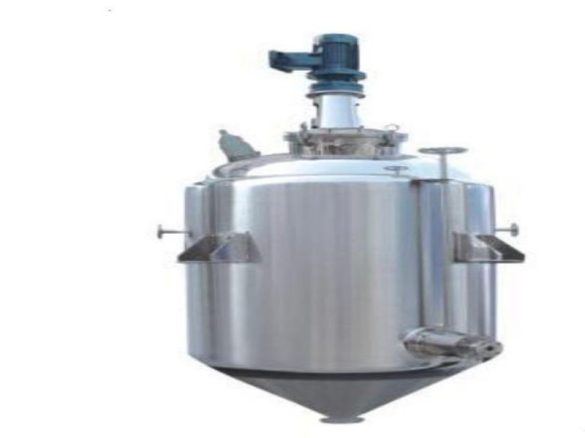
We weld the water precipitation tank with three layers of stainless steel to ensure durability and hygiene. The inner tank is made of high-quality SUS316L/304 stainless steel, and we polish the inner tank to meet the hygiene standards of the food and pharmaceutical industries.
The interlayer uses SUS304 stainless steel, and we install a stainless steel deflector inside the interlayer to facilitate the diversion of cooling water. The outer layer is welded with a stainless steel outer package, and we add polyurethane insulation to help preserve heat, prevent rapid heat loss, and achieve environmental protection and energy saving.
5. Core Functions and Control System
The water precipitation tank integrates cooling, heat preservation, and stirring functions. We design the tank body with various process nozzles, including a material inlet, a pure water port, a discharge port, a sampling port, and heat exchange inlets and outlets.
Additionally, we equip the water precipitation tank with an automatic control system. This system covers key process controls such as feeding, discharging, temperature control, and stirring, which reduces labor intensity and enables fully automatic control of the precipitation process.
6. Key Design Features for Separation Effect
We set a clear liquid outlet on the tank, and we can adjust the liquid output according to the liquid level height. A guide gear is installed on the upper clear liquid outlet pipe; through the outlet pipe outside the tank top, the liquid forms a certain angle with the cylinder body, and the outlet pipe can rotate 360° to avoid sucking out precipitates (including flocculent substances).
The handwheel on the tank top adjusts the rotation direction of the liquid outlet pipe, ensuring that we can pump out most of the upper clear liquid without affecting precipitation and discharge. We also install a long sight glass on the tank wall to facilitate observation of precipitation and the separation interface between the upper clear liquid and sediment, allowing real-time monitoring of the material liquid’s sedimentation and separation in the tank.
For optimal separation effect, we generally design the bottom of the water precipitation tank to be conical, with a cone angle of 90°-120°.