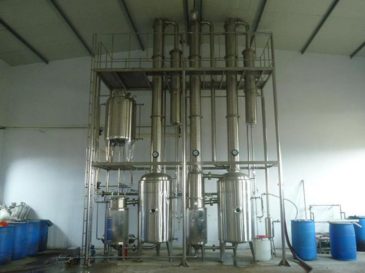
1. Company Overview and Core Capabilities
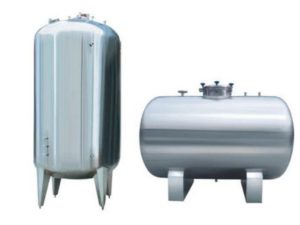
Our company specializes in designing and manufacturing static tanks, traditional Chinese medicine (TCM) static tanks, alcohol precipitation tanks, water precipitation tanks, and alcohol sedimentation tanks, with years of rich design and production experience.
We integrate product design, development, manufacturing, installation, and commissioning into one comprehensive service. We also hold the business license qualification for Class I and II pressure vessels.
Our main products include extraction tanks, double-effect concentrators, MVR concentrators, reaction kettles, mixing tanks, blending tanks, and liquid distribution tanks. We provide these mechanical equipment for the food, chemical, and pharmaceutical industries.
Additionally, we offer configuration services for various production lines and technical transformation for both new and old production lines.
2. Static Tank: Core Applications
We mainly use static tanks for freezing or normal-temperature alcohol precipitation of concentrated liquids after TCM decoction concentration. They can also handle water precipitation of concentrated liquids after TCM alcohol extraction.
Furthermore, static tanks are suitable for blending and mixing material liquids in related processes.
3. Static Tank: Specifications and Models
Common product specifications include 300L, 500L, 1000L, 1500L, 2000L, and 3000L, 6000L. Their corresponding model numbers are JC-300, JC-500, JC-1000, JC-1500, JC-2000, JC-3000, and JC-6000.
In addition to standard products, we also design and manufacture non-standard products according to specific user requirements.
4. Static Tank: Structural Design and Versatility
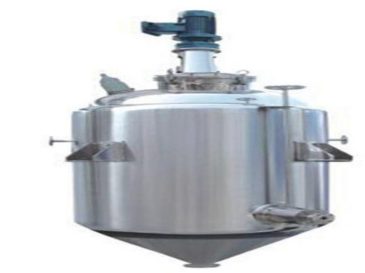
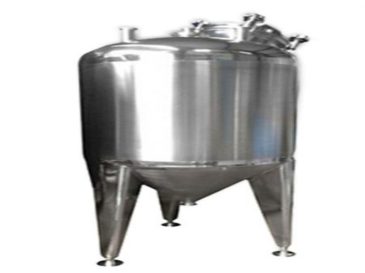
We construct static tanks with a jacketed cylindrical body, an elliptical head, and a conical bottom. We can introduce freezing brine or cooling water into the cylinder jacket to indirectly cool the material liquid.
This cooling method helps us control the temperature required for alcohol precipitation liquid precipitation. We equip static tanks with a mixing system that meets GMP requirements and a special fine-tuning rotating liquid outlet pipe.
Besides TCM applications, static tanks are also suitable for freezing or normal-temperature precipitation of suspensions and liquid-solid phase separation in other industries, such as pharmaceuticals, chemicals, dyes, and food.
5. TCM Static Tank: Working Principle
The TCM static tank is a sedimentation-type liquid-solid phase separation equipment. We use it to remove non-alcohol-soluble substances (such as starch and protein) from TCM decoction concentrated liquids (usually with a specific gravity of about 1.1).
We add alcohol to the concentrated liquid to prepare a solution of a certain concentration, then perform sedimentation at normal temperature or low-temperature freezing for liquid-solid separation. This process improves the purity and clarity of the TCM extraction liquid, thereby enhancing product quality.
6. TCM Static Tank: Operational Process
First, we add the concentrated liquid and alcohol in the proportions required by the process. We then turn on the freezing brine or cooling water and start stirring to mix the material liquid evenly.
Once the material liquid reaches the required temperature, we stop stirring but continue introducing freezing brine or cooling water into the jacket to maintain the required liquid temperature.
After precipitation is complete, we open the supernatant outlet valve and pump out the supernatant using a pump or vacuum. As the supernatant liquid level drops, we fine-tune the angle of the in-tank liquid outlet pipe by turning the handwheel, monitoring the process through the top sight glass.
We close the liquid outlet valve immediately after pumping out the supernatant. For sediment discharge, we offer two options:
Option A: We use two cylinders controlled by a pneumatic switch to open the bottom cover. After removing and cleaning the sediment, we close the bottom cover.
Option B: We select the type B slag outlet. First, we add water (or other liquid media) and start stirring to make the sediment into a suspension. We then open the bottom ball valve to drain the suspension, clean the tank inner wall with water, and close the ball valve.
7. Key Factor Affecting Precipitation Time
The precipitation time for liquid-solid separation (alcohol precipitation) of the precipitation liquid directly relates to the liquid temperature in the tank. The general conditions for TCM alcohol precipitation are as follows: