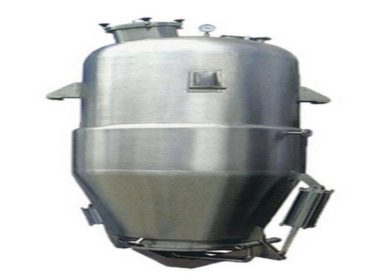
1. Overview of Small-Scale Hot Reflux Extraction Tank
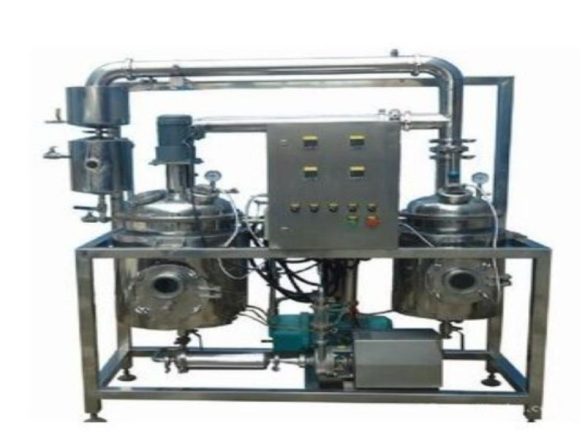
We developed the small-scale hot reflux extraction tank based on the Soxhlet principle.
In recent years, it has seen wide application for traditional Chinese medicine (TCM) extraction.
For TCM extraction, we mainly use two methods: alcohol extraction and water extraction.
We mainly use two extraction methods for TCM: alcohol extraction and water extraction.
In these processes, alcohol or water acts as the solvent.
Notably, the hot reflux extraction method delivers universally recognized energy-saving effects.
In particular, this energy-saving advantage is more obvious for alcohol extraction processes.
The hot reflux extraction method delivers universally recognized energy-saving effects.
This is especially true for alcohol extraction processes.
2. Equipment Composition and Working Principle
The equipment has two main parts: the extraction unit and the concentrator unit.
During extraction and concentration, extraction liquid flows from the extraction tank bottom into the concentrator.
As the concentrator works, it generates secondary steam during the concentration process.
We then condense this secondary steam and return it to the extraction tank as fresh solvent.
The concentrator generates secondary steam during concentration.
We condense this secondary steam and return it to the extraction tank as fresh solvent.
This continuous cycle maintains a high concentration gradient of extractable substances between medicinal materials and solvent.
Thanks to this high gradient, solutes in medicinal materials dissolve quickly.
Ultimately, this entire process achieves efficient extraction overall.
The high gradient makes solutes in medicinal materials dissolve quickly.
This achieves efficient extraction overall.
3. Application Effects in Different Extraction Methods
3.1 Application in Alcohol Extraction
Alcohol has a low boiling point. This leads to large evaporation and high reflux volume.
Due to this high reflux volume, a high concentration gradient is maintained between medicinal materials and solvent.
As a result, solutes from medicinal materials dissolve quickly.
This rapid dissolution ensures good extraction efficiency.
Solutes from medicinal materials dissolve quickly as a result.
This ensures good extraction efficiency.
Moreover, it also effectively recovers the solvent, reducing waste.
Thus, it shows strong applicability in alcohol extraction scenarios.
Thus, it shows strong applicability in alcohol extraction.
3.2 Application in Water Extraction
Water has a relatively high boiling point, which in turn reduces its evaporation amount.
Because of this reduced evaporation, the application effects in TCM water extraction are poor.
The reduced evaporation leads to poor application effects in TCM water extraction.
4. Problems of 6m³ Extraction Tank in Hot Reflux Application
The 6m³ extraction tank has the largest feeding capacity among common extraction tanks.
Per extraction, we usually decoct materials with water 2 to 3 times.
In most practical operations, we use 2 decoctions for efficiency.
For one decoction with a 6m³ tank, we need 8 to 10m³ of water.
Most operations use 2 decoctions.
One decoction with a 6m³ tank needs 8 to 10m³ of water.
This water requirement means the hot reflux method needs 4 to 5 tons of reflux volume.
Thus, the concentrator requires a relatively large heating area to meet this demand.
To ensure sufficient heating area without making the heater bulky,
Thus, the concentrator needs a relatively large heating area.
To ensure sufficient heating area without making the heater bulky,
manufacturers adopt specific design methods.
For instance, they lengthen heating tubes, reduce pipe diameter, and increase tube rows.
This design is compared to that of a general triple-effect concentrator for reference.
They lengthen heating tubes, reduce pipe diameter, and increase tube rows.
This is compared to a general triple-effect concentrator.
5. Practical Application Defects
In practical use, the concentrator has a small evaporation amount.
As a consequence, its reflux volume fails to meet the required standards.
This insufficient reflux creates a low concentration difference between medicinal materials and extraction liquid.
Its reflux volume fails to meet the required standards.
This creates a low concentration difference between medicinal materials and extraction liquid.
As a result of this low concentration difference, effective components release slowly.
Eventually, each extraction takes more than 10 hours to complete.
Each extraction takes more than 10 hours to complete.
6. Additional Application Issues
Some hot reflux equipment introduces concentrated secondary steam directly into the extraction tank.
Subsequently, a condenser condenses this steam, which then refluxes back to the tank.
The secondary steam’s heat is intended to maintain the boiling of the medicinal liquid.
A condenser then condenses this steam, which refluxes back to the tank.
The secondary steam’s heat maintains the boiling of the medicinal liquid.
The core purpose of this design is to save energy during operation.
We tested this method in actual production to verify its effectiveness.
Unfortunately, the secondary steam could not maintain the medicinal liquid’s boiling.
We tested this method in actual production.
The secondary steam could not maintain the medicinal liquid’s boiling.
This issue is especially prominent for large straight-tube extraction tanks.
Additionally, secondary steam enters the extraction tank’s limited internal space.
This influx of steam increases the tank’s internal pressure significantly.
Additionally, secondary steam enters the extraction tank’s limited space.
This increases the tank’s internal pressure.
The increased pressure then causes poor condensate reflux, hindering operation.
In some cases, uncondensed steam sprays directly from the reflux pipe without condensation.
This short-circuit issue prolongs each extraction to more than ten hours.
Sometimes, uncondensed steam sprays directly from the reflux pipe without condensation.
This short-circuit issue prolongs each extraction to more than ten hours.
As a result, this method is impractical for actual production applications.
7. Specific Defects of Concentrator Design
7.1 Underutilized Heating Area
Concentrators use external heaters with long, small-diameter heating tubes.
Steam heats the liquid that enters from the bottom of the heater.
As the liquid rises to the middle-upper part, it boils rapidly and vaporizes mostly.
Steam heats the liquid entering from the bottom.
The liquid boils rapidly and vaporizes mostly when rising to the middle-upper part.
We can observe this vaporization process through the heater’s top sight glass.
This excessive vaporization leads to underutilization of the middle-upper heating tubes.
In turn, this underutilization reduces the effective heating area of the heater.
This leads to underutilization of the middle-upper heating tubes.
In turn, this reduces the effective heating area.
7.2 Undersized Circulation Pipe
This undersized diameter causes delayed liquid replenishment to the heater.
Chemical engineering handbooks provide clear empirical parameters for this issue.
Specifically, the circulation pipe’s cross-sectional area should be 2 to 3 times that of the heating tubes.
This causes delayed liquid replenishment to the heater.
Chemical engineering handbooks provide empirical parameters.
For short-tube heaters (about 1 to 1.2m), a 1:1 ratio is sufficient for normal operation.
This 1:1 ratio is common in triple-effect concentrators in the industry.
However, current hot reflux extraction concentrators have a circulation pipe cross-sectional area that is too small.
For short-tube heaters (about 1 to 1.2m), a 1:1 ratio suffices.
This is common in triple-effect concentrators.
In fact, it is only half of the heating tubes’ total cross-sectional area.
It is only half of the heating tubes’ total cross-sectional area.
7.3 Insufficient Heating Area
Under rated steam pressure, the heating area may be too small to meet demands.
Improper design choices are the main cause of this issue.
For example, incorrect thermal conductivity parameters are often used during design.
Improper design choices cause this issue.
For example, incorrect thermal conductivity parameters are used.
This incorrect parameter selection leads to an undersized heater and low evaporation volume.
8. Equipment Retrofit Measures
We identified the concentrator’s evaporation capacity as the key factor affecting reflux volume.
Based on this analysis, we implemented the following retrofits:
8.1 Adopt Vacuum Concentration
The heater’s material and area are fixed.
Increasing the heating area is not only difficult but also uneconomical.
Furthermore, it would take up more floor space.
Increasing the heating area is difficult and uneconomical.
It would also take up more floor space.
We fixed the heating steam’s application pressure.
Consequently, the maximum temperature of the heating steam is also fixed.
Thus, we can only reduce the concentrate’s boiling point to improve efficiency.
This fixes the maximum temperature of the heating steam.
Thus, we can only reduce the concentrate’s boiling point.
We achieve this goal by adopting vacuum concentration.
In turn, this method significantly improves the concentrator’s evaporation capacity.
Notably, the extraction process itself uses atmospheric pressure.
This improves the concentrator’s evaporation capacity.
The process uses atmospheric pressure extraction.
Vacuum concentration, however, requires intermittent condensate reflux to the extraction tank.
Therefore, we added a concentrate condensate storage tank to meet this requirement.
Therefore, we added a concentrate condensate storage tank.
8.2 Optimize Heater Design
The concentrator heater had two main issues affecting its performance.
First, middle-upper heating tubes vaporized easily during operation.
Second, the circulation pipe diameter was too small for efficient liquid flow.
First, middle-upper heating tubes vaporized easily.
Second, the circulation pipe diameter was too small.
Both issues together reduced the heating area’s utilization rate.
To solve these problems, we referenced various professional materials for guidance.
We ultimately adopted a bottom-mounted natural circulation evaporator design.
We referenced various materials to solve these problems.
We adopted a bottom-mounted natural circulation evaporator design.
We installed the heater and vapor-liquid separator separately for better performance.
Specifically, the heater is placed at the bottom, while the separator is positioned at the top.
Additionally, we angled the heater at about 20° to optimize liquid flow.
The heater is at the bottom, and the separator is at the top.
We angled the heater at about 20°.
This angled design helps the heated liquid rise easily through the tubes.
It also increases the liquid’s static pressure in the pipe, which is crucial for stability.
This increased pressure raises the boiling point and prevents vaporization in the heating pipe.
It also increases the liquid’s static pressure in the pipe.
This raises the boiling point and prevents vaporization in the heating pipe.
Additionally, it facilitates the drainage of steam condensate, reducing maintenance needs.
Besides adjusting the heater angle, we also increased the circulation pipe’s diameter to address flow issues.
We also increased the circulation pipe’s diameter.
9. Retrofit Effects
The retrofits greatly improved the concentrator’s evaporation capacity.
Under normal operation, the extraction liquid first boils.
About one hour later, concentration can start smoothly.
Under normal operation, the extraction liquid boils.
Concentration can start about one hour later.
Within 4 hours, the volatile reflux volume reaches about 5m³.
This volume maintains a continuous high concentration gradient between the extracted drug and liquid.
In turn, it ensures the rapid precipitation of the drug’s effective components.
This maintains a continuous high concentration gradient between the extracted drug and liquid.
It ensures the rapid precipitation of the drug’s effective components.
From feeding to extraction and concentration, one batch of feeding completes within one shift.
This aligns perfectly with the standard production shift schedule.
This aligns perfectly with the production shift schedule.
10. Summary
In summary, one batch of feeding can complete all operations within one shift.
This is fully consistent with the production shift arrangement in most factories.
This is fully consistent with the production shift arrangement.