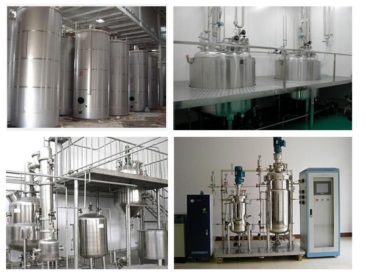
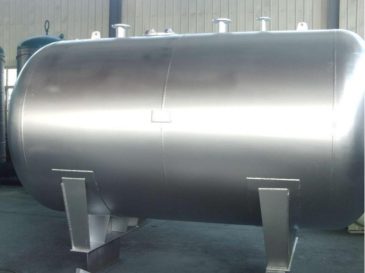
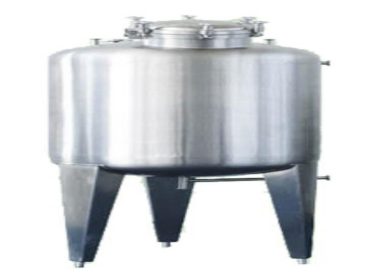
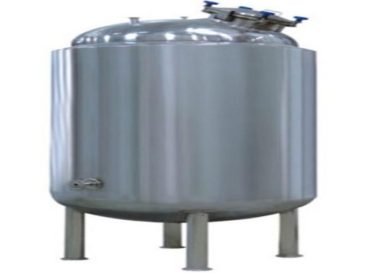
We often call a purified water storage tank a pure water storage tank for short.
As a critical component, purified water serves as pharmaceutical-grade water.
We produce it through distillation, ion exchange, reverse osmosis, or other suitable methods, and we add no additives.
Ordinary water contains many ions, such as sodium and chloride ions.
However, many chemical, physical, and pharmaceutical processes demand extremely pure water free of ions.
In fact, standard tap or process water cannot meet the needs of pharmaceutical, food, and chemical industries.
For this reason, we remove ions from water using specialized equipment to create purified water.
The United States Pharmacopeia compares quality standards for purified water and water for injection.
While both types share the same physicochemical indicators, water for injection has much stricter limits on pyrogens and microorganisms.
Another key difference appears in their production processes.
We can choose from multiple methods to prepare purified water.
By contrast, national pharmacopoeias impose strict restrictions on how we produce water for injection.
For example, the United States Pharmacopeia only allows distillation and reverse osmosis.
Meanwhile, the Chinese Pharmacopoeia requires distillation as the only valid method.
First of all, we must store purified water for no longer than 24 hours.
To ensure safety, we recommend using stainless steel or other non-toxic, corrosion-resistant materials that do not leach ions.
On the ventilation port, we install a fiber-free hydrophobic sterilizing filter.
We also ensure the inner wall is smooth and eliminate dead corners, sand holes, and flawed welds at all nozzles.
To monitor conditions, we use liquid level, temperature, and pressure sensors that do not cause stagnant water pollution.
Finally, we regularly clean, disinfect, and sterilize the tank and verify the effectiveness of each treatment.
Our team designs the tank body to meet sanitary and sterile standards.
By stretching each nozzle, we form a smooth transition and avoid dead corners from direct socket welding.
This careful construction ensures stable and reliable production processes.
We then mirror-polish the inner surface to Ra ≤ 0.4μm.
For the exterior, we finish the outer surface with mirror or sandblasted panels for hygiene and appearance.
All process connections use ISO standard quick-install clamp-type interfaces.
These hygienic fittings stay free of dead corners, disassemble easily, and support fast cleaning.
To improve durability, we fit anti-corrosion gaskets to extend service life.
We equip the tank with Clean-In-Place (CIP) and Sterilization-In-Place (SIP) functions.
Because of these features, the design fully complies with GMP standards.
We precision-process the inner surface into a smooth mirror finish.
On the outside, we apply matt treatment to the outer surface or the straight cylinder section of the heads.
This combination ensures easy, thorough cleaning without dead corners.
According to your needs, we can add a temperature control system and liquid level display system.
For automated factories, we provide remote output control for high-automation production lines.
For basic operation, we use local display and manual control for routine observation.
We apply stretch-flanging technology to create arc transitions on all nozzles.
Thanks to smooth surfaces, the system allows easy cleaning and avoids material buildup.
As a result, this design ensures stable production and meets GMP requirements.
| Parameter | Specification |
|---|---|
| Nominal Volume | 110L, 300L, 500L, 1000L, 2000L, 3000L, 5000L, 10000L |
| Inner Diameter (mm) | 500, 800, 900, 1100, 1400, 1500, 1800, 2100 |
| Working Pressure (Mpa) | Designed and manufactured according to process conditions |
| Working Temperature (°C) | 70 – 80°C or 0 – 4°C |
| Metering Method | Weighing and dispensing, liquid level metering, or flow metering |
| Thermal Insulation Material | Polyurethane / Rock Wool / Aluminum Silicate |
| Nozzle Configuration | Can be custom – designed as needed under meeting conditions, with CIP and SIP |
| Tank Material | SUS304 / 316L |
| Structural Form | Vertical or Horizontal |