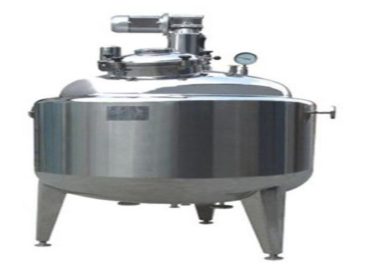
1. Overview and Aliases
The mobile liquid preparation tank has multiple common aliases in industrial applications. For instance, we often refer to it as the Mobile Stirring Formulation Tank, mobile liquid preparation equipment, or simply a stirring tank.
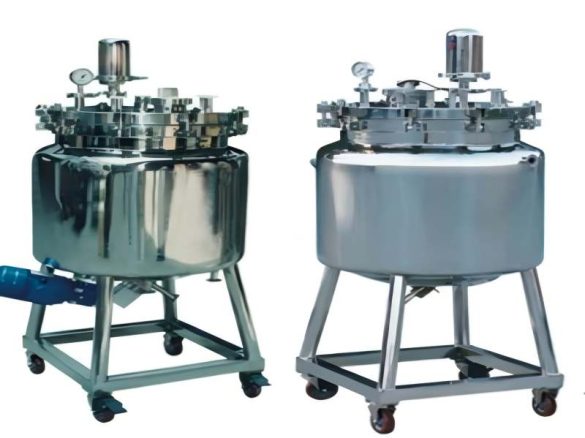
Essentially, we design it as a sanitary-grade stainless steel container. Importantly, we can move it within the factory premises according to specific production requirements, which offers great flexibility. Additionally, its sanitary design ensures it meets the high standards of food, pharmaceutical, and chemical industries.
2. Specifications and Basic Features
The mobile liquid preparation tank comes in various standard specifications to meet different production needs. Specifically, common specifications include 100L, 200L, and 300L; besides these, we can also customize specifications based on actual demands. For example, we can adjust the capacity to fit small-batch or pilot-scale production needs.
Besides standard models, we can also design it with a stirring function or as a sanitary transfer tank, depending on customer demands. Additionally, we make the entire tank of high-quality stainless steel to ensure its hygiene and durability. This material choice also enhances the tank’s resistance to corrosion and wear.
To enable mobility, we equip it with a stainless steel mobile cart and sanitary-grade polyurethane wheels. Specifically, we install two swivel wheels and two fixed wheels, which allow for small-radius turns and enhance maneuverability. These wheels are also designed to be wear-resistant and quiet, suitable for factory environments.
Overall, this thoughtful design makes the tank flexible in operation; moreover, it is extremely convenient to use in daily production. Furthermore, its compact structure saves valuable factory space.
3. Application Scenarios and Functional Versatility
Mobile liquid preparation tanks serve diverse purposes in factories, depending on their configuration. For example, some act as intermediate buffer tanks, which we use for the mobile storage and transportation of materials. This helps streamline the production process by reducing material transfer time.
On the other hand, others come with stirring and heating functions; after we stir and heat the materials, we can move these tanks to any desired location within the factory. This flexibility eliminates the need for fixed stirring equipment and saves installation costs.
Generally, we move them either between different workshops or within the same workshop, which helps them adapt to dynamic production layouts. Moreover, the tank can realize flexible movement while we equip it with various practical functions. These functions are tailored to meet the specific needs of different production processes.
These functions include stirring, cleaning, heating, cooling, and temperature control, which makes it a multi-functional tool. Furthermore, mobile liquid preparation tanks with a jacket and thermal insulation have even more uses than standard models. For example, they can maintain material temperature during transportation, ensuring product quality.
They can not only function as a standard liquid preparation tank but also serve as a mobile tank for material transportation (within the factory) and as a temporary storage tank; thus, they offer strong versatility. In addition, this multi-functional design reduces the need for multiple pieces of equipment, lowering production costs.
4. Key Structural and Design Details
4.1 Tank Structure
We can customize the liquid preparation tank’s structure to fit process requirements. For example, we can design it as a single-layer tank, a jacketed type, or a three-layer structure with thermal insulation, depending on needs. Specifically, jacketed tanks are ideal for heating or cooling materials, while insulated tanks maintain temperature stability.
Additionally, we can combine these structures flexibly based on different customer needs, which ensures the tank adapts to specific production conditions effectively. For instance, we can add a jacket to a single-layer tank for customers who need both mixing and temperature control.
4.2 Interface Design
We adopt international standard ISO quick-installation chucks for the tank’s interfaces, which ensures easy and secure connections. The materials used for interfaces are imported 316L or 304 stainless steel, meeting high sanitary standards. This material choice aligns with GMP requirements for pharmaceutical and food production.
We perform mirror polishing on the inner surface, achieving a smoothness of Ra ≤ 0.4μm; meanwhile, we treat the outer surface with either matt or mirror polishing, which makes it both aesthetically pleasing and easy to clean. Additionally, the polished surface prevents material adhesion and facilitates thorough cleaning.
4.3 Material Specifications
We make the cylinder body of the mobile liquid preparation tank of high-quality stainless steel. Specifically, we use either 304 or 316L stainless steel, which offers excellent corrosion resistance and hygiene performance. Notably, 316L stainless steel is more corrosion-resistant, making it suitable for acidic or alkaline materials.
4.4 Level Gauge Options
To meet different monitoring needs, we provide various level gauge options for the tank. These options include plate-type graduated sight glasses, glass tube level gauges, hydrostatic level gauges, ultrasonic level gauges, and radar level gauges; therefore, customers can choose the most suitable one. For example, radar level gauges are ideal for closed tanks with high pressure or high temperature.
4.5 Mobility System
The mobility system is a key feature of this tank. We equip it with four mobile casters—two fixed and two swivel—along with a pushing handle on the mobile cart for easy operation. The pushing handle is ergonomically designed to reduce operator fatigue during movement.
This combination enables us to transport materials conveniently and smoothly within the factory, even in narrow spaces; hence, it greatly improves production efficiency. Furthermore, the casters are equipped with brakes, ensuring the tank stays stable during operation.