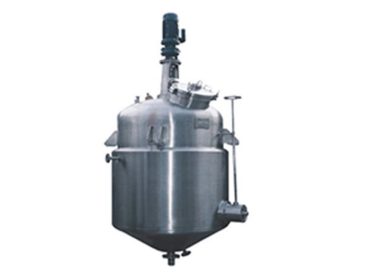
1. Overview & Application Scope
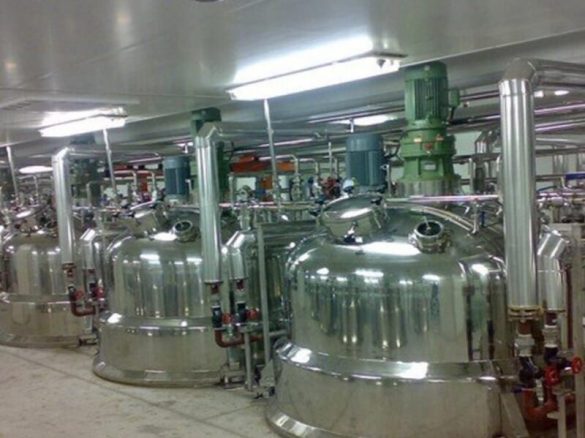
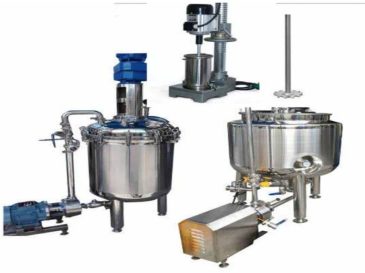
The mixing kettle is a three-layer container, featuring functions such as heating, cooling, and stirring. We widely apply it in industries like pharmaceuticals, food, building materials, beverages, chemicals, bioengineering, coatings, fruit wines, pigments, condiments, fine chemicals, oils and fats, and scientific research. It serves as a commonly-used intermediate buffering, stirring, and blending equipment in these industries.
2. Structural Composition
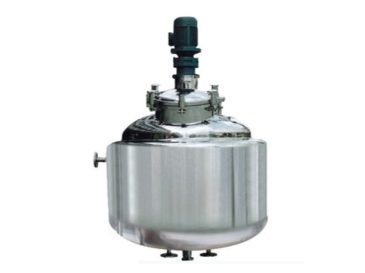
The mixing kettle consists of the kettle body, upper and lower heads, agitator, support, transmission device, shaft sealing device, etc. We can connect the kettle body and heads by flange sealing or welding. We can open process nozzles for feeding, discharging, observation, temperature measurement, pressure measurement, steam distillation, safety venting, etc., according to process requirements.
3. Kettle Body Specifications
For the kettle body of the mixing kettle reactor, we use SUS304 or SUS316L for the inner tank and SUS304 for the outer insulation shell. We perform mirror polishing treatment on the inner surface of the stainless steel tank and use a wire-drawing plate for the outer surface.
4. Classification by Jacket Heating Form
We generally classify the mixing kettle reactor according to the jacket heating form into: electric heating tube heating, steam heating, and heat-conducting oil circulation heating reactors. We can design and manufacture the number of openings, specifications, or other requirements of the jacket heat-exchange reactor according to user requirements.
5. Bottom Structure
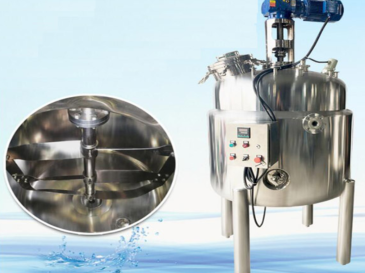
We process the bottom structure of the mixing kettle reactor into an R angle by spinning, and after welding and polishing it with the inner tank, there are no dead corners.
6. Stirring Device Composition
The stirring device consists of a motor reducer, motor base, stirring shaft, agitator, mechanical sealing device, etc.
7. Equipment Configuration
The configuration of the mixing kettle reactor includes: electrical control box (including temperature gauge, liquid level measurement, pressure display, switch, indicator light, spotlight switch, etc.), manhole, material inlet and outlet, heating and cooling medium inlet and outlet, standby port, cleaning port, temperature gauge port, pressure gauge port, vacuum port, etc.
8. Process Opening & Welding Requirements
We adopt the flanging process for arc transition for the process openings of each inlet and outlet nozzles and the welding joints with the inner tank. This design ensures the surface is smooth and easy to clean without dead corners, and has an attractive appearance.