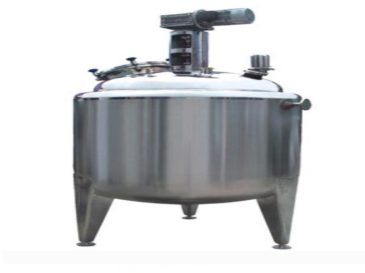
1. Overview and Core Functions
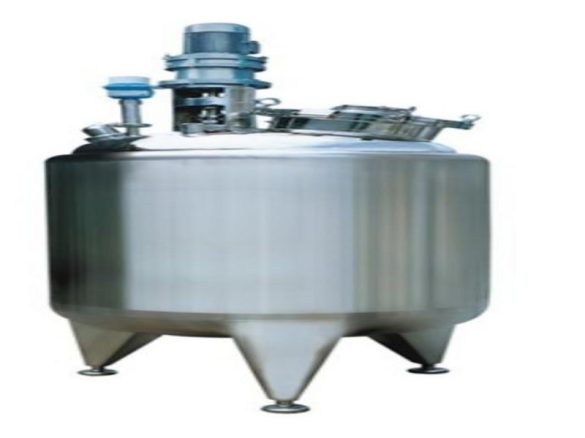
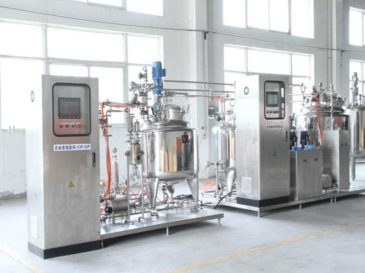
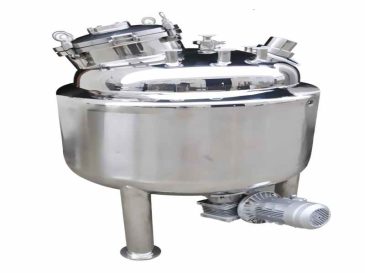
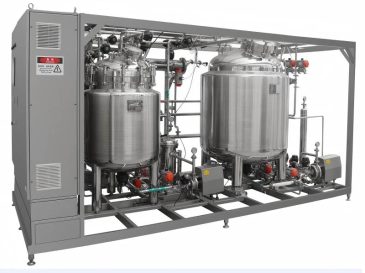
An insulated liquid mixing tank is a type of liquid mixing tank. It integrates heating, cooling, heat preservation, and liquid mixing and stirring functions.
We design three-layer insulated liquid mixing tanks with a jacket layer. This jacket layer uses steam, heat-conducting oil, or other refrigerants to realize heating and cooling.
The jacket layer also contains a heat preservation medium. This medium enables the tank’s heat preservation function.
The tank uses internal stirring and transmission devices to achieve liquid mixing and stirring.
We can set different stirring forms according to different materials. We can also adjust the stirring speed based on liquid mixing requirements.
2. Main Components and Customization Options
2.1 Basic Components
An insulated liquid mixing tank consists of multiple core components. These include a tank body, upper and lower heads, and an agitator.
It also includes supports, a transmission device, a shaft seal device, a jacket, and a thermal insulation medium.
Additionally, it has a thermal insulation layer. We can also equip it with liquid level and flow metering devices if needed.
2.2 Customizable Parts
The upper and lower heads of three-layer insulated tanks have various combination options. These include upper and lower elliptical heads, or upper flat mouth and lower conical bottom.
Other options are upper and lower conical heads, or upper elliptical head and lower conical bottom.
We can also choose upper flat mouth and lower elliptical head combinations.
The agitator has multiple forms. These include simple paddle type, anchor type, turbine type, and wall scraping type.
The transmission device mainly includes a motor and a speed reducer. We determine their models based on tank volume, material viscosity, and agitation form.
The jacket can be either a hollow jacket or a half-pipe jacket.
We select the thermal insulation medium based on jacket and tank temperature. Common options are polyurethane, rock wool, or aluminum silicate.
The thermal insulation layer usually has a thickness of 50mm or 100mm.
3. Application Scope
The insulated liquid mixing tank has multiple functions. These include heating, cooling, heat preservation, stirring, and metering.
It is widely used in various industries. These industries include pharmaceuticals, food, dairy products, and beverages.
4. Operation and Maintenance Notes
4.1 Basic Operation Requirements
Operators must strictly follow the working pressure and temperature on the product nameplate. This avoids potential dangers.
They must also strictly abide by the product manual’s cooling and oil injection regulations. They should do a good job in equipment maintenance and upkeep.
4.2 Cleaning and Daily Maintenance
Different production processes have different requirements. For example, dairy and pharmaceutical enterprises have high hygiene standards.
For these scenarios, operators must pay strict attention to the tank’s cleaning and daily maintenance.
They should refer to the equipment instruction manual for cleaning and maintenance details.
5. Installation and Trial Run Requirements
5.1 Pre-Installation Inspection
Users should check the equipment after transportation. They need to see if there is serious damage or deformation.
They should also check if the equipment’s fasteners are loose.
5.2 Installation Steps
Three-layer insulated tanks that need anchor bolts require pre-embedded anchor bolts. Users must install the equipment horizontally on a solid foundation.
Professionals should guide the correct installation of the equipment, electrical control devices, and accessories.
Operators should check if pipelines are unobstructed. They should also check if installed instruments are correct and undamaged.
5.3 Pre-Startup and Trial Run
Before starting the equipment, check for people or objects around it. These could affect normal operation and cause danger.
After installation, conduct a trial run for a few seconds first. Confirm no electrical short circuit or abnormal noise before a short-term trial run.
5.4 Mechanical Seal Precautions
If the tank has a mechanical seal, fill its lubrication groove with 10# oil or sewing machine oil before starting the main engine.
For water-cooled mechanical seals, introduce cooling water into the cooling cavity. This ensures good lubrication and cooling.
5.5 Post-Operation Check
After the equipment operates normally, check the bearing temperature and operation stability. Also check tightness and whether instruments work normally.
Only after confirmation can operators put materials into operation.