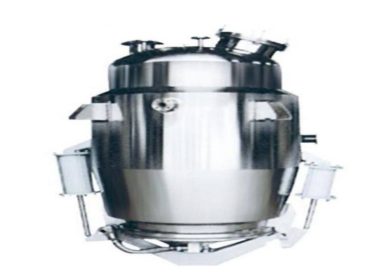
1. Overview and Core Functions
The extraction tank (also known as extraction vessel) we designed is used to extract active ingredients from plant parts (such as roots, stems, leaves) or animal tissues. Specifically, it can efficiently extract polyphenols, collagen, brain proteins, bone extracts, bone peptides and other substances.
Since raw materials vary—including plant tissues, traditional Chinese medicinal herbs, bones, and bone residues—we use different types of extraction tanks to match these materials. This ensures optimal extraction results for each raw material type.
2. Common Types of Extraction Tanks
Based on raw material characteristics and processing needs, we commonly use the following extraction tank types:
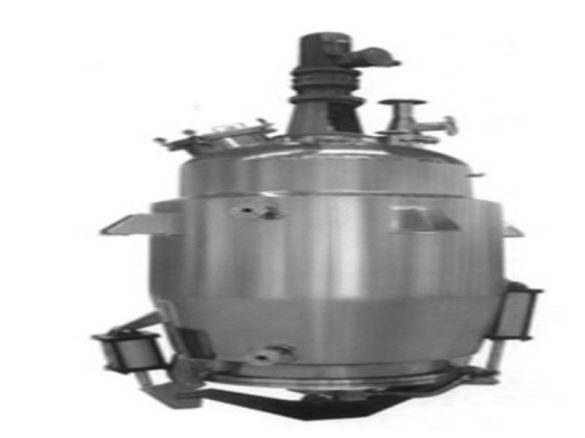
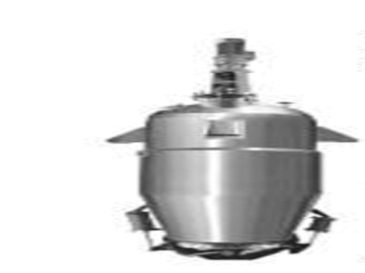
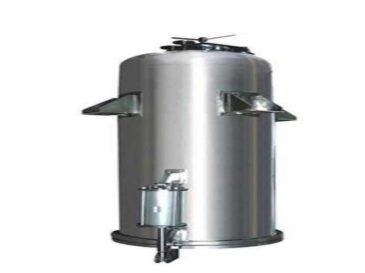
Straight cylinder extraction tank
Positive cone extraction tank
Mushroom-type extraction tank
Dynamic extraction tank
Static extraction tank
These tank types have distinct design features, which we tailor to different raw materials and processing techniques. For example, dynamic extraction tanks are suitable for materials that require constant stirring, while static ones are ideal for gentle extraction processes.
3. Company Strengths
With years of professional experience, we specialize in the design, development, and manufacturing of extraction tanks for the traditional Chinese medicine (TCM), food, chemical, and other industries. We guarantee reliable product quality, and we also offer non-standard customization services to meet unique customer needs.
4. Working Volume Specifications
We provide extraction tanks with various working volumes to adapt to different production scales. The available volumes include 0.5m³, 1m³, 1.5m³, 2m³, 3m³, 5m³, 6m³, 8m³, and 10m³.
Notably, the working volume accounts for 50%~80% of the total tank volume, so the total volume is always larger than the effective working volume. In most cases, we design the tanks based on the required effective working volume to ensure practical production needs are met.
5. Operating Parameters and Structural Design
5.1 Operating Temperature
We set the typical operating temperature of extraction tanks between 10~150℃, which we can adjust according to specific extraction processes and raw material requirements.
5.2 Structural Types
We offer three main structural types: straight cylinder, mushroom-type, and positive cone-type. Each type has unique advantages to suit different scenarios.
5.3 Heating Design
We design the tank body with sectioned heating capabilities to ensure uniform temperature distribution. For the slag discharge door’s bottom cover, we adopt either direct steam heating or bottom indirect heating, depending on the process needs.
Additionally, we install easily detachable filters on the cylinder’s bottom cover, which simplifies maintenance and cleaning.
5.4 Operating Pressure
The internal working pressure of the tank can be either atmospheric or pressurized, giving us flexibility to match different extraction processes.
5.5 Feeding and Discharging Design
We equip the feeding port with a self-locking function and an observation window, which enhances operational safety and allows real-time monitoring of feeding conditions.
For the bottom cover, we add a safety locking function, and we control both the discharge gate and feeding port through a pneumatic control box. This design ensures convenient and safe operation.
6. Surface Treatment
For all parts of the equipment that come into contact with materials, we perform mechanical polishing and post-polishing oil-free treatment. This ensures the inner surface is smooth, clean, and free of residues, meeting hygiene standards for food and pharmaceutical industries.
7. Process Openings Configuration
We equip each extraction tank with a complete set of process openings to support various operational needs. These openings include, but are not limited to:
Feeding port (manhole)
Sight glass and lighting port
Exhaust port and reflux port
Forced reflux port
Pressure gauge port and vent port
Liquid discharge port
Direct steam port and drinking water inlet
Temperature probe interface and safety valve
8. Main Components
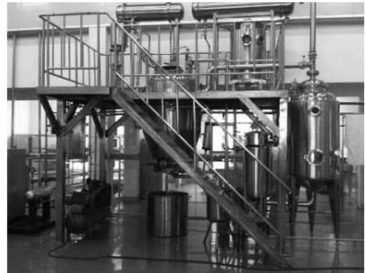
An extraction tank consists of seven core components, each playing a vital role in the extraction process. These components work together to ensure efficient and stable operation:
8.1 Main Tank (Extraction Tank)
As the core component, the main tank (also called the extraction tank) serves as the site for raw material decoction, heating, cooling, evaporation, and reflux processes. For cone-type extraction tanks, we use a slag discharge door for material discharge, which is convenient, efficient, and safe.
8.2 Foam Trap
We install a quick-opening cover on the top of the foam trap, which allows easy disassembly of defoaming components. This design makes it simple to remove and clean the defoaming parts, ensuring consistent defoaming performance.
8.3 Condenser
We design condensers based on actual requirements, including working pressure, heat exchange area, shell wall thickness, and tube specifications. This customization ensures the condenser efficiently condenses steam during the extraction process.
8.4 Cooler
Similar to condensers, we tailor coolers to meet specific working conditions. We determine their design parameters—such as heat exchange area and material specifications—based on the extraction process requirements.
8.5 Oil-Water Separator
We design the oil-water separator to separate oil and water effectively during the extraction process. This ensures the purity of the extracted active components and prevents oil contamination.
8.6 Filter
We select filters based on the extraction process and raw material characteristics, ensuring they can effectively filter impurities and protect the quality of the extracted liquid.
8.7 Pump
We equip the system with pumps to drive the circulation of materials and liquids during extraction. We choose pump types and specifications based on the required flow rate and pressure, ensuring stable material transfer.
9. Non-Standard Customization Service
In addition to standard extraction tanks, we also provide non-standard customization services. We can tailor the tank’s structure, volume, operating parameters, and components to meet the unique needs of different customers and production processes.