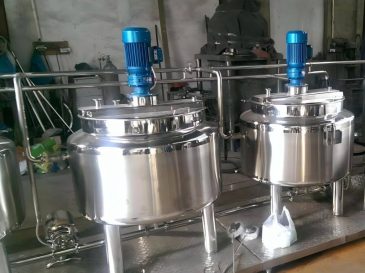
1. Overview and Basic Definition
As the name suggests, we design the electric heating mixing tank to use an electric heating method. Specifically, it is a practical equipment widely used in various industries for mixing and heating materials.
2. Equipment Composition
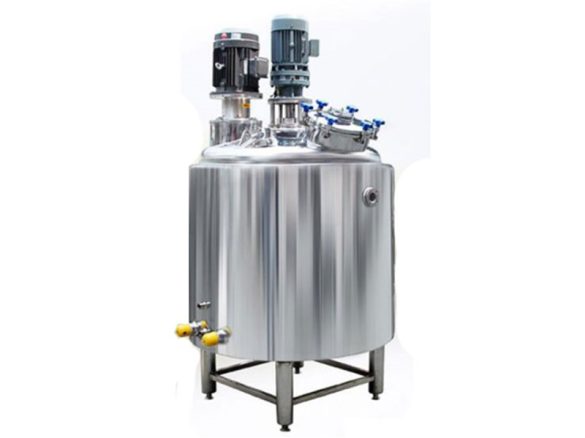
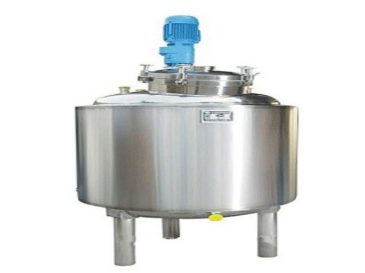
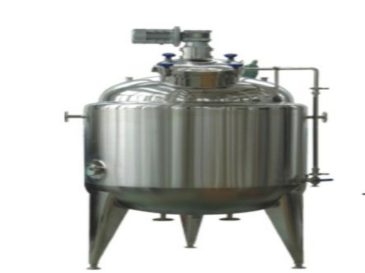
The electric heating mixing tank consists of multiple key components. These components include an upper conical head, inner liner, lower conical head, and full jacket.
In addition to these parts, it also includes an outer skin, stirring device, motor reducer, motor base, and temperature gauge. Moreover, it is equipped with a level gauge, electric heating tube, and legs to ensure full functionality.
We can choose imported or high-quality domestic products for the motor reducer. During long-term operation, the motor reducer does not overheat, which in turn ensures a long service life.
Furthermore, it requires minimal maintenance and produces low noise, making it highly suitable for long-term continuous use in industrial settings.
3. Material and Surface Treatment
We make the electric heating mixing tank from high-quality stainless steel S30408 or S31603 material. To ensure hygiene and easy cleaning, we polish the inner surface to a mirror finish.
For the outer surface, we adopt a drawn treatment to enhance its appearance and durability. Notably, neither the inner nor the outer surface will peel, so it suits sanitary workshops perfectly.
4. Key Specifications and Control Methods
4.1 Heating Method
The tank adopts electric heating, with two voltage options available. These options are 380V and 220V electric heating, which can effectively meet different usage scenarios and production needs.
4.2 Jacket Form
It uses a full jacket design, which not only ensures uniform heating but also improves the efficiency of temperature control during the mixing process.
4.3 Control Methods
We offer two control methods: manual control and automatic control. For manual control, we use on/off buttons to operate the motor and reducer for simple and direct operation.
The temperature is displayed on-site for real-time monitoring, allowing operators to adjust parameters timely. We control material feeding through manual valves, and heating is also managed via manual valve operations for flexible control.
For automatic control, users first inform us of their process requirements. After confirming the requirements, we input the corresponding program into the PLC module to realize automatic operation.
Its features include fully automatic material feeding, heating, constant temperature control, and pressure control. These functions greatly reduce the need for manual intervention, improving production efficiency.
5. Application Fields
Closed hot and cold tanks (matching the electric heating mixing tank) are suitable for multiple processes. These processes include mixing, stirring, storage, and transfer, covering various production links.
Specifically, they are widely used in industries such as pharmaceutical, food, beverage, and textile, adapting to the diverse production needs of different sectors.
6. Additional Configuration and Connection
The tank is equipped with various functional ports for convenience. These ports include a feed port, discharge port, standby port, CIP port, and SIP port to meet different operational needs.
Besides these ports, it also has an inlet and outlet medium port, temperature gauge port, level gauge port, and electric heating tube. For the pipe ports, we adopt a standard pipe port connection mode, ensuring compatibility and easy installation.