1. Product Overview
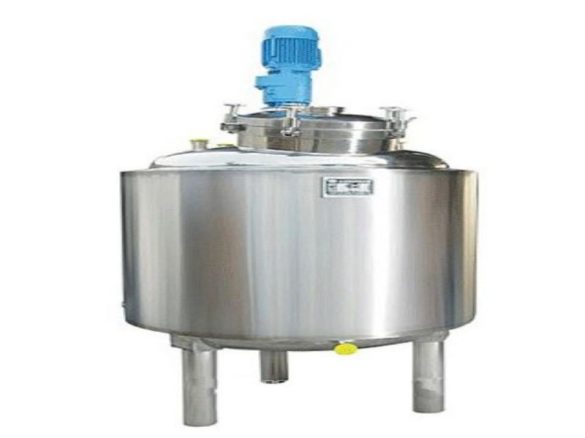
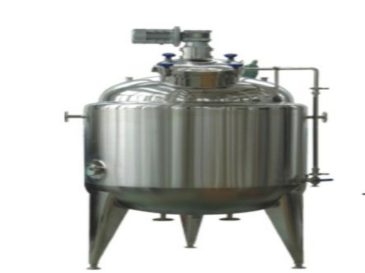
An ingredient tank is a specialized mixing vessel. It achieves liquid-liquid and solid-liquid blending through rotational agitation. Moreover, it serves as essential equipment for multiple industrial processes.
Specifically, it is used for intermediate buffering, liquid storage, mixing, formulation, and reaction processes. It is widely applied across various industries to meet diverse production needs.
These industries include pharmaceuticals, bioengineering, food and beverage, fruit wine, condiments, fine chemicals, and oils. Additionally, these tanks can be flexibly configured according to technology requirements.
For instance, they can be set up to add specific solvents or other media during the ingredients process. Furthermore, some models come with an integrated heating jacket for precise temperature control.
2. Structure Components
An ingredient tank consists of multiple key components that work together to ensure stable operation. These components include:
-
Upper conical head
-
Inner tank (with stainless steel lining)
-
Lower conical head
-
Jacket (available in full jacket or spiral coil design)
-
External cladding
-
Agitation system (including mixing impeller)
-
Motor base
-
Temperature gauge
-
Level indicator
-
Support legs
3. Key Features
The ingredient tank boasts several outstanding features that enhance its performance and reliability. First and foremost, the motor is sourced from imported brands or premium domestic manufacturers.
This ensures prolonged operation without overheating, reducing downtime. Additionally, the gear reducer is specially engineered for an extended lifespan.
It requires minimal maintenance and emits low noise, creating a comfortable working environment. Overall, this equipment is critical for precise ingredient blending and process control in industrial production lines.
4. Material Selection & Surface Treatment
We construct the ingredient tank from premium stainless steel, specifically S30408 or S31603. This material choice ensures durability and corrosion resistance. Its surface treatment includes two key aspects:
First, the inner surface undergoes mirror polishing, which makes cleaning easy and ensures compliance with hygienic standards. Second, the outer surface features a brushed finish.
This finish enhances both aesthetic appeal and durability. Importantly, both surfaces are free of peeling or flaking, meeting the strict sanitary standards required for cleanroom environments.
5. Heating/Cooling Methods
The ingredient tank offers multiple heating and cooling methods to adapt to different process needs. These methods include:
6. Jacket Configurations
We provide various jacket configurations to optimize heat transfer efficiency based on customer needs. The available options are:
-
Full-wrap jacket: Ensures uniform temperature distribution throughout the tank
-
Spiral coil designs: Available in U-channel or semicircular profiles for efficient heat transfer
-
Miller plate jackets: Enhance heat transfer efficiency significantly
7. Control Systems
The ingredient tank offers two types of control systems to cater to different automation needs: manual control and automated control.
7.1 Manual Control
The manual control system is simple and easy to operate. It includes on/off buttons for the motor and gear reducer. It also features local temperature display via analog or digital gauges.
Additionally, it is equipped with manual valves for inlet/outlet and heating media, allowing operators to adjust processes manually.
7.2 Automated Control
The automated control system is based on a PLC platform with custom programming, which requires specific process specifications. It comes with a range of advanced features, including:
-
Automatic feeding control
-
Precision temperature regulation
-
Pressure monitoring and adjustment
-
Automated constant temperature control (maintains the set temperature consistently)
Notably, this automated system reduces manual intervention and minimizes human error, improving production efficiency and accuracy.
8. Applications
The ingredient tank is ideal for batching, mixing, storage, and intermediate processing. It is widely used in industries such as pharmaceuticals, food & beverage, textiles, and chemical manufacturing.
Its design ensures compliance with industry-specific hygiene standards. At the same time, it optimizes thermal performance and operational efficiency, making it a practical choice for various production scenarios.
9. Equipment Maintenance and Cleaning
9.1 Equipment Cleaning
After operation, operators must clean the tank based on the residual materials. Common cleaning methods include two main options:
(1) CIP (Clean-In-Place) cleaning, which adheres to pharmaceutical standards for thorough sanitization.
(2) Alternative cleaning procedure, which involves the following steps:
-
Pre-rinse with 50–65°C hot water for 15 minutes via circulation.
-
Clean with 2% NaOH solution at 65–75°C for approximately 15 minutes.
-
Rinse with water for 5–7 minutes to remove residual alkali.
-
Disinfect with 2% HNO₃ solution at 65–75°C for approximately 15 minutes.
-
Final rinse with hot water for about 10 minutes.
9.2 Agitation System Activation During Cleaning
Operators must start the mixing system throughout the cleaning process. This ensures cleaning fluids reach all crevices of the tank and remove residues completely, maintaining hygiene standards.
9.3 Electrical Maintenance
Before and after each shift, operators should open the maintenance door to check two key points: loose or detached wiring connections and damaged cables caused by operational negligence.
Additionally, they should regularly inspect and replace wiring according to standards to ensure safe operation.
9.4 Agitator Maintenance
Before startup, operators need to open the manhole cover to perform several checks: inspect for loose or worn components in the agitator, run the agitator briefly to listen for abnormal noises, and test motor operation by switching it on and off.
On a weekly basis, they should tighten all bolts and nuts of the agitator system and replace faulty parts immediately to prevent equipment failure.
9.5 Pipeline Maintenance
Operators must regularly inspect the pipelines for potential issues. This includes checking for leaks at pipe joints, clamps, flanges, and nuts, testing the pressure resistance of pneumatic valves, and examining the wear of hoses connecting to the main tank.
They should replace vulnerable components periodically and address any damages promptly to avoid production disruptions.
9.6 Cable Maintenance
All cables must be protected by stainless steel conduits to prevent damage. Operators should check for abrasion at cable joints and bends.
If any damage is found, they must stop operation immediately, locate the leaks, and only resume operation after all risks are mitigated.
9.7 Surface Maintenance
The main tank is made of S30408 stainless steel, which requires proper care. Operators should avoid using strong acid or alkali cleaners, as these may damage the surface finish.
Instead, they should use non-toxic detergents (e.g., dish soap) and gently wipe the surface to remove stains, preserving the tank’s appearance and durability.
10. Key Notes
Adhering to these maintenance protocols is crucial for several reasons. First, it ensures the equipment’s longevity, reducing replacement costs. Second, it maintains hygienic compliance, which is essential for industries like pharmaceuticals and food.
Finally, it guarantees safe operation in pharmaceutical, food, and chemical industries, protecting both operators and production quality.