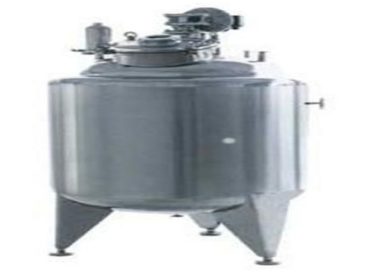
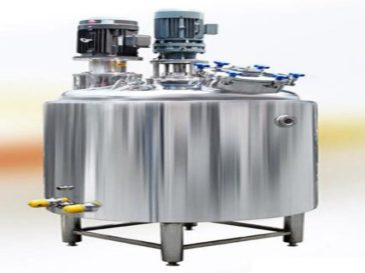
1. Product Overview
The fully automatic batching tank system comprises several key components. Primarily, it includes a batching tank, a touchscreen + PLC (industrial computer control system), automatic pneumatic valves, transfer pumps, and a weighing system.
As an ideal automated liquid preparation device, it uses a PLC touchscreen-controlled program to automatically mix and proportion various raw materials. Notably, this program operates according to preset logic to ensure precision.
It follows specific sequences and operates under different temperature conditions; consequently, this process efficiently achieves the production of finished products. Furthermore, it maintains consistent product quality throughout the process.
Additionally, this system is suitable for liquid preparation in specific pharmaceutical products, such as injections, lyophilized powder injections, and vaccines. Specifically, it meets the strict purity requirements of these pharmaceutical applications.
2. Key Components and Their Functions
The fully automatic batching tank system relies on core components to ensure stable operation, and each component has a distinct and essential function. Below is a detailed breakdown of each core component:
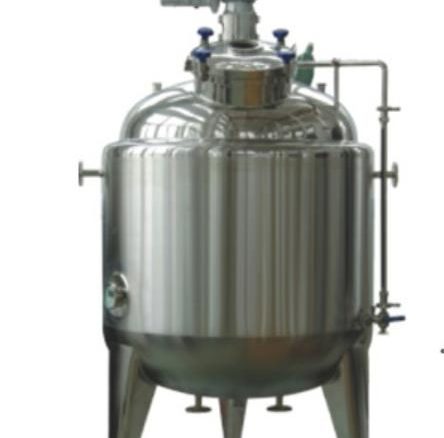
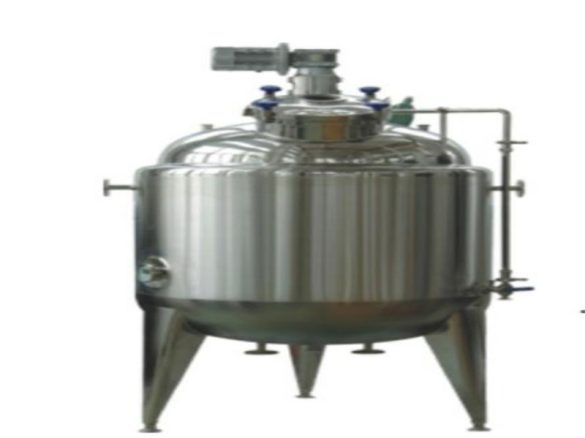
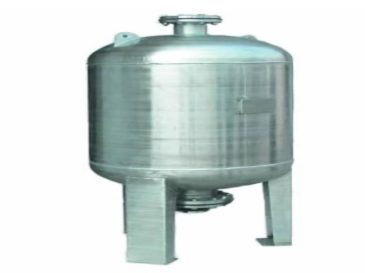
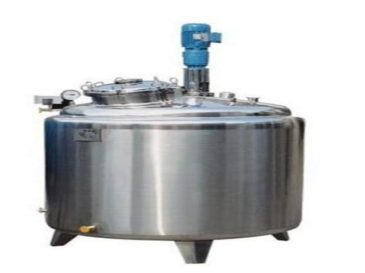
Batching Tank: Serving as the main vessel for mixing and storing ingredients, it forms the core of the entire system. It ensures materials are mixed uniformly and stored safely.
Touchscreen + PLC: It provides automated control and monitoring capabilities, thereby enabling precise operation of the system. It also allows operators to adjust parameters in real time.
Pneumatic Valves & Pumps: They ensure precise material transfer and flow control, which prevents waste and guarantees accuracy. Moreover, they operate smoothly to avoid material spillage.
Weighing System: It enables accurate measurement of raw materials, a factor that is critical for consistent product quality. Without it, batch uniformity would be difficult to achieve.
3. Application Scope
The system has a wide range of applications across multiple industries. First and foremost, it is widely used in the pharmaceutical industry due to its high precision and hygiene standards.
In this industry, it is used for the preparation of injections, vaccines, and lyophilized products. Beyond the pharmaceutical industry, it also finds applications in biotechnology.
In biotechnology, it is used for precise liquid mixing in sensitive processes, where accuracy and purity are paramount. For example, it is ideal for mixing biological reagents that require strict contamination control.
4. Main Components of the Batching Tank
The batching tank itself is composed of several key parts that work together to support its functions, and these main components include the following: Each part plays a vital role in the tank’s overall performance.
Tank Body: Composed of a cylindrical shell and a dished head (cover), it ensures a sturdy and sealed structure. This design prevents material leakage and maintains a hygienic environment.
Jacket/Half-Pipe Coil: Used for temperature control, it includes both heating and cooling functions as needed. It adjusts the material temperature to meet process requirements efficiently.
Top-Mounted Mechanical Agitator: Driven by a motor-reducer transmission system, it ensures thorough mixing of materials. It operates stably to avoid uneven mixing.
Shaft Sealing Device: It ensures containment of process media, preventing leakage and maintaining hygiene. This is crucial for meeting industry sanitary standards.
Support Structure: It includes platforms and legs for stability, ensuring the tank operates safely. It also facilitates easy maintenance and operation.
Insulation Layer: It maintains process temperature and improves energy efficiency, thus reducing operational costs. It also prevents heat loss during the production process.
5. System Configurations
The fully automatic batching tank system comes with comprehensive configurations to meet diverse production needs, and these configurations include: Each configuration is tailored to enhance system performance.
Transmission System: It consists of a motor, reducer, and coupling, providing power for the agitator. It ensures the agitator operates at the required speed.
Mechanical Seal: It prevents leakage around the agitator shaft, ensuring the system’s tightness. This seal is durable and resistant to wear.
Temperature Control: It includes sensors, heating/cooling systems, and PID controllers for precise temperature regulation. It maintains the material temperature within the required range.
Weighing System: It enables accurate measurement of raw materials, ensuring batching precision. It provides real-time weight data for operators to monitor.
Level Indicator: It monitors liquid levels inside the tank, allowing operators to track material quantities. It also alerts operators when levels are too high or too low.
6. Nozzle Configurations
The tank is equipped with various nozzles to support different operational needs, and these nozzles include: Each nozzle is designed for a specific function to ensure smooth operation.
-
Manhole (also serves as a solid feeding port)
-
Liquid inlets and outlets
-
Sight glass and lighting ports for observation
-
Venting/breathing ports to maintain pressure balance
-
Temperature gauges and sensors for real-time temperature monitoring
-
Thermal medium inlets and outlets for temperature control
7. Core Advantages and Integrated Functional Modules
The automatic batching tank boasts several core advantages, including strong versatility, stable performance, an intuitive interface, and simple operation. All these advantages make it easy to integrate into production lines.
Moreover, it integrates comprehensive functional modules to enhance operational efficiency, and these modules include: These modules cover all aspects of the production process.
Data Management: It covers raw material configuration, precision settings, silo transfer setup, and operator authority management. It ensures data traceability and operational standardization.
Recipe Management: It allows for the storage and recall of multiple batching formulas, adapting to different production needs. Operators can quickly switch between formulas as required.
Production Management: It enables the configuration of process parameters and control parameters for precise production. It ensures each batch meets quality standards.
Real-Time Monitoring: It provides visualization of production status and material flow, facilitating timely adjustments. Operators can detect and resolve issues promptly.
Reporting System: It generates various reports, including batch reports, shift reports, daily/monthly production summaries, silo statistics, and recipe analysis reports. These reports support data-driven decision-making.
Equipment Diagnostics: It has built-in detection functions to ensure operational reliability and reduce downtime. It alerts operators to potential equipment failures in advance.
8. Operational Features During Batching
During the batching process, the system offers several user-friendly operational features. First, it displays real-time data, such as weights, temperatures, and mixing status, for easy monitoring.
Second, it shows simulated process flowcharts for intuitive operation, even for new operators. Third, it features a user-friendly HMI (Human-Machine Interface) that simplifies operation.
This interface has clear graphics and stable runtime performance. Together, these features ensure high operational efficiency, minimal human error, and compliance with automated production requirements.
As a result, it is suitable for industries such as pharmaceuticals, food, and chemicals, where precision and efficiency are critical. It adapts to the unique needs of each industry.
9. Key Technical Features
9.1 Real-Time Weight Detection System
The fully automatic batching tank system uses advanced load cells, which measure the net weight of the liquid contents in real time. These load cells are highly sensitive and reliable.
Notably, this measurement is independent of the tank’s own weight or internal pressure, thus ensuring accuracy. This independence eliminates external interference with weight detection.
9.2 Non-Contact Sensing Technology
We mount all sensing components externally, a design that ensures zero contact with the process liquid. This external mounting avoids contamination risks.
In turn, it fully preserves the integrity and purity of the formulated product, meeting strict industry standards. This is especially important for pharmaceutical and biotech applications.
9.3 High-Precision Measurement
The system is equipped with imported high-precision load cells from leading global suppliers. These load cells guarantee consistent and accurate measurements.
This equipment achieves exceptional accuracy in liquid weight detection, thereby ensuring consistent product quality. It reduces batch-to-batch variations effectively.
9.4 Quick-Connect Flexible Sealing
The weighing tank features a quick-release flexible connection, which uses imported braided reinforced platinum-cured silicone tubing. This tubing is highly durable and resistant to high and low temperatures.
This tubing has a temperature range of -73.3°C to 204.4°C and complies with GMP and FDA standards. It meets the strict hygiene requirements of food and pharmaceutical industries.
This design minimizes measurement errors caused by mechanical stress, further improving accuracy. It ensures the weighing system operates stably even during continuous use.
9.5 Intelligent PLC Control System
We automate the system via a PLC with an intuitive touchscreen interface, and it offers several advanced functions: These functions significantly improve operational efficiency.
A user-friendly HMI with simplified operation, which reduces training time for operators. New operators can master the system quickly with minimal training.
Precise control of solute and solvent quantities by inputting two parameters: total batch weight and target concentration. This simplifies parameter setting and ensures accuracy.
Elimination of manual errors and inconsistencies, which ensures product uniformity. It reduces the impact of human factors on product quality.
Significant reduction in production costs and cycle times, which improves operational efficiency. It helps enterprises save time and resources.
Ensurance of the first-pass yield of accurately formulated solutions, which reduces waste. This increases production efficiency and reduces material losses.
9.6 CIP/SIP Capabilities
The system is fully equipped for Clean-in-Place (CIP) and Sterilize-in-Place (SIP) operations, which we can activate with simple operations. It simplifies cleaning and sterilization processes.
This ensures compliance with pharmaceutical and biotech industry standards, maintaining hygiene and safety. It helps enterprises meet regulatory requirements.
10. Technical Notes
We convert units to the metric system for international clarity, making the system accessible to global users. This ensures consistency across international markets.
We retain industry-specific terms (such as GMP, FDA) for accuracy, ensuring compliance with global standards. These terms are widely recognized in the industry.
We minimize passive voice to maintain an active, directive tone, enhancing readability and usability. This makes the introduction easier to understand and follow.
We format technical specifications for easy reference, allowing operators and engineers to quickly access key information. This saves time during operation and maintenance.
Overall, this introduction maintains precision while ensuring readability for global engineering and manufacturing audiences. It balances technical accuracy with user-friendliness.