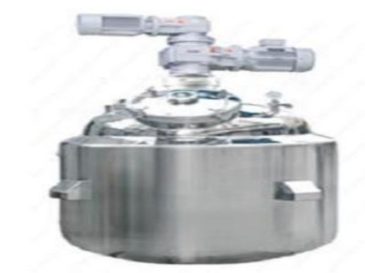
1. Overview and Application
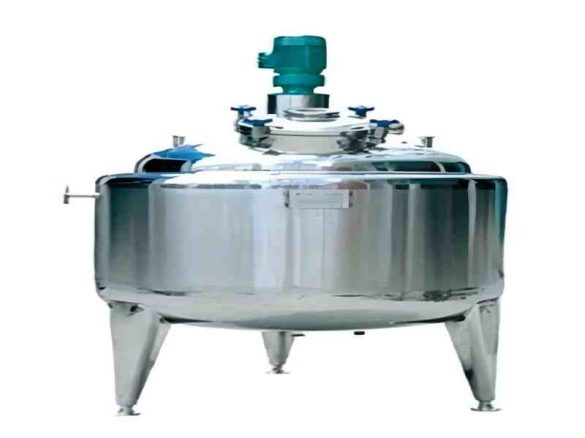
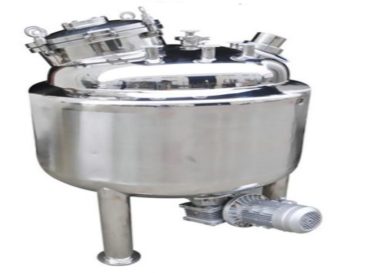
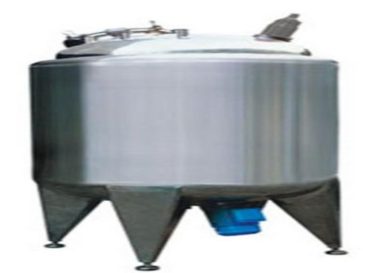
We widely use concentrate mixing tanks in the pharmaceutical industry. Specifically, we use them for liquid preparation of large-volume injections, freeze-dried aqueous injections, and oral liquids.
After we complete the concentrated preparation, we transfer the mixture to the dilute mixing tank for further processing. Moreover, we select materials carefully to meet strict pharmaceutical standards.
We make all parts that contact the liquid medicine from 316L material. For all other parts, we use 304 material to ensure hygiene and corrosion resistance.
In terms of structural design, we equip the tank with an elliptical head and adopt offset wall axial flow stirring. This design not only enhances mixing efficiency but also ensures uniform liquid preparation.
2. Tank Top Configuration
The tank top has multiple functional components to support daily operation. First and foremost, it includes a water inlet, a return port, and a disinfection port for routine maintenance and cleaning.
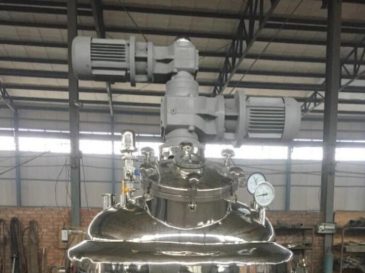
Additionally, we equip it with a cleaning ball, a manhole, and a breathing port with a 0.22μm air breather. Besides that, we install a stirring system on the top to drive the mixing process effectively.
3. Tank Bottom Configuration
The tank bottom integrates several key functional ports for practical use. Specifically, these include a condensate outlet, a discharge port, and a sewage outlet for waste and liquid discharge.
Furthermore, we equip it with a sampling port, a temperature probe, and a liquid level sensor. In this way, these components help monitor the liquid medicine’s status in real time.
4. Control System and Optional Configurations
To ensure convenient operation, we equip the tank with a control cabinet. Meanwhile, the instrument on the cabinet clearly displays the temperature and liquid level of the liquid medicine.
It also provides upper and lower limit alarm functions, which can remind operators of abnormal conditions promptly and thus avoid potential risks.
According to user requirements, we can equip the dilute mixing tank with a nitrogen filling device and a pH meter. In addition, these optional configurations effectively enhance the tank’s adaptability to different processes.
5. Material and Structural Details
5.1 Thermal Insulation Material
For the thermal insulation material of the liquid preparation tank container, we adopt high-temperature resistant and anti-aging polyurethane foam or pearl cotton. As a result, this material ensures stable temperature control during operation.
5.2 Tank Structure
In terms of tank structure, we design it with the internationally standard ISO quick-installation chuck type. This design, in turn, simplifies installation and disassembly for cleaning and maintenance.
5.3 Tank Surface Treatment and Compliance
We make the inner container of imported stainless steel SUS316L or SUS304. For the inner surface, we perform mirror-polishing to Ra≤0.28μm, while we treat the outer surface with polishing, mirroring, sandblasting, or cold-rolled primary color matte. Consequently, this design fully meets GMP pharmaceutical standards.
5.4 Stirrer and Nozzle Configurations
For the stirrer’s seal, we use imported sanitary mechanical stirring seals or magnetic full-seal stirring devices. Meanwhile, operators can select the stirring speed arbitrarily to match different material properties.
To meet diverse functional needs, we equip the nozzles with various functional ports. These include liquid level gauge ports (static pressure type, capacitive type, non-contact type, ultrasonic type, glass tube type), air breathers, and thermometers (digital display type or dial type).
Additionally, the nozzles include CIP cleaning ports, sight glasses, explosion-proof sight lights (integrated sight glass and sight light), SIP sterilization ports, liquid inlets and outlets, and sanitary manholes to cover all operational needs.
6. Capacity and GMP Verification Materials
The volume of the liquid preparation tank ranges from 100L to 10000L. Moreover, we can design and manufacture it according to the actual needs of customers, so as to meet different production scales.
We randomly attach relevant GMP verification materials, including material reports, certificates of purchased parts, verification forms, etc., to ensure compliance with pharmaceutical industry requirements.