1. Overview and Basic Definition
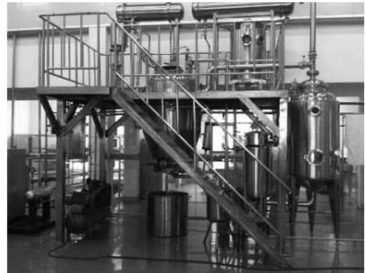
Literally, we define a percolation tank as a device for percolating liquid. Specifically, it works by allowing liquid to continuously infiltrate out during operation.
It is a commonly used infiltration, extraction, and separation equipment in the pharmaceutical, food, and chemical industries. Furthermore, we use it most frequently for extracting and separating effective components from Chinese herbal medicines.
2. Working Principle
When operating a percolation tank, we generally add Chinese herbal medicines into the tank first. Next, we add a small amount of liquid for initial infiltration.
Subsequently, we add an extractant liquid, which permeates into the medicinal materials to dissolve out the effective substances. During this process, the liquid can infiltrate and flow simultaneously.
3. Types and Operation Methods
3.1 Types of Percolation Tanks
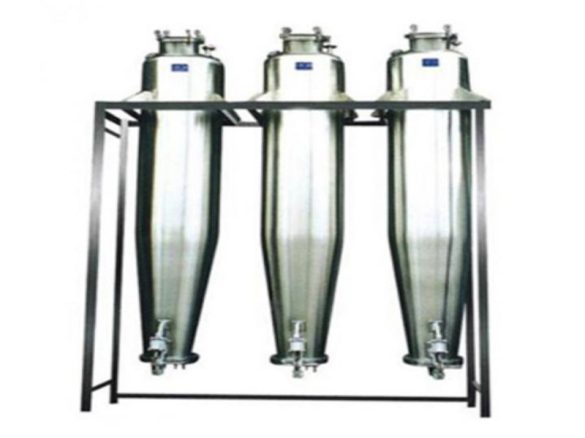
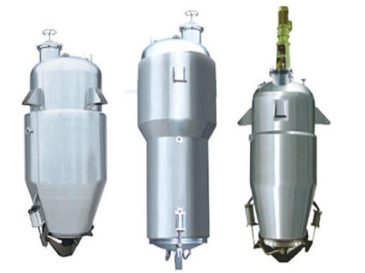
We divide commonly used percolation tanks into two main types. Specifically, these types are straight-tube percolation tanks and regular-cone percolation tanks.
3.2 Operation Methods
Additionally, we classify the operation methods inside common percolation tanks into four categories. These include single percolation, repeated percolation (multiple percolations), counter-current percolation, and pressurized percolation.
4. Percolation Operation Steps
4.1 Moistening
We first prepare the solvent in a certain proportion. Afterwards, we pour the solvent into the medicinal materials, which will fully expand after absorbing the solvent.
4.2 Loading into the Tank
After we moisten the medicinal materials for a period of time, we load them into the percolation tank (or a multi-function extraction tank) for subsequent operations.
4.3 Infiltration
We slowly add the extraction solvent into the percolation tank; we continue adding until the liquid level is about 20-30 centimeters higher than the medicinal materials.
Right after that, we close the liquid inlet and the feeding port and let the mixture infiltrate for 24-48 hours to ensure full contact.
4.4 Percolation
After the infiltration period, we discharge the percolation liquid. Afterwards, we add the extraction solvent again and repeat the percolation process multiple times for thorough extraction.
5. Key Operation Notes
5.1 Appropriate Particle Size
If the particles are too coarse, we cannot achieve sufficient extraction and full percolation. On the other hand, if they are too fine, they will block the slag discharge door and prevent smooth liquid flow.
Generally, we use coarse powder (5-20 meshes) to balance extraction effect and fluidity.
5.2 Moistening of Solid Materials
Premoistening has a direct impact on the yield of percolation. For instance, if we do not premoisten properly, insufficient leaching may occur.
5.3 Uniform Pressure for Medicinal Powder
We must apply uniform pressure when compacting the medicinal powder, as this ensures consistent percolation speed and extraction effect.
5.4 Control of Percolation Speed
If the percolation speed is too fast, we will not achieve sufficient extraction. Conversely, if it is too slow, it will affect production efficiency.
6. Our Percolation Tanks: Features and Specifications
6.1 Product Advantages
Our company specializes in producing stainless steel percolation tanks. Specifically, we offer them at favorable prices, with clean and hygienic properties and an attractive appearance.
6.2 Structural Design
To ensure sufficient solvent infiltration and extraction of medicinal materials, we design percolation tanks with a large length-to-diameter ratio, usually choosing 2-4.
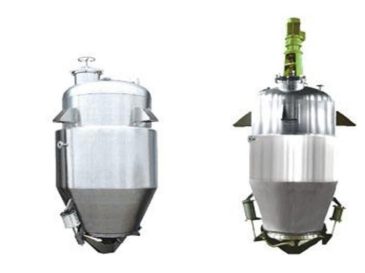
For medicinal materials with good solubility, we generally use regular-cone percolation tanks. Specifically, the cone-shaped part can loosen the compacted medicinal materials to some extent and provide contraction space.
6.3 Temperature and Pressure Design
We usually operate percolation tanks under normal temperature and pressure, so they are generally single-layered. Besides that, we can also design them for heating or cooling according to process requirements.
6.4 Slag Discharge Door and Application
The slag discharge door can be a manually quick-opening type or a convenient cylinder-locking type. In contrast, we use straight-tube percolation tanks for materials that are relatively easy to percolate.
6.5 Material and Configuration
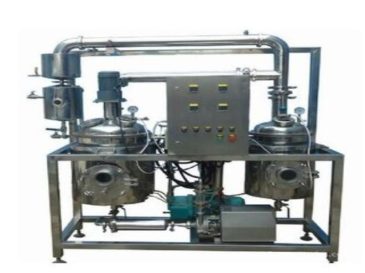
We make the percolation tank of high-quality stainless steel. Additionally, it is equipped with a feeding port, a liquid inlet, a slag discharge door, a cleaning port, a sewage discharge port, and other components.
It is suitable for single or multiple infiltration and extraction operations, with simple operation and sufficient percolation. Therefore, we welcome you to place an order.