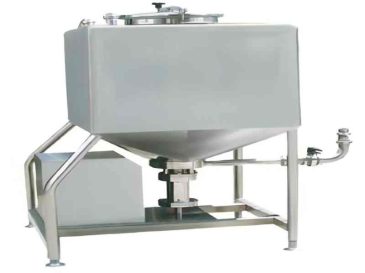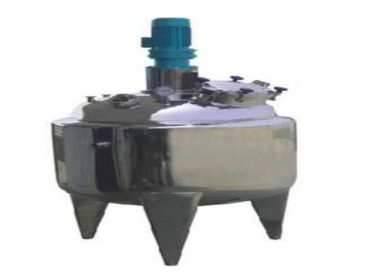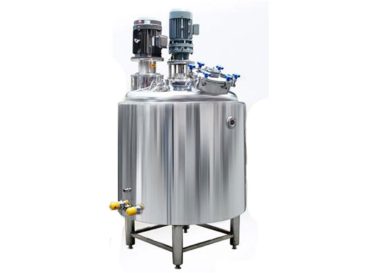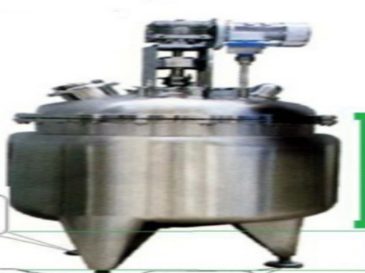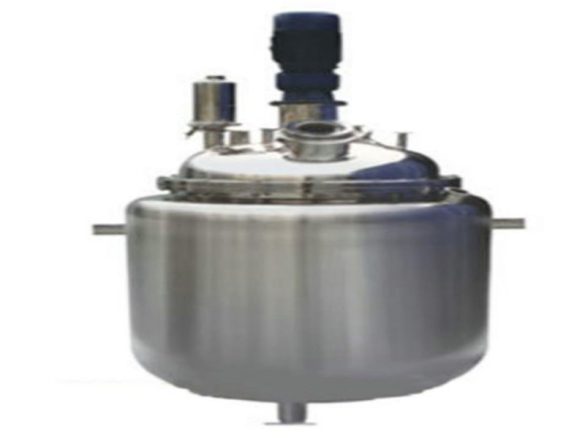
A mixing tank, also known as a preparation tank or blending tank, is a professional vessel used for material formulation and configuration.
It is widely applied in many industries, including food and dairy production for recipe mixing, pharmaceuticals for liquid preparation, as well as chemical and paint manufacturing for ingredient blending.
After the system powers on, sensors mounted on the tank — including those for temperature, rotation speed, and pressure — send real-time signals to the tank controller.
The controller then processes these signals and executes the following functions:
It compares the detected temperature with the preset target value.
Then, it adjusts heating power through PID algorithms, using on/off switching or phase modulation, to make the actual temperature match the set value accurately.
It compares the measured rotation speed with the set value.
After that, it regulates the motor speed via PID algorithms to reach and maintain the desired rotational velocity.
It compares the pressure signal with the safe threshold.
If pressure exceeds the limit, the system triggers an alarm immediately to remind the operator to take action.
It records the total operating time of the tank.
In this way, it supports effective overall control and production management.
Operators must work strictly within the working pressure and temperature ranges shown on the product nameplate.
Otherwise, the equipment may face potential safety hazards.
Users should follow cooling, oiling, and other maintenance rules stated in the product manual.
This ensures long-term stable performance and proper equipment upkeep.
For high‑hygiene processes such as dairy and pharmaceutical production, strict cleaning and daily maintenance protocols are essential.
Detailed steps can be found in the official equipment operation manual.
First, check the equipment for serious damage or deformation caused by transportation.
Also, verify that all fasteners remain tight and secure.
For high‑speed mixing tanks that require anchor bolts, users must embed bolts in a solid, stable foundation.
They should also install the equipment in a strictly horizontal position.
Install the main unit, electrical control devices, and accessories correctly under professional guidance.
Check that all pipelines are unobstructed and that installed instruments are accurate and undamaged.
Before starting the machine, ensure no people or objects are inside or around the tank that could block normal operation.
After installation, run a short trial operation of just a few seconds.
If no short circuits or abnormal noises appear, proceed to a slightly longer test rotation.
For tanks equipped with mechanical seals:
Inject suitable 10# oil or sewing machine oil into the seal lubrication groove before starting the main unit.
For water‑cooled mechanical seals, supply cooling water to the seal cavity to ensure sufficient lubrication and cooling.
Once normal operation begins, inspect bearing temperature, running stability, sealing performance, and instrument function.
Only after confirming everything works properly should users start adding materials.