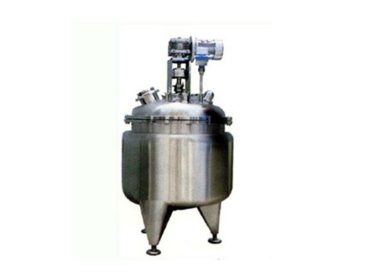
1. Overview and Nomenclature
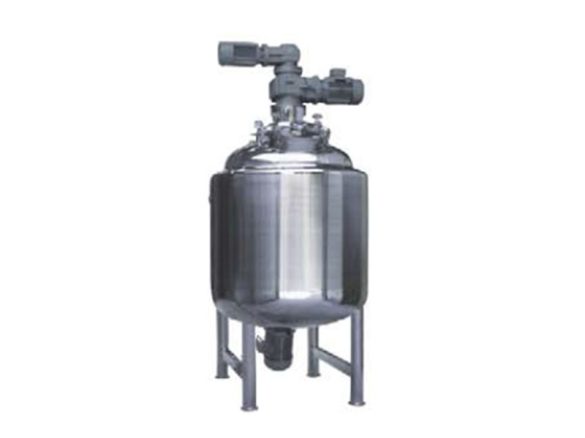
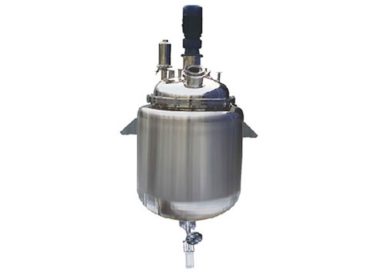
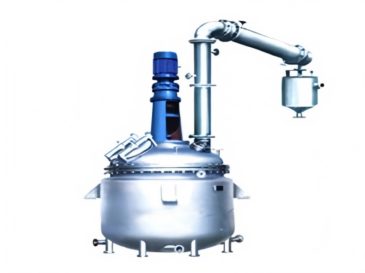
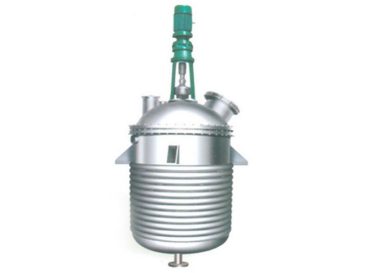
The coaxial dual-stirring scraper reactor has multiple common names.
It is also called coaxial dual-stirring wall-scraping reactor.
People often refer to it as dual-stirring wall-scraping reactor.
Other names include dual-stirring wall-scraping tank or mixer.
2. Working Principle
Its core principle involves two stirring systems sharing one axis.
Both systems work from the center of the tank.
In reality, these two axes are concentric.
One stirs on the outer axis, while the other works on the inner axis.
One system is dedicated to mixing and stirring.
The other, by contrast, performs the wall-scraping action.
Both systems work from the center of the tank.
In reality, these two axes are concentric.
One stirs on the outer axis, the other on the inner axis.
One system is for mixing and stirring.
The other performs the wall-scraping action.
3. Core Advantages and Suitable Materials
It suits viscous materials prone to sticking to tank walls.
Specifically, it thoroughly breaks down material lumps or clumps.
This ensures full mixing of materials.
As a result, it improves reaction efficiency significantly.
Moreover, it also enhances the overall performance of products.
Specifically, it thoroughly breaks down material lumps or clumps.
This ensures full mixing of materials.
As a result, it improves reaction efficiency significantly.
Moreover, it also enhances the overall performance of products.
4. Application Fields and Typical Uses
It is suitable for various complex material processes.
These processes include dissolution, dispersion and reaction.
Additionally, it also applies to emulsification and coagulation.
It is widely used in biopharmaceuticals and food industries.
Besides that, it also serves fine chemicals, medicine and cosmetics.
Other fields include coatings and polymerization.
Typical applications include emulsified silicone oil.
Furthermore, it is also used for chlorinated butadiene rubber and casein.
Other uses are leather fatliquors and PU aqueous adhesives.
In addition, it also applies to MBS coagulation processes.
These processes include dissolution, dispersion and reaction.
It also applies to emulsification and coagulation.
It is widely used in biopharmaceuticals and food industries.
Additionally, it also serves fine chemicals, medicine and cosmetics.
Other fields include coatings and polymerization.
Typical applications include emulsified silicone oil.
Besides that, it is also used for chlorinated butadiene rubber and casein.
Other uses are leather fatliquors and PU aqueous adhesives.
Furthermore, it also applies to MBS coagulation processes.
5. Material and Surface Treatment
We make the reactor from high-quality stainless steel plates.
In addition, we also use welded heads in its manufacturing.
Material contact parts use S30408 (304) stainless steel.
Alternatively, they can also use S31603 (316L) stainless steel.
We mirror-polish the interior of the tank.
For the outer surface, we apply a matte treatment.
We also polish weld joints smooth and mirror-finish them.
These treatments fully meet GMP requirements.
In addition, we also use welded heads in its manufacturing.
Material contact parts use S30408 (304) stainless steel.
Alternatively, they can also use S31603 (316L) stainless steel.
We mirror-polish the interior of the tank.
For the outer surface, we apply a matte treatment.
We also polish weld joints smooth and mirror-finish them.
These treatments fully meet GMP requirements.
6. Stirring Features
Scraper and paddle mixing prevent wall sticking.
We use low-speed variable frequency stirring.
This avoids bubbles caused by high speed.
Central paddle’s low-speed stirring creates alternating environments.
This makes material mixing more uniform.
7. Electrical Control Cabinet
Food and pharmaceutical industries use sanitary grade cabinets.
These cabinets have a good appearance and are clean.
They comprehensively monitor equipment operation.
They can display temperature and stirring speed data.
8. Agitator Combinations and Drive System
The reactor can adopt various agitator types.
This suits different product production needs.
Besides scraping stirrers, there are blade agitators.
These include paddle, propeller and screw agitators.
Three-blade propeller agitators are also available.
Coaxial stirrers have different stirring speeds.
They consist of two motors and one reducer.
It is typically a dual-motor reducer with two output shafts.
One shaft is large, the other small; one horizontal, one vertical.
Both shafts are located at the same position.
9. Basic Structure
The reactor includes a tank, motor and stirring shaft.
Its key feature is the concentric stirring shaft.
This shaft consists of an outer shaft and an inner shaft.
The outer shaft fits over the inner shaft snugly.
It connects to a frame structure for stability.
The frame’s outer edge slides against the tank’s inner wall.
Outer blades connect to the frame’s outer surface.
Meanwhile, the inner shaft is equipped with inner blades.
Outer and inner blades are spaced and staggered strategically.
The motor reducer has a two-in-one structure.
It connects to the outer and inner shafts respectively.
Its key feature is the concentric stirring shaft.
The shaft has an outer shaft and an inner shaft.
The outer shaft fits over the inner shaft.
It connects to a frame structure.
The frame’s outer edge slides against the tank’s inner wall.
Outer blades connect to the frame’s outer surface.
The inner shaft is equipped with inner blades.
Outer and inner blades are spaced and staggered.
The motor reducer has a two-in-one structure.
It connects to the outer and inner shafts respectively.
10. Customizable Configurations
We can design it as a pressure tank per process needs.
We can configure a vacuum pump for special processes.
These processes include vacuum foaming and stirring.
It can be a normal temperature single-layer tank.
We can add heating or cooling devices per requirements.
Heating methods include steam or electric heating.
Customers can choose the heating method they need.
11. Overall Performance
It is a versatile reaction vessel with dual functions.
These functions are powerful stirring and wall scraping.
It adapts well to medium to high viscosity materials.
Additionally, it also suits materials with thixotropic properties.
Simultaneous stirring and dispersion ensure good results.
It can perform co-directional or bidirectional stirring.
This provides better mixing and dispersion effects.
Furthermore, it also offers more flexible operation options.
These functions are powerful stirring and wall scraping.
It adapts well to medium to high viscosity materials.
Additionally, it also suits materials with thixotropic properties.
Simultaneous stirring and dispersion ensure good results.
It can perform co-directional or bidirectional stirring.
This provides better mixing and dispersion effects.
Furthermore, it also offers more flexible operation options.
12. Common Stirring Configurations
There are two common stirring configurations.
First: wall-scraping stirring combined with paddle stirring.
This suits viscous but uniform materials.
Second: wall-scraping stirring with high-speed emulsifying heads.
This is ideal for homogenizing high-viscosity materials.
It achieves the same effect as a dual-stirring emulsifying tank.
However, their structural designs differ.
The emulsifying tank has two axes for various combinations.
These include vertical, central and eccentric stirring.
For coaxial combinations, they have two nested rotating shafts.
As such, they suit both large and small tank sizes.
First: wall-scraping stirring combined with paddle stirring.
This suits viscous but uniform materials.
Second: wall-scraping stirring with high-speed emulsifying heads.
This is ideal for homogenizing high-viscosity materials.
It achieves the same effect as a dual-stirring emulsifying tank.
However, their structural designs differ.
The emulsifying tank has two axes for various combinations.
These include vertical, central and eccentric stirring.
For coaxial combinations, they have two nested rotating shafts.
As such, they suit both large and small tank sizes.