1. Overview of Aging: Physical and Chemical Aging
Physical and chemical aging refers to undesirable changes in the chemical composition and structure of polymeric materials. These changes alter physical properties such as hardening, stickiness, brittleness, discoloration, and reduced strength.
Environmental factors—including heat, oxygen, moisture, light, microorganisms, and chemical agents—drive these changes. Over time, these factors gradually degrade the material’s performance.
In most industrial applications, workers implement preventive measures to avoid such aging effects. These measures help maintain material integrity and extend service life.
2. Aging in Food Processing: Focus on Ice Cream Production
In ice cream production, aging serves a specific and critical purpose. It is the process where water, fats, and emulsifying stabilizers in the mixture achieve full hydration.
Under low-temperature conditions, colloids coagulate. This coagulation allows sufficient time for optimal bonding between colloids and other ingredients, forming the desired texture and structure of ice cream.
This step is critical in traditional ice cream manufacturing. Soft-serve ice cream may skip aging, but standard ice cream production typically requires aging at around 5°C for more than 30 minutes under slow agitation.
3. Aging Tanks: Definition and Industrial Positioning
3.1 Aging Tanks in Ice Cream Production
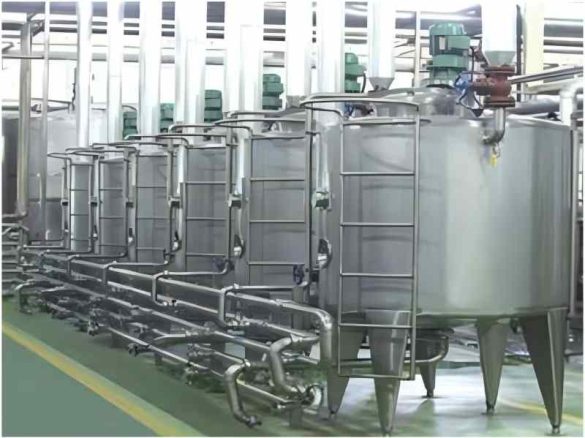
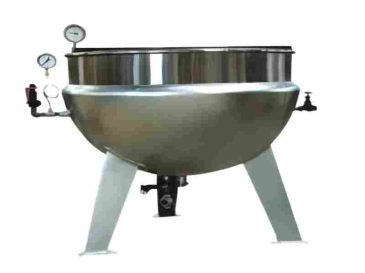
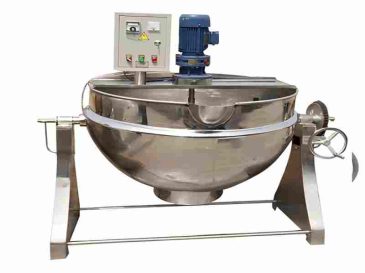
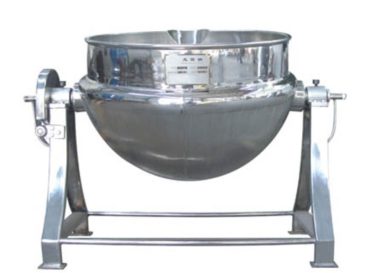
In ice cream manufacturing, an aging tank is a stainless steel vessel that integrates heat exchange and mixing functions. It enables precise temperature control and gentle agitation to support and stabilize the aging process.
3.2 General Industrial Role of Aging Tanks
In a broader sense, aging tanks are specialized industrial vessels. They are similar to reactors, enzymatic hydrolysis tanks, dissolution tanks, and mixing tanks—all engineered to perform specific and critical process functions.
4. Key Differences: Aging Tanks vs. Conventional Vessels
The most significant difference between aging tanks and conventional vessels (such as reactors, enzymatic hydrolysis tanks, dissolution tanks, and mixing tanks) lies in their jacket structure.
Aging tanks typically feature a Miele plate jacket, as they often operate under low-temperature stirring conditions. This jacket design delivers exceptional heat exchange efficiency, strong medium fluidity, and uniform heat transfer.
5. Advantages and Limitations of Miele Plate Jackets
Notably, the Miele plate jacket supports both cooling and high-pressure steam heating. The heat transfer medium flows spirally along the tank wall via guide rings.
This design allows the use of high-pressure and high-temperature steam without increasing the thickness of the inner tank wall. Under equivalent pressure ratings, it enables thinner tank walls compared to standard reactors.
This thinner wall design reduces material costs while maintaining excellent heat exchange performance. However, it is not suitable for highly viscous heat transfer media such as thermal oil.
6. Structural and Agitation Features of Aging Tanks
6.1 Tank Structure
Aging tanks generally have upper and lower conical heads, or an upper flat head paired with a lower conical head. This structure optimizes mixing and material discharge.
6.2 Agitation System
The agitation system usually adopts a special mixer designed for dairy and slurry applications. It is a customized combination based on a frame-type and inclined-blade structure.
Our company’s proprietary aging tank agitator ensures stable and efficient mixing, supporting complete and rapid aging of the material. The agitator runs at a low speed, typically between 15 and 43 rpm.
7. Monitoring Features of Aging Tanks
To facilitate convenient monitoring of the aging process, workers commonly fit aging tanks with a long-strip sight glass on the cylinder body. This sight glass allows real-time observation and rough volume estimation during production.