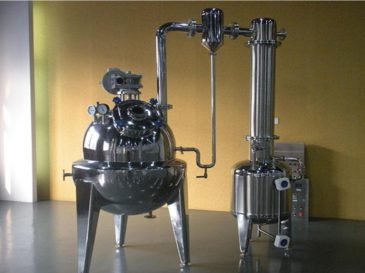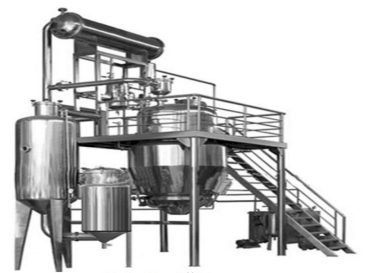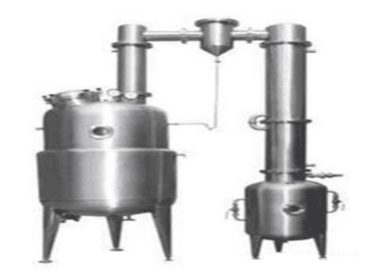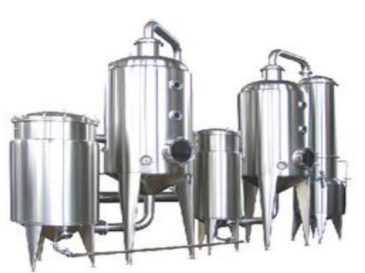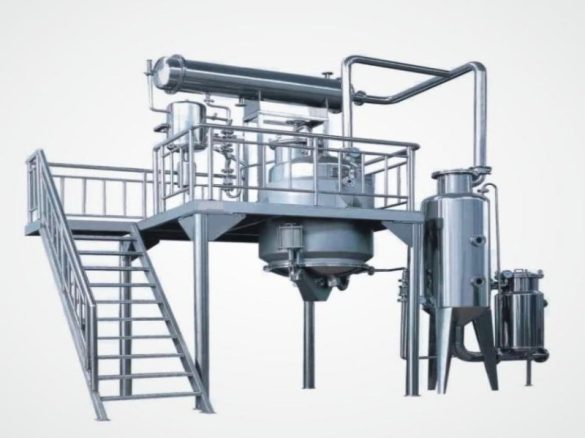
The Traditional Chinese Medicine (TCM) Extraction and Concentration Unit serves as professional integrated processing equipment.
Specifically, engineers design it to extract and concentrate active ingredients from Chinese herbal medicines and various plants.
Notably, this unit fully complies with GMP pharmaceutical standards.
Therefore, it enjoys wide application in TCM factories, research institutes, university laboratories, and small-to-medium-sized pilot production lines.
The unit mainly adopts thermal reflux or electric heating methods.
Meanwhile, its rational structural design supports efficient, energy-saving, and environmentally friendly operation.
Importantly, it effectively solves typical problems in traditional TCM extraction and concentration.
These issues include long processing time, high solvent consumption, and easy loss of active ingredients.
Consequently, the unit greatly improves both production efficiency and product quality.
The unit combines core components and auxiliary devices.
All parts work together to ensure stable and efficient performance.
Furthermore, engineers design each component to meet the professional demands of TCM extraction and concentration.
Specifically, the key components are as follows:
Extraction Tank
It holds medicinal materials and solvents and provides stable heating.
Moreover, it uses a sealed structure to prevent solvent volatilization and material contamination.
Additionally, it includes a safety pressure relief device to guarantee safe operation.
Concentration Tank
It concentrates the extracted solution efficiently.
Specifically, it uses an external heating circulation design.
This design shortens heating time and protects heat-sensitive ingredients effectively.
Oil-Water Separator
It consists of two glass cylinders.
These cylinders extend separation time and improve overall separation efficiency.
Furthermore, the transparent glass allows users to observe the separation process directly.
Condenser & Cooler
It converts secondary steam from concentration into liquid condensate.
Operators can reuse this condensate as a recycling solvent.
In this way, the system achieves clear energy-saving and environmental benefits.
Control Box
It intelligently manages the entire production process.
This includes precise control of temperature, vacuum degree, and solvent discharge.
Moreover, it supports automatic liquid release to reduce labor intensity.
Vacuum Converter
It works closely with the control box.
Together, they satisfy diverse process requirements.
For example, they enable normal-temperature extraction with low-temperature concentration.
CIP Cleaning Device
We install this device inside the tank for convenient daily cleaning.
It ensures hygienic conditions and fully meets GMP standards.
Steam-Water Separator
It separates residual steam and condensate from the heating chamber.
As a result, it significantly improves the overall energy utilization rate.
TCM Extraction
The unit supports both water extraction and alcohol extraction.
Furthermore, it performs atmospheric extraction, water decoction, wet immersion, thermal reflux, and cyclic permeation.
Solution Concentration
It realizes low-temperature vacuum concentration.
This feature makes it highly suitable for heat-sensitive TCM materials.
Meanwhile, it offers short processing time and high working efficiency.
Solvent Recovery
It separately recovers high-concentration and dilute solvents.
Users can reuse these solvents easily.
Consequently, it greatly improves solvent utilization.
Aromatic Oil Collection
It collects aromatic oils during the extraction process.
This ensures the integrity of active ingredients in TCM products.
Energy Saving and Environmental Protection
Its reflux design reduces steam and solvent consumption.
Additionally, users can reuse condensate as distilled water, which supports resource recycling.
Compared with single-effect concentrators, it saves a large amount of energy every year.
High Efficiency and Time Saving
It applies dynamic extraction and concentration technology.
This shortens the entire processing cycle significantly.
Typically, it finishes the full reflux extraction‑concentration process within 4–6 hours.
Moreover, its evaporation efficiency far exceeds that of national standard concentrators.
Compliance with GMP Standards
All material-contact parts use high-quality stainless steel.
Workers polish all welds smoothly.
The unit also features three-layer thermal insulation and an open structure.
Together, these designs ensure high hygiene and safety levels.
Easy Operation and Intelligence
The whole process runs automatically.
It supports 24‑hour continuous operation with only one operator.
Furthermore, it includes a self-diagnosis function and an LCD screen for easy monitoring.
Wide Applicability
It suits various TCM materials and plant extracts.
Besides, it serves the pharmaceutical, food, and chemical industries.
Particularly, it performs excellently in R&D and small‑batch production.
This unit mainly supports R&D, pilot production, and small‑scale production.
Specifically, it applies to the following scenarios:
University, research institute, and enterprise R&D labs:
Researchers use it to extract and concentrate TCM active ingredients.
Additionally, it supports new product development effectively.
Small-to-medium TCM factories:
Workers use it for small-batch production.
Typical products include TCM extracts, oral liquids, and similar items.
Healthcare and food industries:
Teams use it to extract and concentrate plant active ingredients.
It also processes food additives and health products reliably.
First, put the medicinal materials into the extraction tank.
Then, add 5–10 times the amount of solvent (water, ethanol, etc.) according to process rules.
Next, start the heating system of the extraction tank.
Heat the solution until it boils steadily.
After 20–30 minutes, pump one-third of the extract into the concentration tank.
Then, turn off the heating in the extraction tank.
After that, start the heating system of the concentration tank.
Maintain the concentrated juice temperature at 80°C.
Meanwhile, keep the vacuum degree between -0.05 and -0.08 MPa.
Secondary steam from concentration condenses into liquid.
This liquid flows back to the extraction tank for cyclic extraction.
Continue this cycle until active ingredients dissolve completely.
Finally, keep concentrating until the ointment reaches the required specific gravity.
The remaining colorless liquid can be reused for the next batch.
First, add a suitable amount of water into the extraction tank.
Then, turn on direct heating and jacketed hot water.
Next, recover the organic solvent completely.
Once solvent recovery finishes, discharge the medicinal residue safely.
|
Parameter Category
|
Specific Specifications
|
|---|---|
|
Heating Method
|
Steam heating (thermal reflux units) / Electric heating (small-scale units)
|
|
Applicable Solvents
|
Water, ethanol, methanol, acetone, etc.
|
|
Concentration Specific Gravity
|
Up to 1.35 (no additional paste collection steps)
|
|
Reflux Extraction Time
|
4-6 hours (entire reflux extraction-concentration cycle)
|
|
Vacuum Degree
|
-0.05 ~ -0.08 MPa (during concentration)
|
|
Concentration Temperature
|
Approximately 80°C (concentrated juice temperature)
|
|
Material of Contact Parts
|
SUS304 / 316L stainless steel (compliant with GMP standards)
|
|
Key Supporting Components
|
Extraction tank, external circulation single-effect concentrator, oil-water separator, condenser, control box, vacuum converter, CIP cleaning device
|
|
Noise Standard
|
Compliant with pharmaceutical industry noise standards
|