1. Overview of Stainless Steel Condenser
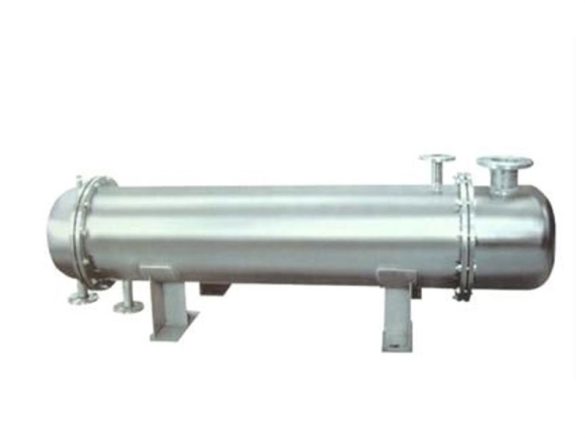
A stainless steel condenser is a cooling heat exchange device.
We categorize condensers into several types.
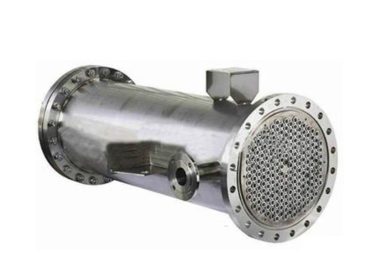
These include stainless steel, shell and tube, and plate heat exchangers.
Among them, shell and tube and stainless steel condensers are key heat transfer devices.
Specifically, they move part of the heat from hot fluid to cold fluid.
For this reason, people also call these devices heat exchangers.
Notably, this heat transfer function is shared by both types.
Specifically, they move part of the heat from hot fluid to cold fluid.
For this reason, people also call these devices heat exchangers.
Notably, this heat transfer function is shared by both types.
2. Application and Main Functions
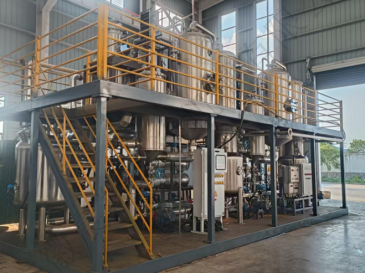
We widely use it in many industrial departments.
These departments include chemical, petroleum, power, and atomic energy.
Its main function is to control the medium temperature precisely.
In detail, it ensures the specific temperature the process requires.
Additionally, it also improves heat utilization rate effectively.
In addition to these key departments, it also serves other related industrial fields.
Beyond temperature control, it also undertakes the task of heat recovery.
Specifically, it ensures the specific temperature required by the process.
Furthermore, it effectively improves the heat utilization rate.
In detail, it ensures the specific temperature the process requires.
Additionally, it also improves heat utilization rate effectively.
In addition to these key departments, it also serves other related industrial fields.
Beyond temperature control, it also undertakes the task of heat recovery.
Specifically, it ensures the specific temperature required by the process.
Furthermore, it effectively improves the heat utilization rate.
3. Equipment Forms
Stainless steel condensers can be separate devices.
Examples include heaters, coolers, and condensers.
Besides, they can also be integrated into process equipment.
For example, a heat exchanger in an ammonia synthesis tower is a common application.
Common examples of separate devices include these types.
In terms of integration, they can also be part of process equipment.
A typical instance is a heat exchanger in an ammonia synthesis tower.
For example, a heat exchanger in an ammonia synthesis tower.
Common examples of separate devices include these types.
In terms of integration, they can also be part of process equipment.
A typical instance is a heat exchanger in an ammonia synthesis tower.
4. Development of Heat Exchangers
Early heat exchangers had limitations.
These limitations came from manufacturing technology and scientific level.
As a result, they only had simple structures.
Additionally, they had small heat transfer areas, large volume, and heavy weight.
A serpentine heat exchanger is a typical example of this.
These limitations mainly stemmed from manufacturing technology and scientific level.
Consequently, they only had simple structures.
Moreover, they had small heat transfer areas, large volume, and heavy weight.
A serpentine heat exchanger is a typical example of such limitations.
A serpentine heat exchanger is a typical example of this.
These limitations mainly stemmed from manufacturing technology and scientific level.
Consequently, they only had simple structures.
Moreover, they had small heat transfer areas, large volume, and heavy weight.
A serpentine heat exchanger is a typical example of such limitations.
With the development of manufacturing technology, shell and tube heat exchangers gradually formed.
Compared with early models, they have larger heat transfer area per unit volume.
Moreover, they also have better heat transfer effects.
For these reasons, they have become typical in industrial production.
First of all, they have a larger heat transfer area per unit volume.
Secondly, they also have better heat transfer effects.
Due to these advantages, they have become typical in industrial production.
For these reasons, they have become typical in industrial production.
First of all, they have a larger heat transfer area per unit volume.
Secondly, they also have better heat transfer effects.
Due to these advantages, they have become typical in industrial production.
5. Classification and Material Selection
We divide stainless steel condensers by heat transfer methods.
The three categories are mixed, storage, and wall types.
We generally make this equipment from metal materials.
Specifically, we use carbon steel and low alloy steel for medium and low pressure.
On the other hand, we mainly use stainless steel under different conditions.
Furthermore, austenitic stainless steel resists high and low temperatures effectively.
In contrast, we use nickel alloys under high temperature conditions.
For medium and low pressure scenarios, we use carbon steel and low alloy steel.
Under different working conditions, we mainly adopt stainless steel.
When it comes to high and low temperature resistance, austenitic stainless steel is ideal.
For high temperature conditions, we choose nickel alloys instead.
In contrast, we use nickel alloys under high temperature conditions.
For medium and low pressure scenarios, we use carbon steel and low alloy steel.
Under different working conditions, we mainly adopt stainless steel.
When it comes to high and low temperature resistance, austenitic stainless steel is ideal.
For high temperature conditions, we choose nickel alloys instead.