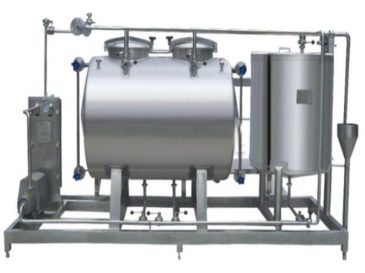
1. Overview and Core Advantages
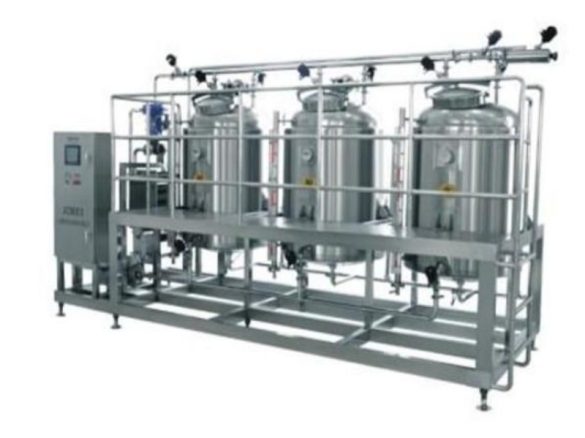
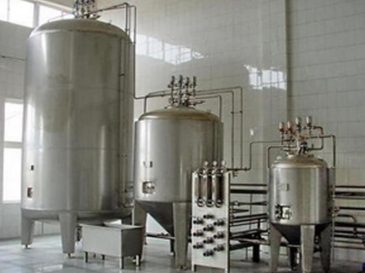
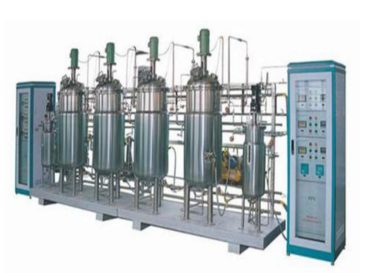
The split-type CIP cleaning system features tanks with a split structure, and this design allows the system to independently perform processes such as acid cleaning, alkali cleaning, and hot water flushing. We can also compile specific cleaning programs for fully automatic cleaning according to actual needs. This system not only effectively cleans equipment but also controls microbial growth. Additionally, we can configure it with semi-automatic and fully automatic control systems according to customer requirements.
2. Detergent Specifications and Tank Material Selection
2.1 Detergent Composition and Usage Conditions
For the acid-alkali detergent used in the system, we use a 1%–2% nitric acid solution as the acid component and 1%–3% sodium hydroxide as the alkali component, and we use both at a temperature of 65°C–80°C.
2.2 Tank Material Requirements
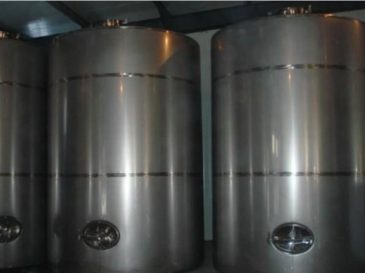
Therefore, we typically make acid and alkali tanks of SUS316L stainless steel, as this material can resist acid-alkali corrosion and ensure long-term stable operation of the system.
3. Core Functions and Comprehensive Benefits
The CIP cleaning system ensures reliable cleaning performance, which in turn enhances product safety. It saves operation time and improves efficiency, reduces labor demand, and ensures operational safety. Moreover, it conserves resources like water and steam, reduces detergent consumption, supports large-scale production equipment with high automation, and extends the service life of production equipment.
4. Working Principle and Operational Process
4.1 Cleaning Liquid Heating Control
The split-type CIP cleaning system heats the cleaning liquid automatically. We set the cleaning temperature via a temperature controller, which regulates the opening of the steam control valve to limit steam input, thus maintaining the cleaning liquid at the required temperature for constant temperature control.
4.2 Liquid Level Monitoring and Alarm
We equip each tank of the CIP station with automatic liquid level alarm and indication functions. When the concentration of the cleaning liquid fails to meet the required level, a pneumatic diaphragm pump adds concentrated acid and alkali to adjust the concentration.
4.3 Cleaning and Water Replenishment Operation
During the cleaning process, operators manually operate the corresponding pipeline valves to transport the CIP liquid, and they perform manual water replenishment when the tank is short of water.
5. Concentrated Acid-Alkali Preparation and Pipeline Protection
We prepare concentrated alkali liquid in concentrated acid and alkali tanks. We also equip these tanks with automatic liquid level control and an overflow protection system to ensure safe operation. Additionally, we design a unique outlet structure to prevent cleaning liquid from crystallizing and blocking pipelines.
6. Comparison with Integrated CIP Cleaning Systems
Compared with the integrated CIP cleaning system, the split-type system significantly reduces cleaning time and improves work efficiency. It uses cleaning agents and water more scientifically and reasonably, while its steam consumption is relatively low. This achieves rational energy utilization and effectively reduces cleaning costs.
7. Advantages of Automatic Control
The automatic control of cleaning liquid heating makes it easier for operators to maintain the temperature at the process-required value. The use of diaphragm pumps to add concentrated acid and alkali enhances operational safety. Moreover, automatic temperature control and high-low liquid level alarms help enterprises reduce production costs.
8. Investment and Applicability
8.1 Investment and Operational Requirements
However, the split-type CIP cleaning system requires higher capital investment and has stricter requirements for operation and maintenance personnel.
8.2 Applicability and Cost-Effectiveness
Due to its precise temperature control, operational safety, and production cost reduction, the investment cost is not excessively high. This makes it an excellent choice for large, medium, and small food enterprises in China.