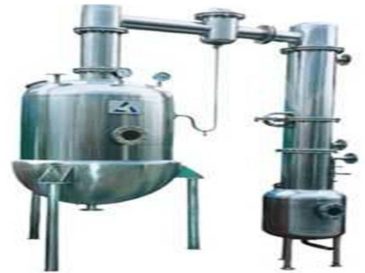
1. Overview and Basic Classification
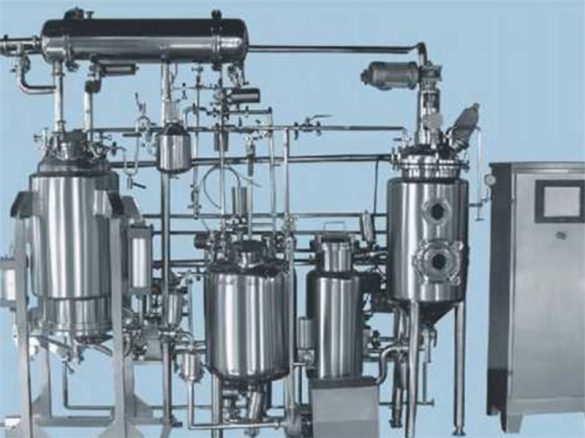
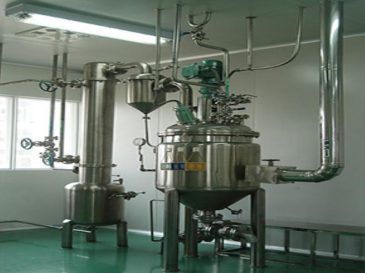
We also call the multifunctional extraction and concentration unit a stainless steel extraction and concentration unit.
Essentially, it functions as a multifunctional processing system that integrates extraction and concentration.
Traditional Chinese medicine factories and biological extraction departments often use two types of such equipment.
One type is the thermal reflux multifunctional extraction and concentration unit.
The other type is small-scale extraction and concentration equipment.
Most small units rely on electric heating for operation.
By contrast, thermal reflux units usually adopt steam heating, which helps save energy effectively.
Notably, it is most commonly used in the pharmaceutical industry, especially for traditional Chinese medicine processing.
We also call the multifunctional extraction and concentration unit a stainless steel extraction and concentration unit.
It is essentially a multifunctional processing system that integrates extraction and concentration.
Traditional Chinese medicine factories and biological extraction departments often use two types.
One is the thermal reflux multifunctional extraction and concentration unit.
The other is small-scale extraction and concentration equipment.
Most small units use electric heating.
Thermal reflux units usually adopt steam heating for energy conservation.
It is most commonly used in the pharmaceutical industry, especially for traditional Chinese medicine.
2. Application Scope and Standards
It serves multiple industries, including pharmaceutical, pigment, food and beverage, animal and plant, and chemical sectors.
Additionally, it supports various processes such as atmospheric pressure, water decoction, wet immersion, and thermal reflux.
It also handles cyclic percolation, essential oil extraction, and organic solvent recovery efficiently.
Importantly, it meets GMP pharmaceutical standards to ensure product safety.
Specifically, it suits laboratory R&D and pilot production lines in universities, institutes, and enterprises.
It serves multiple industries, including pharmaceutical, pigment, food and beverage, animal and plant, and chemical.
It supports various processes: atmospheric pressure, water decoction, wet immersion, and thermal reflux.
It also handles cyclic percolation, essential oil extraction, and organic solvent recovery.
It meets GMP pharmaceutical standards.
It suits laboratory R&D and pilot production lines in universities, institutes, and enterprises.
3. Equipment Composition and Core Advantages
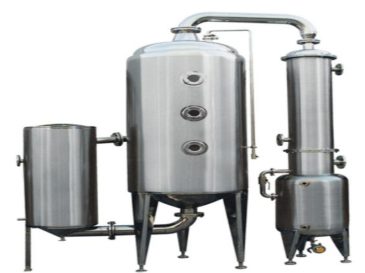
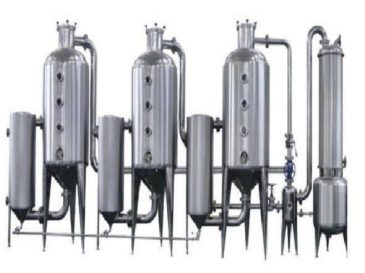
The equipment mainly consists of an extraction tank and an external circulation single-effect concentrator.
It also includes other auxiliary equipment to ensure smooth operation.
With a compact structure, it is easy to operate even for new operators.
Most notably, it integrates extraction, concentration, and solvent recovery in one system, improving efficiency.
The equipment mainly consists of an extraction tank and an external circulation single-effect concentrator.
It also includes other auxiliary equipment.
It has a compact structure and is easy to operate.
It integrates extraction, concentration, and solvent recovery in one system.
4. Functional Features
It has full functions and suits both water extraction and alcohol extraction needs.
It can perform atmospheric pressure and vacuum extraction as required.
Furthermore, it can recover volatile oil efficiently without wasting resources.
Equipped with a vacuum converter and control box, it ensures easy operation for users.
In this way, it achieves various process requirements, including low-temperature concentration and extraction.
It has full functions and suits both water extraction and alcohol extraction.
It can perform atmospheric pressure and vacuum extraction.
It can also recover volatile oil efficiently.
It is equipped with a vacuum converter and control box for easy operation.
It achieves various process requirements, including low-temperature concentration and extraction.
5. Oil-Water Separator Design
The oil-water separator uses two glass cylinders for optimal performance.
This design effectively extends oil-water separation time.
As a result, it ensures a better separation effect for precise operation.
We use glass material specifically for easy observation during operation.
The oil-water separator uses two glass cylinders.
This design extends oil-water separation time.
It ensures better separation effect.
We use glass material for easy observation during operation.
6. Extraction and Concentration Process
We use the high-position self-flow method for concentration during extraction.
Meanwhile, evaporated distilled water returns to the extraction tank for further extraction.
The entire reflux extraction and concentration process takes about 4-6 hours.
This process reduces steam and solvent loss significantly.
Moreover, it also shortens the overall operation time to improve productivity.
We use the high-position self-flow method for concentration during extraction.
Evaporated distilled water returns to the extraction tank for further extraction.
The entire reflux extraction and concentration process takes 4-6 hours.
It reduces steam and solvent loss.
It also shortens overall operation time significantly.
7. Solvent Recovery and Utilization
We directly send high-concentration solvent to the alcohol preparation tank.
There, it serves as solvent for the alcohol sedimentation tank or extraction tank.
On the other hand, we send dilute solvent to the dilute alcohol storage tank for future use.
The control box controls solvent discharge to achieve automatic liquid discharge.
This not only reduces labor intensity but also improves the solvent utilization rate.
We directly send high-concentration solvent to the alcohol preparation tank.
It serves as solvent for the alcohol sedimentation tank or extraction tank.
We send dilute solvent to the dilute alcohol storage tank.
The control box controls solvent discharge for automatic liquid discharge.
This reduces labor and improves solvent utilization rate.
8. Main Application and Equipment Characteristics
It is suitable for extracting and concentrating effective components from traditional Chinese herbs and plants.
Additionally, it can recover solvents and collect essential oils during processing.
It boasts high efficiency, easy operation, and a high degree of automation.
A central controller manages its operation to ensure stability.
Furthermore, it uses high-quality materials and adopts dynamic extraction and concentration for better results.
It is suitable for extracting and concentrating effective components from traditional Chinese herbs and plants.
It also recovers solvents and collects essential oils.
It has high efficiency, easy operation, and high automation.
A central controller manages its operation.
It uses high-quality materials and adopts dynamic extraction and concentration.
9. Equipment Specifications and Design
It uses either electric boiler heating or direct electric heating, depending on needs.
The tank is equipped with a CIP cleaning device for convenient maintenance.
It can control and display temperature and PH value during operation in real time.
With three-layer insulation and an open structure, it balances heat preservation and accessibility.
We polish internal and external welds to 300 mesh for hygiene and durability.
Made of SUS304 material, it ensures long-term use with good durability and hygiene.
It uses electric boiler heating or direct electric heating.
The tank is equipped with a CIP cleaning device.
It controls and displays temperature and PH value during operation.
It has three-layer insulation and an open structure.
We polish internal and external welds to 300 mesh.
It is made of SUS304 material for durability and hygiene.
10. Operation Steps
First, place herbs into the extraction tank carefully.
Next, add 5-10 times the herb volume of solvent (water, ethanol, etc.), based on process requirements.
Then, start the extraction tank’s heating system to boil the extract for 20-30 minutes.
After that, use a suction filter tube to transfer one-third of the extract to the concentration tank.
Subsequently, close the extraction tank’s direct heating and jacket hot water.
Then, turn on the concentration tank’s direct heating and heating system.
Finally, maintain the concentrate at around 80℃ and vacuum at -0.05 to -0.08 MPa.
Place herbs into the extraction tank.
Add 5-10 times the herb volume of solvent (water, ethanol, etc.), based on process requirements.
Start the extraction tank’s heating system to boil the extract for 20-30 minutes.
Use a suction filter tube to transfer one-third of the extract to the concentration tank.
Close the extraction tank’s direct heating and jacket hot water.
Turn on the concentration tank’s direct heating and heating system.
Maintain the concentrate at around 80℃ and vacuum at -0.05 to -0.08 MPa.
11. Cycle Process and Residue Handling
Secondary steam from concentration passes through a condenser and cooler.
It then becomes condensed liquid and flows back to the extraction tank as new solvent.
The new solvent flows through the herb layer to dissolve soluble components thoroughly.
We repeatedly transfer the extract to the concentration tank to form a continuous cycle.
Continue concentrating until the desired ointment consistency is achieved.
The colorless liquid in the extraction tank can be reused for the next batch to save resources.
If using organic solvents, first add an appropriate amount of water, recover the solvent, and then remove the residues.
Secondary steam from concentration passes through a condenser and cooler.
It becomes condensed liquid and flows back to the extraction tank as new solvent.
The new solvent flows through the herb layer to dissolve soluble components.
We transfer the extract to the concentration tank repeatedly to form a cycle.
Concentrate until the desired ointment consistency is achieved.
The colorless liquid in the extraction tank can be reused for the next batch.
For organic solvents, add water first, recover the solvent, and remove residues.